

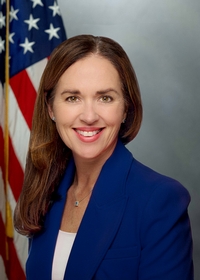
Photo of Bridget Malloy Kosierowski
D Pennsylvania House · District 114 On the 2026 ballot

Rep. Bridget Malloy Kosierowski

Compare
Total votes
7,867
all sessions
Attendance
99%
54 missed
Near the chamber average
With party
98%
of cast votes
Higher than 90% of chamber peers
Bipartisan score
1%
crosses aisle rarely
Lower than 96% of chamber peers
Sponsored
358
bills & resolutions
Near the chamber average
Committees
6
assignments
358 bills and resolutions

Sponsored bills

Total
358
Primary
33
Co-sponsor
325
This page
358
matching current filters
Co-sponsor HB 200
Passed · Pennsylvania House · Co-sponsor
An Act establishing family and medical leave benefits, the Paid Family and Medical Leave Account and the Paid Family and Medical Leave Grant Program; conferring powers and imposing duties on the Department of Labor and Industry; and imposing penalties.

Maddy summaryThis bill would create a state-funded paid family and medical leave program for eligible workers needing time off for health issues, childbirth, or family care. It establishes a dedicated state fund to cover leave costs, creates an advisory board to guide implementation, and assigns oversight to the Department of Labor. The program would directly affect employees in the state who qualify for these leave types, requiring employers to provide the benefits. The bill also specifies penalties for businesses failing to comply with the new requirements.

Passed Apr 1, 2026 1 co-sponsor
Co-sponsor HB 1260
Passed · Pennsylvania House · Co-sponsor
An Act providing for solar-ready projects involving a warehouse or distribution center; authorizing tax exemptions and special tax provisions; imposing duties on the Department of Environmental Protection; and imposing penalties.

Maddy summaryHB 1260 would allow businesses owning warehouses or distribution centers to install solar energy systems by providing tax exemptions for "solar-ready" projects. It directly affects commercial property owners in the state by reducing their tax burden for qualifying solar installations. Key provisions include authorizing special tax breaks, requiring the Department of Environmental Protection to establish guidelines for these projects, and imposing fines for non-compliance with solar-ready construction standards. The bill aims to incentivize renewable energy adoption in large commercial facilities through concrete tax policy changes.

Passed Mar 30, 2026 1 co-sponsor
Co-sponsor HB 501
In committee · Pennsylvania House · Co-sponsor
An Act amending the act of November 30, 2004 (P.L.1672, No.213), known as the Alternative Energy Portfolio Standards Act, further providing for definitions; providing for force majeure; further providing for alternative energy portfolio standards, for portfolio requirements in other states, for health and safety standards and for interagency responsibilities; providing for zero emissions credits; and making editorial changes.

Maddy summaryHB 501 amends Pennsylvania's Alternative Energy Portfolio Standards Act to update definitions and clarify requirements for renewable energy compliance. It specifically adds "advanced reactor" (including small modular reactors) to eligible energy sources, refines criteria for low-impact hydropower, and updates definitions for biomass, biogas, and alternative energy credits. The bill affects electric utilities required to meet portfolio standards by specifying which energy sources count toward compliance and how credits are calculated. These changes aim to modernize the framework for renewable energy reporting and incentives without altering current percentage targets. The bill is currently in committee review (Environmental & Natural Resource Protection).

In committee Mar 23, 2026 1 co-sponsor
Co-sponsor HB 2297
In committee · Pennsylvania House · Co-sponsor
An Act amending Title 61 (Prisons and Parole) of the Pennsylvania Consolidated Statutes, in medical services, further providing for Medical Services Program.

Maddy summaryThis bill establishes a fee program for certain nonemergency medical services provided to inmates in Pennsylvania prisons, with fees capped at $1 per service when requested by the inmate. It requires the Department of Corrections to create regulations specifying which medical services incur fees, their amounts, and payment procedures while exempting medical emergencies, chronic care, and preexisting conditions from fees. The legislation also mandates that inmates pay for medical services related to injuries they caused to themselves or other inmates. The Department of Corrections must update existing rules to align with these changes within 180 days of the bill's effective date, which is set to occur 60 days after enactment.

In committee Mar 18, 2026 1 co-sponsor
Primary HB 2164
In committee · Pennsylvania House · Lead sponsor
An Act amending the act of June 13, 1967 (P.L.31, No.21), known as the Human Services Code, in public assistance, providing for medical assistance for complex care assistant services.

Maddy summaryHB 2164 would create a program allowing family members of Pennsylvania medical assistance recipients to become certified complex care assistants. These family members would provide specific medical services at home - such as feeding, catheter care, and medication administration - under a registered nurse's supervision after completing 75 hours of training and passing a competency evaluation. The program targets recipients under 21, those eligible for private duty nursing, or those needing both services for medical reasons, with home health agencies reimbursed at a minimum of $45 per hour. It explicitly requires the services to supplement, not replace, existing private duty nursing under the medical assistance program.

In committee Jan 28, 2026 0 co-sponsors
Co-sponsor HB 505
Passed · Pennsylvania House · Co-sponsor
An Act amending Title 66 (Public Utilities) of the Pennsylvania Consolidated Statutes, in restructuring of electric utility industry, further providing for energy efficiency and conservation program.

Maddy summaryHB 505 proposes restructuring how electricity companies operate in Pennsylvania by amending the state's public utilities code. It requires electric utilities to implement new energy efficiency and conservation programs for customers, directly affecting both utility companies and residential/commercial electricity users. Key provisions include mandating specific energy-saving measures and updating how utility programs are funded and administered. The bill aims to modernize the electric industry framework while expanding access to efficiency resources for consumers.

Passed Dec 22, 2025 1 co-sponsor
Co-sponsor HB 1881
Passed · Pennsylvania House · Co-sponsor
An Act amending the act of September 27, 1961 (P.L.1700, No.699), known as the Pharmacy Act, further providing for pharmacy technician and pharmacy technician trainee registration, qualifications and supervision; providing for administration of injectable medications, biologicals and immunizations, for clinical laboratory certificate and for report on pharmacy-administered vaccines; and making a repeal.

Maddy summaryHB 1881 updates Pennsylvania's Pharmacy Act to modernize requirements for pharmacy technicians and trainees, including new registration qualifications and supervision rules by licensed pharmacists. It adds specific protocols for pharmacies administering injectable medications, biologicals (like vaccines), and immunizations, while requiring detailed reports on vaccine administration. The bill also establishes new standards for clinical laboratory certificates and repeals outdated sections of the original 1961 law. These changes directly affect pharmacies, pharmacy technicians, trainees, and pharmacists who oversee vaccine and medication administration.

Passed Dec 22, 2025 1 co-sponsor
Primary HB 1676
In committee · Pennsylvania House · Lead sponsor
An Act establishing the Nursing Shortage Assistance Program; and imposing duties on the Department of Labor and Industry.

Maddy summaryHB 1676 establishes Pennsylvania's Nursing Shortage Assistance Program, which provides state grants to "qualified nursing servicers" to help nursing students repay loans after graduation. The program requires partner hospitals to match state funds 1:1 for loan repayment and commit to hiring graduates, with grants only covering tuition expenses (not administrative costs). Nursing students working at participating hospitals may receive up to $10,000 annually or $30,000 total in loan repayment assistance. The Department of Labor and Industry administers the program, sets application rules, and reports annually on its effectiveness to the legislature.

In committee Dec 15, 2025 0 co-sponsors
Co-sponsor HR 373
In committee · Pennsylvania House · Co-sponsor
A Resolution condemning any threats of political violence made against elected representatives and reaffirming the duty of uniformed military personnel to comply with the Uniform Code of Military Justice.

Maddy summaryThis resolution condemns any threats of political violence against elected officials, specifically referencing recent public statements interpreted as threatening lawmakers who uphold constitutional duties. It reaffirms that military personnel must refuse unlawful orders under the Uniform Code of Military Justice (UCMJ), citing Articles 90-92 and the Nuremberg Principles. The resolution has no legal effect but symbolically urges compliance with the UCMJ and rejects intimidation tactics targeting representatives. It directs copies to the President, Defense Secretary, and Pennsylvania's congressional delegation. As a symbolic statement, it does not alter laws or directly affect any group beyond expressing legislative concern.

In committee Dec 3, 2025 1 co-sponsor
Co-sponsor HB 439
Signed into law · Pennsylvania House · Co-sponsor
An Act amending the act of October 27, 1955 (P.L.744, No.222), known as the Pennsylvania Human Relations Act, further providing for definitions.

Maddy summaryHB 439 amends Pennsylvania's Human Relations Act to explicitly define "race" as including hair texture and protective hairstyles (such as locs, braids, or afros), and "religious creed" as including head coverings or hairstyles tied to religious practice. Employers cannot prohibit these features unless they prove the rule is necessary for health/safety, non-discriminatory, job-specific, and applied equally. The law does not prevent employers from enforcing general safety rules or anti-harassment policies that apply fairly across all employees. This directly affects employers and employees in Pennsylvania workplaces by clarifying protections against discrimination related to appearance.

Signed into law Nov 25, 2025 1 co-sponsor
Showing 21 to 30 of 358 bills
Previous 1 … 2 3 4 … 36 Next