

Maddy summaryHB 785 creates a new electronic voter registration system in Pennsylvania. It requires the state to establish a secure online portal within 180 days where voters can submit registration applications or updates, verify identity using the last four digits of their Social Security number or driver's license, and provide digital signatures. The bill mandates accessibility features for voters with disabilities and specifies that applications must be processed through existing systems. This directly affects all Pennsylvania voters seeking to register or update their registration online, streamlining the process while maintaining verification requirements.
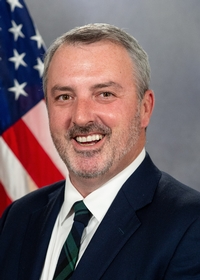
Rep. Kyle Donahue
Sponsored bills
Maddy summaryThis House Resolution (HR 96) designates March 8, 2025, as "International Women's Day" in Pennsylvania. It formally recognizes women's contributions across all sectors of Pennsylvania society without creating new laws or policies. The resolution encourages residents to participate in events celebrating women's achievements and leadership, including noting the record number of women serving in the state legislature. It is a symbolic gesture by the Pennsylvania House of Representatives, not a legislative change affecting specific groups or programs.
Maddy summaryHB 776 requires Pennsylvania high school students to score at least 60% on a civic knowledge assessment to graduate or earn a general equivalency diploma, starting in the 2028-2029 school year. The bill amends the Public School Code to add this graduation requirement, which applies to all students except those with an individualized education program (IEP) if their IEP specifies an exemption. The assessment measures knowledge of civic topics like government structure and citizenship. This policy directly affects all Pennsylvania public high school students seeking graduation or a general equivalency diploma.
Maddy summaryHB 778 establishes a three-year pilot program to increase pre-kindergarten (Pre-K) teacher salaries in Pennsylvania to match those of elementary school teachers with similar qualifications. It directly affects Pre-K teachers working in programs located in high-poverty areas (school districts with ≥20% poverty or census tracts at ≤80% of the statewide median poverty level). The program requires the Department of Education to calculate salary gaps using a specific formula, provide subsidies to eligible Pre-K programs to close those gaps, and collect data for a legislative report. The bill mandates strict use of funds solely for teacher salary increases and includes requirements for reporting program outcomes to the legislature.
Maddy summaryHB 780 creates a tuition assistance program for early childhood educators in Pennsylvania. It provides grants to cover tuition costs (minus other financial aid) for individuals pursuing associate degrees or certifications in early childhood education, targeting those earning under 400% of the federal poverty level, enrolled in at least six credit hours per semester, and working 25+ hours weekly in approved early childhood programs. Recipients must agree to work in Pennsylvania early childhood education for two years after completing their program. Funding comes from a new state fund, with annual reports tracking enrollment, retention, wages, and job demand. The program aims to support workforce development in early childhood education through financial assistance tied to service commitments.
Maddy summaryHB 781 creates a three-year pilot program to provide salary supplements for infant and toddler care professionals working at eligible child-care centers in Pennsylvania. The Department of Public Welfare will administer the program, establishing county-level pay parity standards that consider education and certification levels to prevent staff retention issues. Child-care centers receiving funds must use them exclusively for wage supplements and cannot reduce existing pay or replace staff costs. The program requires annual reporting to the General Assembly and expires after three fiscal years beginning in 2026-2027.
Maddy summaryHB 779 establishes a three-year pilot program to increase salaries for Head Start teachers in Pennsylvania. It targets Head Start programs located in school districts with at least 20% poverty or census tracts with 80% or lower median poverty. The program calculates a salary supplement by comparing Head Start teachers' qualifications to public elementary school teachers in the same district, then provides funds to align their pay. The Department of Education will select participating programs, collect data, and report findings to the legislature after one year.
Maddy summaryHB 758 amends Pennsylvania's Controlled Substance, Drug, Device and Cosmetic Act to reduce penalties for a specific drug-related violation. It changes the maximum fine from $500 to $25, eliminating the possibility of jail time for this offense. The bill directly affects individuals who violate clause (31) of the existing law, which relates to certain drug-related activities under the state's controlled substances regulations. This is a concrete policy change to lower the financial penalty for a minor violation, without altering the prohibited act itself.
Maddy summaryHB 782 prohibits Pennsylvania electric utilities from including lobbying or political activities in their rate base, meaning these costs cannot be passed on to customers through utility rates. It requires utilities with over 75,000 customers to file annual reports detailing all lobbying and political spending, including employee hours, third-party vendor payments, and specific expense breakdowns. The bill also states that advertising expenses can only be recovered if the utility demonstrates they are reasonable and meet defined criteria. This legislation directly affects large electric utilities operating in Pennsylvania.
Maddy summaryHB 739 amends Pennsylvania's 1951 Professional Nursing Law to modernize terminology and clarify roles for advanced practice nurses. It replaces "certified registered nurse practitioner" with "APRN-CNP" throughout the law, defines "collaboration" requirements for new APRN-CNPs (requiring 3,600 practice hours before independent work), and updates definitions for "medical nutrition therapy" and "population focus areas." The bill explicitly removes the State Board of Nursing's authority to license APRN-CNPs, shifting that responsibility elsewhere. These changes directly affect registered nurses seeking advanced practice certification and the Board's regulatory role in nursing licensure.