

Maddy summaryHB 1050 defines new types of electronic games under Pennsylvania's small games of chance law, specifically creating legal terms for electronic pull-tab devices, games, and systems. It clarifies that these electronic games cannot resemble casino-style games like slots or poker and must follow strict technical rules (e.g., no mobile phone use, no spinning reels). The bill directly affects licensed organizations already operating games like pull-tabs, ensuring new electronic formats comply with existing regulations. Key provisions include banning duplicate hold combinations in event games and requiring distinguishable features for multiple prize sets. This is a definitional update, not a policy change to prize limits or licensing.
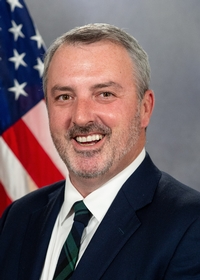
Rep. Kyle Donahue
Sponsored bills
Maddy summaryThis bill proposes a constitutional amendment allowing counties (of first and second class) to create special property tax exemptions for longtime owner-occupants in neighborhoods where home values have risen significantly due to renovations or new construction nearby. It would let local governments establish uniform tax rules for these homeowners without increasing overall property tax rates to fund the exemptions. The amendment requires approval by the General Assembly and then a vote by Pennsylvania voters before taking effect.
Maddy summaryHB 1029 amends Pennsylvania's 1937 Labor Relations Act to clarify worker protections and union election processes. It defines "employe" more broadly (excluding independent contractors) and bans agreements that prevent workers from joining class or collective lawsuits. Employers must post notices about labor rights and provide detailed voter lists for union elections within two business days of a board order. The bill also adds new unfair labor practices, including coercing workers to sign agreements that limit their right to pursue collective claims. These changes directly affect Pennsylvania workers, employers, and labor organizations involved in union representation efforts.
Maddy summaryHB 1034 amends Pennsylvania's 1951 Landlord and Tenant Act to clarify utility payment rules for renters. It requires landlords who collect water, sewer, gas, or electricity payments directly from tenants to include a written notice in the lease about this obligation and provide a copy of the utility bill to the tenant within five days of a written request. The bill directly affects residential tenants and landlords in Pennsylvania rental agreements. Key provisions ensure transparency by mandating written notice and timely access to billing information, with the law taking effect 90 days after enactment.
Maddy summaryThis resolution (HR 138) orders Pennsylvania’s Joint State Government Commission to study civic education in the state and develop cost-effective recommendations to improve it. It directly affects Pennsylvania students and schools by requiring an analysis of current civics assessments (under Act 35 of 2018), comparisons with high-performing states, and strategies to strengthen civic education across three pillars: knowledge, skills, and action. The study must include evaluations of existing assessment methods, successful models from other states, and approaches to boost student engagement, with a report due within 18 months. The resolution does not change laws but aims to inform future policy based on evidence.
Maddy summaryThis bill allows housing authorities in specific Pennsylvania jurisdictions - including second-class counties, second-class cities, second-class A cities, and third-class cities - to appoint their own police officers. These officers would have the same authority as municipal police on housing authority properties and adjacent areas, including enforcing order under local laws. To qualify, officers must complete the same training and certification required for municipal police under state law and maintain that certification. The bill expands housing authorities' security capabilities without altering their core mission of providing low-income housing.
Maddy summaryHB 620 increases the recycling fee for waste processing facilities in Pennsylvania from $2 to $5 per ton. The bill directly affects operators of municipal waste landfills and resource recovery facilities, requiring them to pay this fee on all solid waste processed at their facilities or disposed of at landfills (excluding certain residues). The key provision amends Section 701(a) of the 1988 Municipal Waste Planning Act to set the new fee amount. The change takes effect 60 days after enactment.
Maddy summaryHB 362 amends Pennsylvania's 1929 Administrative Code to authorize the Energy Development Authority to administer federal funds from the Inflation Reduction Act of 2022 for the Solar for All Program. It directs the Authority to distribute funds for residential solar installations, storage, and upgrades to qualifying households across all Pennsylvania counties, prioritizing rural, suburban, and urban communities. The bill specifically prohibits using funds for solar panels or parts made with forced labor (defined as work performed under threat of penalty without voluntary consent) and requires the Public Utility Commission to protect non-participating ratepayers from cross-subsidization. This creates a clear administrative framework for implementing the federal program while adding labor and ratepayer safeguards.
Maddy summaryHB 422 creates a new tax deduction for Pennsylvania residents who donate human organs. It allows taxpayers to deduct up to $12,000 annually for unreimbursed expenses directly related to organ donation, including travel, lodging, lost wages, and medical costs. The deduction applies only to the year the transplantation occurred, may be claimed just once in a lifetime, and cannot reduce taxable income below zero. This provision affects organ donors who incur qualifying out-of-pocket costs while living. The change takes effect for tax years beginning after December 31, 2025.
Maddy summaryThis is a ceremonial resolution, not a law with policy changes. It officially recognizes March 9-15, 2025, as "Multiple Sclerosis Awareness Week" in Pennsylvania. The resolution highlights the impact of multiple sclerosis (affecting over 24,000 Pennsylvanians) and acknowledges the work of the National Multiple Sclerosis Society. It has no binding effect or funding provisions - it simply encourages public awareness and support for the cause.