

Maddy summaryHB 308 establishes new workplace health and safety standards specifically for public employees in Pennsylvania, including those working for the Commonwealth, counties, cities, schools, and public institutions. It creates the Pennsylvania Occupational Safety and Health Review Board, grants the Secretary of Labor new enforcement powers for workplace inspections, and requires public employers to meet safety standards comparable to those in the private sector under federal OSHA. The bill imposes penalties for violations, prohibits employer retaliation against employees reporting safety concerns, and mandates recordkeeping and reporting procedures. This legislation directly affects all public employees across Pennsylvania who previously lacked consistent state-level safety protections.
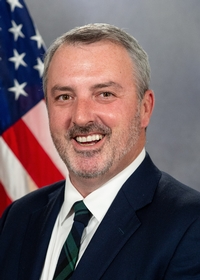
Rep. Kyle Donahue
Sponsored bills
Maddy summaryHB 1324 creates a new criminal offense for bullying in Pennsylvania, defined as committing specific crimes (like assault or property damage) with the intent to harass, intimidate, or cause fear. It directly affects individuals who commit these acts with bullying intent, classifying the offense as a misdemeanor (typically third-degree for minor crimes, or one degree higher for more serious offenses). Sentencing enhancements for severe cases are directed to the Pennsylvania Commission on Sentencing. The bill excludes labor disputes and constitutionally protected activities from coverage. The law takes effect 60 days after enactment.
Maddy summaryHB 1321 creates a new "Military Spouse Leave and Employment Protection Act" in Pennsylvania law. It requires employers with 20+ employees to provide up to 14 paid days per year of leave for employees when their spouse is deployed to a combat zone or during a declared emergency, and up to 14 unpaid days for training deployments. The law prohibits employers from retaliating against employees who request this leave and mandates that employers maintain an employee's position, title, and accrued benefits during the leave. This directly affects Pennsylvania employees with military-connected spouses working at qualifying employers.
Maddy summaryHB 1302, the Medical Debt Interest Act, caps the interest rate on unpaid medical bills at 6% for healthcare providers (like hospitals and doctors) and medical debt collectors in Pennsylvania. The bill prohibits charging more than 6% interest on medical debt and classifies violations as unfair business practices under existing consumer protection law, allowing individuals to seek court enforcement. It takes effect 60 days after enactment.
Maddy summaryHB 1323 amends Pennsylvania's Professional Nursing Law to establish a formal certification process for Advanced Practice Registered Nurses (APRNs). It requires the Board of Nursing to issue certificates to nurses holding a master's or higher degree who are already licensed as nurse practitioners, clinical nurse specialists, or nurse anesthetists. Certified APRNs may use the title "Advanced Practice Registered Nurse" and "A.P.R.N.," and the Board must maintain a public online registry of all certified APRNs. This bill directly affects nurses seeking APRN certification in Pennsylvania and clarifies their title usage and public recordkeeping.
Maddy summaryHB 1327 amends Pennsylvania's Election Code to strengthen penalties for election bribery and create a new offense for paying to induce voter registration. It makes offering money, goods, or lottery chances to influence voting a felony (with penalties up to $15,000 or seven years), while paying someone to register to vote becomes a misdemeanor (up to $10,000 or five years). This bill directly affects individuals who attempt to bribe voters or pay for registration to influence election participation. The provisions aim to deter improper election practices by criminalizing financial incentives tied to voting behavior or voter registration.
Maddy summaryHB 1325 requires health insurers in Pennsylvania offering dental coverage to report annual "medical loss ratios" (MLRs) for dental policies. This means insurers must calculate the percentage of premium dollars spent directly on dental care (not administrative costs) and submit detailed reports by April 30 each year. The bill applies to all health insurers licensed in Pennsylvania that provide dental policies, whether standalone or bundled with medical coverage. Penalties may be imposed if insurers fail to comply with the reporting requirements or meet the MLR standards.
Maddy summaryHB 269 amends Pennsylvania's Controlled Substance Act to improve access to overdose response information. It requires the Department of Health to develop free online training materials, posters, and pamphlets about recognizing opioid overdoses and using reversal medications (like naloxone), with the materials available in multiple languages upon request. Specific public entities - including Commonwealth agencies, transit authorities, municipalities, and local transportation organizations - must display the poster in conspicuous public locations, such as bathrooms or lobbies. The Department covers all printing and distribution costs, and entities already displaying equivalent materials may substitute them with prior notice. This bill focuses on education and resource accessibility, not changing drug laws or medication access.
Maddy summaryHB 273 allows Pennsylvania counties to adopt a property maintenance code (either by referencing a nationally recognized standard or creating their own) to address neighborhood blight. It requires counties to follow specific notice and publication procedures for adopting the code and permits them to appoint inspectors who can collect fees for enforcement. Counties may only enforce their code in areas where municipalities lack their own property maintenance ordinance, and must have a formal agreement with a municipality to enforce it within that municipality. The bill also establishes a Municipal Codes Enforcement Grant Program and a municipal neighborhood mitigation fund to support blight-reduction efforts.
Maddy summaryHB 316 allows Pennsylvania municipalities to deny building permits to property owners with specific unpaid debts or unaddressed violations. It directly affects owners of real property, particularly corporations or LLCs, who owe unpaid taxes, water/sewer bills, or have serious uncorrected code violations (like failing to fix blight) after six months of notification. The bill requires municipalities to specify the property address and court details in denial notices, prohibits denying permits needed to correct violations, and imposes a $1,000 fine on corporations that fail to disclose such delinquencies when applying for permits. It aims to prioritize blight remediation by linking permit access to property maintenance compliance.