

Maddy summaryHB 2021 updates Pennsylvania's Vehicle Code to allow automated red light enforcement cameras in first-class cities (like Philadelphia) and specific other municipalities. It authorizes these systems to capture vehicles running red lights at intersections, directly affecting drivers who violate traffic signals in those areas. The bill modifies existing law to permit this enforcement method, requiring municipalities to adopt specific procedures for camera placement and violation processing. This change expands current red light camera programs by clarifying legal authority for participating jurisdictions.
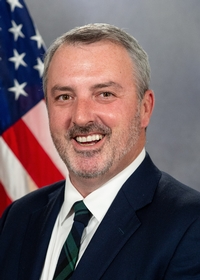
Rep. Kyle Donahue
Sponsored bills
Maddy summaryHB 2022 amends the Insurance Company Law of 1921 to require casualty insurance policies to cover scalp cooling systems. The bill directly affects insurance companies and policyholders by mandating coverage for this specific medical technology. However, the provided context does not specify the exact mechanisms for implementation, affected insurance types, or patient eligibility details. The bill was referred to the Insurance committee on November 12, 2025, but no further provisions or impacts are described in the available information. The context lacks sufficient detail to describe key mechanisms or concrete policy changes beyond the title.
Maddy summaryHB 2025 amends Pennsylvania's Public School Code to address financial strain on school districts during budget disputes with the state. It requires the Commonwealth to reimburse school districts for costs incurred when borrowing money to cover operating expenses during a budget impasse. The bill establishes a new "School District Impasse Recovery Fund" to manage these reimbursements. This directly affects school districts facing funding delays and the state budget office responsible for disbursing funds. The provision creates a concrete mechanism for financial relief during budget standoffs, without altering existing funding formulas.
Maddy summaryHB 2007 mandates a specific $62 million transfer from Pennsylvania's Budget Stabilization Reserve Fund by November 1, 2025, to address the loss of federal SNAP benefits. The funds are allocated as follows: $50 million to the Department of Agriculture for food bank grants under existing state food programs, $10 million to the Department of Human Services for senior meal assistance, and $2 million for administration and outreach. This bill directly affects food banks, senior assistance organizations, and state agencies managing these programs. It requires the transfer to occur regardless of the usual emergency funding process outlined in Section 1703-A(b), which typically requires a two-thirds legislative vote for reserve fund appropriations. The bill takes effect immediately upon enactment.
Maddy summaryHB 446 requires hospitals and ambulatory surgical facilities in Pennsylvania to offer patients unused, facility-provided medication at no additional cost upon discharge, if the prescriber determines it's clinically appropriate for continuing treatment. The bill specifies that this applies only to non-controlled, multi-dose medications like eye drops, creams, or inhalers (excluding IV drugs or controlled substances), and mandates clear discharge instructions with usage details and contact information. Providers acting in good faith are protected from liability for patient misuse, and such medication offers are exempt from standard outpatient dispensing rules. This directly affects patients discharged from hospitals or ambulatory facilities and the healthcare facilities providing their care.
Maddy summaryHB 2004 creates a special account to hold emergency funds for SNAP benefits, which provide food assistance to low-income residents. The bill requires the Department of Human Services, the Secretary of the Budget, and the State Treasurer to transfer these funds to pay SNAP recipients. This establishes a dedicated funding mechanism specifically for emergency SNAP benefit payments. The bill directly affects SNAP recipients by ensuring a streamlined process for receiving benefits during emergencies.
Maddy summaryThis bill is a ceremonial resolution designating November 11, 2025, as "Veterans Day" within Pennsylvania. It directly affects the state government by formally recognizing the date for official purposes, such as ceremonies or proclamations. The resolution has no policy or funding changes - it solely expresses the state's official acknowledgment of Veterans Day. It was adopted by the Pennsylvania legislature on October 29, 2025, as a symbolic gesture.
Maddy summaryThis resolution designates November 10, 2025, as the "250th birthday of the United States Marine Corps" for observance in Philadelphia, Pennsylvania - the location where the Corps was founded. It has no binding effect on policy or funding but formally recognizes this historical milestone. The resolution was adopted by Congress on October 29, 2025, following committee review. It directly affects commemorative observances in Philadelphia and the Marine Corps community.
Maddy summaryHB 2002 would allow Pennsylvania to join the Interstate Compact for School Psychologists, a multi-state agreement designed to simplify licensing for school psychologists working across state lines. The bill directly affects school psychologists seeking employment in multiple states and requires Pennsylvania’s Governor and Secretary of the Commonwealth to adopt the compact’s terms and implement its provisions. Key mechanisms include standardizing licensing requirements so that psychologists licensed in one compact state can practice in others without additional exams or paperwork. This would streamline mobility for professionals while maintaining consistent practice standards across participating states.
Maddy summaryHB 1417 creates a state grant fund to help community organizations provide diapers, briefs, and incontinence supplies to people in need, primarily affecting seniors and individuals with disabilities who rely on these products. It directs the Department of Aging to establish a program improving access to these supplies and assigns specific duties to the Department of Human Services for program implementation. Key provisions include setting up the grant fund, requiring the Aging Department to develop the access program, and outlining the Human Services Department’s role in managing it. The bill proposes concrete policy changes by creating a new funding mechanism and defining agency responsibilities to address supply access gaps.