

Maddy summaryHB 2116 amends Pennsylvania's Taxpayer Relief Act to provide additional property tax relief for low-income senior citizens. It creates a 50% supplemental rebate on top of existing property tax rebates for seniors with household income ≤ $30,000 who live in cities other than first-class cities (e.g., Philadelphia), school districts, or second-class A cities. The bill changes income calculation by allowing property taxes paid on primary residences to reduce taxable income, and updates rebate schedules with annual inflation adjustments based on the Consumer Price Index. These changes directly affect seniors aged 65+ with low fixed incomes who qualify for base property tax or rent rebates.
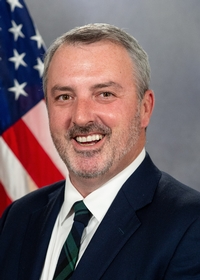
Rep. Kyle Donahue
Sponsored bills
Maddy summaryHB 1322 requires certain state-appointed fiduciaries (like estate administrators or executors) to complete mandatory training on handling decedents' estates and fiduciary duties. The bill amends Pennsylvania's Title 20 statutes to establish this training requirement, directly affecting individuals managing estates under state supervision. This policy change aims to improve oversight and consistency in estate administration by ensuring fiduciaries meet specific competency standards.
Maddy summaryHB 505 proposes restructuring how electricity companies operate in Pennsylvania by amending the state's public utilities code. It requires electric utilities to implement new energy efficiency and conservation programs for customers, directly affecting both utility companies and residential/commercial electricity users. Key provisions include mandating specific energy-saving measures and updating how utility programs are funded and administered. The bill aims to modernize the electric industry framework while expanding access to efficiency resources for consumers.
Maddy summaryHB 150 proposes changes to Pennsylvania's sentencing laws by removing outdated rules about transferring inmates requiring medical care and creating a new process for judges to modify prison terms when an individual's illness prevents them from serving their full sentence. The bill directly affects people incarcerated in Pennsylvania who develop serious medical conditions during their sentence. Key provisions include ending the current transfer system for medical cases and establishing a clear procedure for courts to adjust sentences based on documented health issues. This would allow judges to shorten sentences for health-related reasons without requiring a separate legal process. The bill is currently under review in the Appropriations committee.
Maddy summaryHB 1881 updates Pennsylvania's Pharmacy Act to modernize requirements for pharmacy technicians and trainees, including new registration qualifications and supervision rules by licensed pharmacists. It adds specific protocols for pharmacies administering injectable medications, biologicals (like vaccines), and immunizations, while requiring detailed reports on vaccine administration. The bill also establishes new standards for clinical laboratory certificates and repeals outdated sections of the original 1961 law. These changes directly affect pharmacies, pharmacy technicians, trainees, and pharmacists who oversee vaccine and medication administration.
Maddy summaryHB 1530, the Genetic Information Privacy Act, requires direct-to-consumer genetic testing companies operating in Pennsylvania to protect residents' genetic data. Companies must obtain clear, separate consent for data collection, use, sharing, and retention; implement security measures; and provide consumers with access to or deletion of their data. The bill specifically prohibits sharing genetic data with insurers, employers, or third parties without explicit written consent. Violations could result in $2,500 civil penalties per incident, enforced by the Attorney General’s office. The law applies to Pennsylvania residents and covers genetic data like DNA test results, but excludes research data collected under federal health privacy rules.
Maddy summaryHB 2107 would authorize Pennsylvania to join the Interstate Compact for School Psychologists, an existing agreement among states to simplify licensing for school psychologists who wish to work across state lines. The compact would allow school psychologists licensed in one participating state to obtain an equivalent license in another without repeating lengthy application processes, while still requiring them to follow the practice laws of the state where they work. This aims to address school staffing shortages by making it easier for licensed psychologists to relocate, particularly benefiting military families and schools facing workforce gaps. The bill also specifies that Pennsylvania's Governor and Secretary of the Commonwealth must take steps to join the compact and implement its requirements.
Maddy summaryHB 1676 establishes Pennsylvania's Nursing Shortage Assistance Program, which provides state grants to "qualified nursing servicers" to help nursing students repay loans after graduation. The program requires partner hospitals to match state funds 1:1 for loan repayment and commit to hiring graduates, with grants only covering tuition expenses (not administrative costs). Nursing students working at participating hospitals may receive up to $10,000 annually or $30,000 total in loan repayment assistance. The Department of Labor and Industry administers the program, sets application rules, and reports annually on its effectiveness to the legislature.
Maddy summaryHB 1446 allows local governments to grant tax exemptions for improvements and redevelopment of vacant or underused properties, directly affecting property owners and developers who redevelop sites like abandoned lots or outdated buildings. It establishes a state-level Economic Development and Mixed-Use Redevelopment Advisory Committee within the State Planning Board to advise on eligible projects and guide implementation. The Department of Community and Economic Development is given authority to manage the program, including setting eligibility rules and overseeing tax exemption approvals. The bill aims to incentivize revitalization of neglected properties by reducing financial barriers for redevelopment. This policy change focuses on concrete tax incentives and administrative structure, not speculative economic outcomes.
Maddy summaryThis resolution directs Pennsylvania's Legislative Budget and Finance Committee to audit all current incentives for public school district consolidation and shared services. The audit will examine why these incentives aren't being used (as no districts have voluntarily consolidated since 2009), review other states' approaches, and assess how to better incentivize consolidation for districts of specific enrollment sizes. The committee must issue a report with findings and recommendations to the General Assembly within one year. This process does not create new policies but aims to inform future decisions about school district reorganization.