

Maddy summaryHB 1278 amends Pennsylvania's Election Code to require candidates for state, local, and federal offices (including U.S. Congress) to submit a written statement (replacing the prior "affidavit" requirement) instead of an affidavit. This statement must include specific details like the candidate's residence, election district, office sought, eligibility confirmation, commitment to election laws, and awareness of campaign finance reporting rules. The bill updates penalties for false statements to reference Pennsylvania's unsworn falsification statute (18 Pa.C.S. § 4904), applying to all candidates filing nomination documents. It directly affects every candidate submitting paperwork for election in Pennsylvania, including those running for county, city, school board, or federal positions.
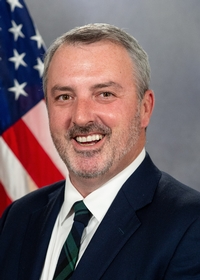
Rep. Kyle Donahue
Sponsored bills
Maddy summaryThis bill expands death benefit eligibility in Pennsylvania for firefighters who die from cancer linked to their work. To qualify, a firefighter must have served at least four years, had direct exposure to a carcinogen, and passed a pre-service physical exam showing no signs of cancer. The law presumes these deaths occurred while performing official duties, allowing their families to receive financial support under the existing Emergency and Law Enforcement Personnel Death Benefits Act. The changes will take effect 60 days after the bill is signed into law.
Maddy summaryThis bill expands the enforcement powers of Pennsylvania's Pharmacy Audit Integrity and Transparency Act to address how Pharmacy Benefit Managers handle Medicaid prescriptions. It directly affects PBMs, pharmacies, and pharmacists by requiring PBMs to accept and process prescriptions from any pharmacy or pharmacist that is in good standing with state regulators. The law prohibits PBMs from limiting patient access to specific pharmacies based on the PBM's own private contracting choices. These changes are designed to ensure that Medicaid patients can use any qualified pharmacy without facing artificial restrictions imposed by their benefit manager.
Maddy summaryThis bill requires emergency medical services providers in Pennsylvania, including paramedics and nurses, to complete specific training on caring for individuals with dementia. The Department of Health must create a program covering how to communicate effectively with these patients, manage behavioral symptoms, and identify signs of abuse. New providers will need three hours of initial training, while all providers must complete one hour of continuing education annually. Those who already finished similar training within the last 18 months will be exempt from the initial requirement but must still take the annual course.
Maddy summaryThis Pennsylvania House resolution designates the week of April 13 through 17, 2026, as "Local Government Week" and April 22, 2026, as "Local Government Day" within the state. The measure aims to highlight the work of the Commonwealth's thousands of local officials and employees who provide essential services such as road maintenance, public safety, and utilities. By formally recognizing these contributions, the bill seeks to bring attention to the importance of local governance in daily community life.
Maddy summaryThis bill amends Pennsylvania's Unfair Trade Practices and Consumer Protection Law to explicitly define "dynamic pricing" as a potential unfair practice. It specifically targets the use of artificial intelligence to vary prices for essential goods or services within a 24-hour period based on demand. The legislation includes detailed definitions for artificial intelligence, generative AI, and bona fide pricing to clarify what constitutes deceptive behavior versus legitimate pricing strategies. By adding these specific terms to the law, the bill aims to provide clearer guidance for regulators and businesses regarding AI-driven price fluctuations.
Maddy summaryThis Pennsylvania bill updates the Public School Code to strictly limit the use of artificial intelligence in charter and cyber charter schools. It defines artificial intelligence as machine-based systems that make predictions or decisions and prohibits these schools from using AI to replace human teachers for direct instruction. The law requires local school boards and the state Department of Education to reject applications from schools relying on such models and allows for the nonrenewal or immediate termination of charters that adopt them. Additionally, the bill clarifies the powers and duties of the State Board of Education regarding charter school oversight.
Maddy summaryHB 1964 imposes a temporary pause (moratorium) on selling or leasing public water and wastewater systems to private companies. It creates a Water Utility Reform Working Group to develop recommendations for system management and reform. The bill also repeals specific rules about how acquired water systems are valued. This directly affects communities that own public water systems and their residents, as it delays potential privatization and sets up a process for reviewing system operations.
Maddy summaryHB 1800 would repeal the current legal provisions in Pennsylvania that recognize marriage between people of the same sex by removing specific sections from the domestic relations code. The bill directly affects same-sex couples currently married in Pennsylvania, as it would eliminate the statutory basis for their marriages. Key provisions include amending definitions in the preliminary sections of the code and striking down existing language that addresses same-sex marriage. The bill is currently referred to the Judiciary committee and has not been enacted.
Maddy summaryThis bill would create a state-funded paid family and medical leave program for eligible workers needing time off for health issues, childbirth, or family care. It establishes a dedicated state fund to cover leave costs, creates an advisory board to guide implementation, and assigns oversight to the Department of Labor. The program would directly affect employees in the state who qualify for these leave types, requiring employers to provide the benefits. The bill also specifies penalties for businesses failing to comply with the new requirements.