

Maddy summaryHB 2198 repeals the Computer Data Center Equipment Incentive Program from Pennsylvania's Tax Reform Code of 1971. This bill eliminates tax exemptions and refunds previously available for investments in data center equipment, such as servers, cooling systems, and energy infrastructure. The repeal directly affects computer data centers and their owners/operators who previously qualified for these tax benefits under Article XXIX-D. The policy change removes a specific tax incentive program without creating new provisions. This is a procedural change to the tax code, ending an existing program for data center equipment investments.
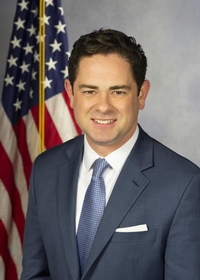
Rep. Kyle Mullins
Sponsored bills
Maddy summaryHB 1127 authorizes Pennsylvania to join the Dentist and Dental Hygienist Compact, enabling dentists and dental hygienists licensed in Pennsylvania to practice in other participating states without obtaining separate licenses. The bill establishes a "Compact Privilege" that allows qualified professionals to practice across state lines while maintaining each state's regulatory authority over scope of practice and disciplinary actions. Key mechanisms include streamlined licensure pathways, shared disciplinary information between states, and protection of public health standards. This affects licensed dental professionals seeking to work in multiple compact states, particularly addressing workforce mobility and access to care.
Maddy summaryThis bill creates a new fee in Pennsylvania courts to help fund support services for children who are victims of specific sexual offenses and crimes against minors. When a person is convicted, pleads guilty, or enters a diversion program for these crimes, they must pay a fee ranging from $250 to $1,000 depending on the severity of the offense. The collected money goes into a state fund that the Pennsylvania Commission on Crime and Delinquency uses to provide grants to children's advocacy centers. Courts are required to allow defendants who cannot afford the fee to pay it in installments, and the bill ensures that any restitution owed to victims is paid before this fee is collected.
Maddy summaryHB 1135 prohibits the use of paraquat, a specific chemical pesticide, within Pennsylvania. It defines paraquat by its chemical identifier (CAS number 4685-14-7) and includes related salts, making it unlawful for farmers, agricultural businesses, or any pesticide users to apply it in the state. The bill amends Pennsylvania's 1973 Pesticide Control Act to add this prohibition, effective one year after enactment, and overrides any conflicting existing regulations. This directly affects pesticide users and applicators operating in Pennsylvania.
Maddy summaryThis bill is a ceremonial resolution that designates October 24, 2026, as "Acupuncture and Herbal Medicine Day" throughout Pennsylvania. It does not create new laws, change regulations, or alter funding, and it has no direct impact on healthcare providers or residents. The measure simply acknowledges the historical use of these medical practices and encourages the public to learn more about them.
Maddy summaryThis bill requires Pennsylvania electric distribution companies to build a combined 3,000 megawatts of energy storage systems by July 2033, with specific targets for short-duration and long-duration storage. The Public Utility Commission will assign storage goals to each company based on their service area's demand and may adjust these targets if market conditions change. Companies must use open, competitive bidding processes overseen by an independent monitor to purchase this capacity through long-term contracts.
Maddy summaryThis House Resolution honors the life of Pennsylvania State Police Corporal Timothy J. O'Connor, Jr., who died in the line of duty in March 2026, and extends condolences to his family. The document details his 15-year career, numerous awards, and community service, while formally recognizing his sacrifice as the 105th state police officer to die in service. It directs that a copy of the resolution be presented to his wife, Casey O'Connor, as a gesture of respect and support.
Maddy summaryHB 1567 requires municipalities to negotiate benefit agreements with owners of certain electric power plants, mandating that facilities pay impact fees to host communities. These fees must be used for local projects like infrastructure or community programs, with clear rules for public input during negotiations. The bill also sets administrative fees for the Department of Environmental Protection (DEP) to oversee compliance and enforce the agreement process. It directly affects municipalities hosting power plants and the facilities themselves, creating a structured framework for financial contributions to impacted communities.
Maddy summaryHB 1106 establishes a certification program for chiropractic assistants in Pennsylvania. To become certified, individuals must be at least 18, have a high school diploma, complete an approved training program, pass an exam, and meet background requirements. Certified assistants can only perform tasks delegated by a licensed chiropractor under direct on-premises supervision and must complete 16 hours of continuing education (including 8 in-person hours) every two years to maintain certification. The bill also makes minor editorial changes to the existing Chiropractic Practice Act.
Maddy summaryHB 2173 updates Pennsylvania's Medical Practice Act of 1985 by adding new definitions and licensing requirements for medical imaging professionals. It specifically creates licensing categories for roles like medical imaging professionals, radiation therapists, radiologist assistants, and trainees, defining their scope of practice (including modalities such as MRI, CT scans, ultrasound, and nuclear medicine). The bill removes outdated provisions about radiologic procedures and education requirements while establishing certification standards through recognized medical imaging certification organizations. This directly affects healthcare workers performing imaging procedures, requiring them to obtain board licenses based on their certified modalities. The changes clarify professional responsibilities and ensure consistent training standards for these healthcare roles.