

Maddy summaryHB 248 requires Pennsylvania public schools to provide parents or legal guardians with specific information about student clubs and organizations (including mission, activities, faculty advisor, and meeting details) at least two weeks before participation begins. Schools must obtain written parental permission for students to join any club or organization, and parents may withdraw permission at any time in writing. The bill mandates that consent forms be simple and accessible, prohibiting schools from making withdrawal more difficult than granting permission. This applies to all school-sponsored clubs, including cheerleading, band, and chorus, directly affecting parents, students, and school boards under the Public School Code.
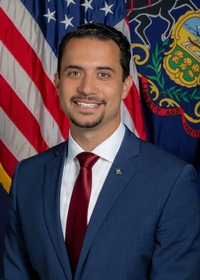
Rep. Robert Leadbeter
Sponsored bills
Maddy summaryHB 161 amends Pennsylvania's Prevailing Wage Act by adding specific definitions to clarify which construction projects are covered. It defines "public work" to exclude school safety and security improvements, such as projects funded under the Public School Code for safety upgrades. This directly affects construction contractors working on public projects costing over $25,000, as school safety projects will no longer require prevailing wage rates. The bill takes effect 60 days after enactment.
Maddy summaryThis bill removes the requirement for non-motorized boats (like kayaks, canoes, and paddleboards) to obtain permits or register when used in Pennsylvania state parks, forests, or public waters. It specifically prohibits state agencies from creating new rules for these vessels, affecting all owners of non-motorized watercraft using state-managed areas. The change modifies existing boating regulations under Pennsylvania's Fish Code to eliminate administrative burdens for non-motorized boaters. The bill takes effect 60 days after enactment.
Maddy summaryHB 163 amends Pennsylvania's 1980 law to prohibit entities from "countries of concern" (including China, Russia, Iran, North Korea, Belarus, and Venezuela) and foreign governments from acquiring agricultural land, except through inheritance or as security for debt. It requires title companies to verify compliance with the law, imposing a $1,000 civil penalty for willful failure to do so, and authorizes the Attorney General to investigate violations. Violating entities must forfeit the land to the Commonwealth, which will sell it at auction; proceeds cover sale costs, reimburse the Attorney General for investigation expenses, pay lienholders, and then fund the General Fund. The law defines agricultural land broadly (including cropland and livestock operations) but excludes mineral rights and non-farm zoning.
Maddy summaryHB 127 amends Pennsylvania's Unfair Trade Practices and Consumer Protection Law to require businesses to accept cash payments for in-person retail transactions under $500. This directly affects Pennsylvania retailers (like stores and service providers) and consumers who pay with cash for qualifying purchases. The bill defines refusing such cash payments as an unfair or deceptive practice, unless the business has a visible written policy stating it won't accept cash above a specific denomination (e.g., $100 bills) and posts this policy before the transaction. Exceptions allow businesses to set high-denomination cash limits if properly disclosed, but they cannot refuse cash outright for transactions under $500.
Maddy summaryHB 189 amends Pennsylvania's vehicle registration law to exempt multipurpose agricultural vehicles from registration requirements. This change directly affects farmers who use such vehicles exclusively on their own farms or on highways connecting parts of a single farm or between two farms within 10 miles of each other. The bill specifies that these vehicles cannot be used for general public road travel outside of farm-related activities. The exemption applies only to vehicles owned or operated by the farm owner, not to commercial or non-agricultural vehicles. The law takes effect 60 days after enactment.
Maddy summaryHB 110 amends Pennsylvania's 1970 law to allow minors aged 18 or older to consent independently to mental health treatment without parental permission, raising the age from 14. It also clarifies that minors aged 18+ control their mental health treatment records, while parents or legal guardians retain full access to all medical, dental, and health records for minors under 18. The bill includes provisions for minors to revoke consent for treatment and requires court review if a minor objects to continued inpatient care. These changes directly affect minors seeking mental health services and their parents, streamlining consent processes while balancing minor autonomy with parental access.
Maddy summaryHB 94 amends Pennsylvania's Public School Code to allow parents or guardians of school-aged children to opt their child out of school-imposed face covering or mask requirements. This applies when masks are required due to health department mandates (like those under the Disease Prevention and Control Law) or school board policies. Schools must provide a simple online opt-out form without requiring an excuse and must prohibit discrimination against students who opt out, including exclusion from activities or locations. The bill directly affects parents, guardians, and schools in Pennsylvania, changing how mask mandates are implemented in educational settings.
Maddy summaryHB 22 amends Pennsylvania's Tax Reform Code of 1971 to clarify the definition of "compensation" for personal income tax purposes. It specifically adds exclusions to what counts as taxable compensation, such as certain disability payments, retirement benefits, public assistance, foster care payments, and National Guard service income. These changes directly affect Pennsylvania taxpayers and employers who must apply these definitions when calculating income tax liability. The bill does not alter tax rates but provides clearer guidance on which income types are taxable under state law.
Maddy summaryHB 93 requires institutions of higher education and private licensed schools in Pennsylvania to offer voluntary, free human trafficking prevention and education programs to first-year students. These programs must cover specific topics such as how traffickers profile victims, the role of online activity, and the differences between prostitution and trafficking. Schools are also required to submit an annual report to the Department of Education confirming that they have implemented these educational initiatives.