

Maddy summaryHB 1817 would amend Pennsylvania's criminal code to create a specific offense for interfering with or impeding first responders - such as police, firefighters, or paramedics - while they are performing emergency duties. The bill would add this as a new provision under the section on obstructing governmental operations, defining prohibited actions like physically blocking, threatening, or hindering emergency personnel. This change would make such interference a distinct criminal violation, potentially subjecting offenders to penalties under state law. The bill is currently under review by the Judiciary committee.
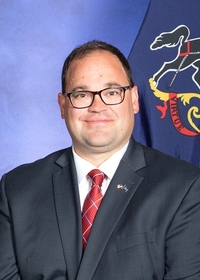
Rep. Michael Stender
Sponsored bills
Maddy summaryHB 1736 amends Pennsylvania's vehicle registration rules to update the process for obtaining special "wild resource conservation" license plates. These plates allow vehicle owners to contribute additional fees directly to state wildlife conservation programs. The bill modifies specific registration procedures for these plates within the state's vehicle registration system. It directly affects drivers who choose these plates and the conservation programs funded by the extra fees.
Maddy summaryThis resolution designates the week of September 21-27, 2025, as "Surgical Technologist Week" in Pennsylvania. It formally recognizes surgical technologists (also called "scrubs") who work alongside surgeons in operating rooms across Pennsylvania’s hospitals and surgical centers. The resolution highlights their vital role in patient care, their growing employment opportunities, and the existing National Surgical Technologists Week observance. As a symbolic gesture, it does not create new laws or funding but aims to honor these healthcare professionals’ contributions.
Maddy summaryHB 1726 amends the Child Labor Act to update definitions, specify permissible occupations for minors (including in performances), and clarify employer responsibilities. It repeals the existing work permit requirement for minor employees. The bill also includes specific provisions for newspaper delivery jobs and updates administrative procedures. This legislation directly affects minors working in covered occupations and the employers who hire them.
Maddy summaryHB 1703 would amend Pennsylvania's 1971 Tax Reform Code to change how personal income tax applies to businesses that pass income to owners, such as partnerships and S corporations. The bill introduces an option for these businesses to pay tax at the business level instead of having the tax pass through to individual owners. It also clarifies rules for taxing income from these businesses and handling taxes paid to other states. This change would directly affect business owners and Pennsylvania's tax collection process.
Maddy summaryHB 1695 amends Pennsylvania's 2019 law abolishing state authorities by changing the composition of the Pennsylvania Human Relations Commission and transferring related duties. It also addresses the Interstate Rail Passenger Advisory Council Compact and cancels an executive order related to this council. The bill focuses on structural adjustments to existing state bodies rather than creating new policies. (Procedural bill; summary adheres to 1-2 sentence limit.)
Maddy summaryHB 1685 amends Pennsylvania's Local Health Administration Law (1951) to clarify that county health departments may directly oversee the removal of asbestos or similar hazardous materials from properties. This exception allows health departments to bypass standard permitting processes for asbestos abatement, directly affecting property owners, contractors, and county health agencies handling such removals. The bill modifies existing duties of county health departments by adding this specific exception to their powers, streamlining cleanup for immediate health hazards. It does not create new programs or funding but adjusts procedural authority under current law.
Maddy summaryHB 1689 creates a "Streamlining Permits for Economic Expansion and Development Program" within Pennsylvania's Department of Environmental Protection. It allows businesses or developers seeking permits to pay for expedited reviews by qualified professionals (e.g., engineers, geologists) who meet specific experience and ethics requirements. The program mandates a 10-business-day priority review timeline for eligible permits, with the qualified professional conducting an initial review and the permitting entity completing a final review within established deadlines. This change directly affects applicants for permits under the PA EDGE tax credit program by providing a faster, structured process for permit approvals.
Maddy summaryHB 1666 increases Pennsylvania's minimum property damage liability coverage for auto insurance from $5,000 to $25,000 per accident. It updates definitions and requirements in vehicle insurance law, mandating that insurers offer higher coverage limits for bodily injury ($100,000/$300,000) and property damage, while requiring clear notice to policyholders about available benefits. This affects all drivers purchasing or renewing auto insurance policies in Pennsylvania, as insurers must now provide standardized disclosure of coverage options at application. The changes apply to policies issued or renewed 60 days after the bill's effective date.
Maddy summaryHB 825 amends Pennsylvania's public utilities law to allow utility companies to install "double utility poles" that carry both power lines and communication lines (like fiber optic cables) on the same pole structure. This change directly affects public utility providers regulated under Title 66 by altering their permitted infrastructure options. The key provision modifies the utilities' powers and duties to facilitate this dual-use pole configuration, potentially streamlining infrastructure deployment. Specific impacts on communities, costs, or regulatory details are not described in the provided context.