

Maddy summaryThis bill amends Pennsylvania's Vital Statistics Law to establish fee waivers for obtaining certified copies of birth and death records. It directly affects active duty military personnel, veterans, their spouses, dependents, funeral homes, and legal representatives of deceased service members. The key provision allows these specific groups to receive their first ten certified copies of a record for free each year, while also clarifying definitions for terms like "veteran" and outlining specific conditions for who qualifies for the waiver.
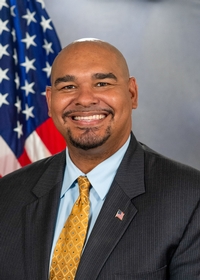
Rep. Justin Fleming
Sponsored bills
Maddy summaryThis bill amends Pennsylvania laws to improve substance use overdose awareness by requiring the Department of Drug and Alcohol Programs to distribute educational posters in multiple languages. The department is authorized to cover the costs of printing and distributing these materials, which must be placed in conspicuous locations where permitted. Additionally, the legislation establishes a new grant program designed to support long-term recovery from substance use. These changes directly affect state agencies responsible for drug and alcohol prevention and the communities they serve.
Maddy summaryThis bill, known as the Crematory Regulation Act, establishes new safety standards for crematories in Pennsylvania that began construction after April 17, 1989. It requires these facilities to use an interlock system that prevents loading remains until the secondary chamber reaches and maintains a temperature of 1600 degrees Fahrenheit. Additionally, the law mandates that operators monitor incinerator temperatures during use and prohibits the state from requiring higher temperatures in general permits. The Department of Environmental Protection is tasked with adopting specific regulations to oversee these monitoring requirements.
Maddy summaryThis bill prohibits insurance companies from discriminating against individuals based on their use of specific drugs when underwriting, issuing, or renewing certain life insurance policies. The key provision expands the scope of protection to include the refusal to renew a policy, ensuring that coverage cannot be denied solely due to drug use. It directly affects insurance carriers and policyholders by mandating that decisions be based on factors other than the presence of certain substances. The legislation aims to create a more uniform standard for drug-related assessments in life insurance without advocating for a specific outcome.
Maddy summaryHB 2370 amends Pennsylvania's Public School Code to update regulations for public schools and charter schools, with specific new rules on advertising and funding. The bill requires public schools to clearly state that any advertised costs for tuition or technology are paid by taxpayers and prohibits schools from using taxpayer money to sponsor public events. It also establishes reporting requirements for school advertising expenditures and expands definitions related to charter school management and enrollment. Additionally, the legislation modifies how student-weighted basic education funding is calculated and introduces new accountability grants for the state.
Maddy summaryThis bill designates the week of June 17 through 23, 2024, as "Pollinator Week" throughout Pennsylvania to raise awareness about the importance of bees and other pollinators for agriculture and ecosystems. It acknowledges the roles of various state organizations, such as the Pennsylvania State Beekeepers Association and the Department of Agriculture, in supporting beekeeping and habitat conservation. The resolution formally congratulates these groups for their efforts and urges the Governor to issue a proclamation recognizing the observance. Copies of the resolution will be sent to relevant state agencies and partner organizations to facilitate public recognition of the event.
Maddy summaryThis bill designates June 2024 as "Pennsylvania Municipal Retirement System Month" to honor the 50th anniversary of the system established in 1974. It directly affects Pennsylvania state lawmakers and the Pennsylvania Municipal Retirement System, which serves over 18,000 local government employees and manages more than $3.3 billion in assets. The resolution does not change laws or funding but serves as a commemorative measure to recognize the system's history and contributions to financial stability for retirees.
Maddy summaryPennsylvania House Bill 1684 updates state laws regarding child custody by establishing clearer definitions for terms like "equal parenting time" and "supervised physical custody." The bill introduces a rebuttable presumption that shared physical custody and equal parenting time are in a child's best interest during temporary custody orders, requiring courts to maximize time with each parent unless specific factors suggest otherwise. It also outlines new procedures for obtaining temporary custody orders based on affidavits and agreements, while expanding the list of factors judges must consider, including any criminal convictions of the parents. These changes aim to standardize how courts evaluate custody arrangements and ensure that parenting plans are explicitly detailed in legal orders.
Maddy summaryThis bill requires health insurance policies in Pennsylvania to cover custom-fabricated and custom-fitted devices, such as prosthetics and orthotics, when prescribed by a licensed healthcare provider. Coverage is granted if a doctor determines the device is medically necessary for daily living, physical activities, or improving limb function, while excluding costs resulting from patient negligence or misuse. Insurers may still require prior authorization and can limit coverage to services provided by contracted vendors or designated suppliers, and standard deductibles and copayments remain applicable. The law specifically applies to health insurance plans but excludes accident-only, dental, vision, Medicare supplement, and other limited-benefit policies.
Maddy summaryThis bill establishes a grant program to provide menstrual hygiene products to students in Pennsylvania public schools without charge. It directs the Department of Education to award funding to school districts that have at least 50% of their students eligible for free or reduced-cost lunch, allowing recipients to purchase items like tampons and pads or install dispensing machines. The program requires that these products be accessible to all students regardless of their gender identity and mandates that schools report how the funds are spent. A total of $100,000 is appropriated from the state's General Fund to support this initiative.