

Maddy summaryHR 20 is a House Resolution directing Pennsylvania's Joint State Government Commission to study truck parking shortages. It requires the Commission to analyze challenges, identify high-demand areas, examine solutions from other states, and develop recommendations to expand parking capacity within 12 months. The study will specifically address the shortage of approximately 4,400 truck parking spaces, which leaves about 1,000 trucks parked on highway shoulders nightly. This resolution affects truck drivers, transportation systems, and communities by focusing on safety, congestion, and infrastructure needs. It does not enact new law but will inform future policy decisions.
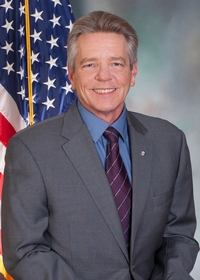
Rep. Russ Diamond
Sponsored bills
Maddy summaryHB 258 proposes a constitutional amendment requiring all Pennsylvania elections to be conducted by in-person ballot at polling places, including early voting as permitted by law, while preserving voting secrecy. It would amend the state constitution to replace current language allowing for "other voting methods" with a specific mandate for in-person voting. The amendment must be approved by both chambers of the Pennsylvania General Assembly and then ratified by voters in the next qualifying election. If adopted, it would fundamentally change Pennsylvania’s election method by standardizing in-person voting as the primary process.
Maddy summaryHB 125 proposes a constitutional amendment to change when the Pennsylvania General Assembly must convene, moving the regular session start date from the first Tuesday in January to December 1 each year. The amendment would require the legislature to meet annually on December 1, unless the Governor calls a special session under existing rules. The bill also outlines the approval process: after two legislative votes, the amendment must be advertised and then submitted to voters at the next applicable primary, general, or municipal election. If approved by voters, the change would take effect, altering the annual meeting schedule for the state legislature.
Maddy summaryThis bill requires in-person safety exams for snowmobile and all-terrain vehicle (ATV) operators under age sixteen in Pennsylvania. It mandates that each county must offer at least one physical location for these exams, approved by the state department. The change directly affects minors seeking to operate these vehicles, adding a safety certification requirement. The law takes effect 60 days after enactment.
Maddy summaryHB 128 adds an explicit exemption for emergency service personnel (such as firefighters and EMTs) from jury duty in Pennsylvania's judicial code. The bill amends Section 4503(a)(9) of Title 42 to allow these workers to request excusal from jury service. This change directly affects emergency service personnel who seek to avoid jury duty due to job responsibilities. The exemption requires personnel to formally request excusal but does not automatically exempt them. The bill takes effect 60 days after enactment.
Maddy summaryHB 126 amends Pennsylvania's Election Code to update the affidavit candidates must file with their nomination petitions for public office. It requires candidates to affirm their residence, eligibility, and that they are not running for multiple offices in the same election, while also confirming compliance with election laws and campaign finance rules. For party positions like delegates or committee members, the affidavit must state party membership and that the candidate isn't seeking the same office through multiple parties. This applies to all candidates for state, county, city, and local offices, except presidential candidates who only need to provide a mailing address in their petition.
Maddy summaryHB 119 permanently prohibits Pennsylvania from observing daylight saving time, requiring all timekeeping in the state to follow Eastern Standard Time year-round. The bill amends an 1887 law to remove the existing provision allowing daylight saving time (which previously shifted clocks forward between April and October) and declares Eastern Standard Time as the sole legal standard. This directly affects all residents, businesses, and government operations across Pennsylvania, eliminating the need for biannual clock changes. The policy change would take effect 60 days after the bill's passage.
Maddy summaryHB 127 amends Pennsylvania's Unfair Trade Practices and Consumer Protection Law to require businesses to accept cash payments for in-person retail transactions under $500. This directly affects Pennsylvania retailers (like stores and service providers) and consumers who pay with cash for qualifying purchases. The bill defines refusing such cash payments as an unfair or deceptive practice, unless the business has a visible written policy stating it won't accept cash above a specific denomination (e.g., $100 bills) and posts this policy before the transaction. Exceptions allow businesses to set high-denomination cash limits if properly disclosed, but they cannot refuse cash outright for transactions under $500.
Maddy summaryHB 120 requires parental or guardian consent for most minors to receive vaccines in Pennsylvania. Specifically, it mandates that individuals under 18 who haven't graduated high school, aren't pregnant, and aren't legally emancipated cannot consent to vaccines without a parent or guardian's permission. The bill also overrides any local laws (such as city or county rules) that might allow minors to consent to vaccines without parental approval, making those local rules invalid. The law takes effect 60 days after enactment.
Maddy summaryThis bill (HB 122) prevents Pennsylvania state and local government entities from enforcing any rules, fees, taxes, or mandates issued by the World Health Organization (WHO), United Nations (UN), or World Economic Forum (WEF). It directly affects all Pennsylvania agencies, municipalities, and government bodies by prohibiting them from implementing or enforcing any requirements from these international organizations. The law explicitly states these organizations "shall have no jurisdiction or power" within Pennsylvania, blocking enforcement of their policies by any state or local entity. The bill takes effect 60 days after enactment.