Issue · Labor & Employment

Labor & Employment (Labor Standards)

Every labor & employment bill, vote, and legislator stance in Pennsylvania, automatically classified by Maddy, our AI policy reader.

Total bills
67
2025-2026 Regular Session
Top supporter
Ben Sanchez
82% support rate
Top opponent
Thomas Kutz
18% support rate
Ranked legislators
10
5 support · 5 oppose
Key legislators

Who's moving labor standards in Pennsylvania

Legislators moving labor standards in Pennsylvania
Legislator Party Stance Support rate Votes
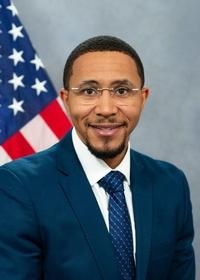
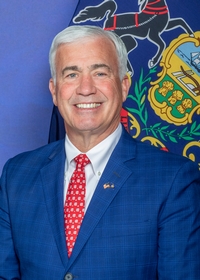
Ben Sanchez
Ben Sanchez House · District 153
D
Strong +
82% 28
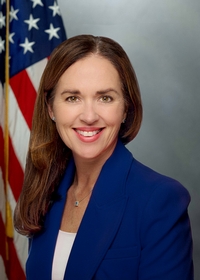
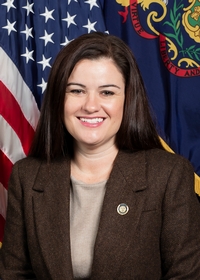
Bridget Malloy Kosierowski
Bridget Malloy Kosierowski House · District 114
D
Strong +
81% 27
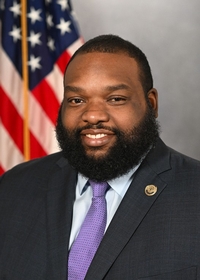
Jordan Harris
Jordan Harris House · District 186
D
Strong +
81% 27
Abigail Salisbury
Abigail Salisbury House · District 34
D
Strong +
81% 26
Aerion Abney
Aerion Abney House · District 19
D
Strong +
81% 26
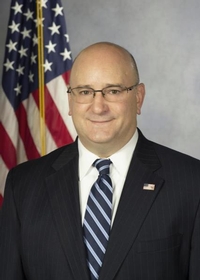
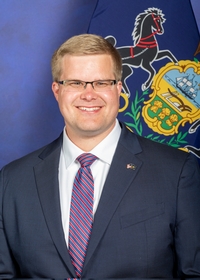
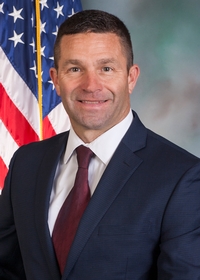
Thomas Kutz
Thomas Kutz House · District 87
R
Strong −
18% 28
Jim Struzzi
Jim Struzzi House · District 62
R
Strong −
19% 27
Charity Krupa
Charity Krupa House · District 51
R
Strong −
19% 26
Jamie Barton
Jamie Barton House · District 124
R
Strong −
19% 26
Ann Flood
Ann Flood House · District 138
R
Strong −
20% 25
Showing 51–60 of 67 bills

All labor & employment bills

in committee · Pennsylvania · Senate Apr 28, 2025

SB 19: An Act amending the act of January 17, 1968 (P.L.11, No.5), known as The Minimum Wage Act of 1968, further providing for definitions, for minimum wages and for exemptions; providing for gratuities; further providing for enforcement and rules and regulations, for penalties and for civil actions; repealing provisions relating to preemption; and providing for local option and for taxpayer savings and reinvestment.

SB 19 proposes amendments to The Minimum Wage Act of 1968, directly affecting employees and employers across the state. The bill seeks to increase the minimum wage to $15 per hour starting January 1, 2026, with subsequent annual adjustments tied to the cost of living. It also revises rules for tipped employees, requiring their cash wage to be at least 70% of the minimum wage and clarifying that all gratuities are the property of the employee. Employers would be prohibited from deducting credit card processing fees from employee tips and must pay them by the next regular payday.
in committee · Pennsylvania · Senate Jan 24, 2025

SB 179: An Act amending the act of August 15, 1961 (P.L.987, No.442), known as the Pennsylvania Prevailing Wage Act, further providing for remedies and penalties.

SB 179 amends Pennsylvania's Prevailing Wage Act to strengthen penalties for contractors who intentionally underpay workers on public projects. It establishes tiered debarment periods: 3 years for unpaid wages under $1 million, 5 years for $1-10 million, and 10 years for over $10 million. This directly affects contractors who violate prevailing wage laws, barring them from winning future public contracts during these periods. The bill also authorizes the Secretary of Labor to request the Attorney General to recover penalties for the state. These changes aim to enforce compliance with prevailing wage requirements on public construction projects.
Sub-Topics Labor Standards
in committee · Pennsylvania · House Feb 4, 2025

HB 470: An Act providing for meal breaks or rest periods for employees; and imposing penalties.

HB 470 requires employers with 15 or more employees in Pennsylvania to provide a paid 30-minute meal break or rest period after five consecutive hours of work. This applies to all covered employees, with exemptions for union contracts that already provide equivalent or better break rights and during workplace emergencies. Employers violating the law face penalties of $100-$500 per affected employee per missed break, with additional recovery of lost wages for workers. The bill takes effect 90 days after enactment.
in committee · Pennsylvania · House Sep 2, 2025

HB 1580: An Act providing for regulations for employers to protect employees from heat-related injury or heat-related illness caused by heat stress; imposing duties on the Department of Labor and Industry and the Secretary of Labor and Industry; establishing the Heat Protection Enforcement Fund; and imposing penalties.

HB 1580 requires employers to implement specific heat safety measures, including providing cooling breaks and access to water, to protect employees working in conditions causing heat stress. It directly affects workers in outdoor and high-heat environments, such as construction, agriculture, and manufacturing. The bill establishes a new Heat Protection Enforcement Fund to support Department of Labor and Industry oversight and imposes penalties for non-compliance. Key provisions mandate employer action plans, define heat illness prevention protocols, and assign enforcement duties to the Department of Labor and Industry.
passed · Pennsylvania · House Mar 25, 2025

HB 118: An Act amending the the act of October 24, 2012 (P.L.1209, No.151), known as the Child Labor Act, further providing for penalties.

HB 118 amends Pennsylvania's Child Labor Act to increase penalties for employers violating child labor laws. It raises the fine for first-time violations from $500 to $1,000 per violation and increases penalties for repeat offenses to $3,000 per violation or up to 10 days in jail. The bill directly affects employers who hire minors in prohibited work situations. These changes are concrete policy adjustments to enforcement, not new work restrictions. The amendment takes effect 30 days after enactment.
in committee · Pennsylvania · House Aug 19, 2025

HB 1810: An Act providing for workplace violence prevention and emergency preparedness standards for retail employers and employees; imposing duties on the Department of Labor and Industry; and imposing penalties.

HB 1810 requires retail employers to establish workplace violence prevention and emergency preparedness standards for their employees. It mandates the Department of Labor and Industry to develop and enforce these safety standards, including specific measures for handling threats or incidents. The bill directly affects retail businesses and their workers by creating new safety obligations. Violations could result in penalties imposed by the Department, though specific penalty amounts are not detailed in the provided context.
in committee · Pennsylvania · House Jun 16, 2025

HB 1617: An Act amending the act of July 14, 1961 (P.L.637, No.329), known as the Wage Payment and Collection Law, further providing for definitions; and providing for specific liability.

HB 1617 amends Pennsylvania's Wage Payment and Collection Law to clarify that general contractors are jointly and severally liable for unpaid wages owed by subcontractors on construction projects. This directly affects construction workers who may receive faster payment, as well as general contractors (who must cover subcontractors' wage violations) and subcontractors (who must reimburse contractors under specific conditions). Key provisions require general contractors to pay wages if subcontractors fail to do so, unless the subcontractor's contract already covers indemnification or the general contractor delayed payment. The bill applies to new construction contracts entered after its effective date, which is 60 days after passage.
Sub-Topics Labor Standards
passed · Pennsylvania · House Feb 13, 2026

HB 1923: An Act providing for regulation of the meat packing and food processing industry by creating facility health and safety committees in the workplace; establishing the industry workers' rights coordinator within the Department of Labor and Industry; and imposing penalties.

HB 1923 establishes new workplace safety requirements for meat packing and food processing facilities by mandating facility health and safety committees. It creates a dedicated workers' rights coordinator position within the Department of Labor and Industry to oversee compliance and address concerns. The bill also adds specific public health emergency protections for workers during outbreaks or crises, requiring employers to follow state health guidelines. These changes directly affect workers and employers in the meat and food processing industry across the state.
in committee · Pennsylvania · House Mar 13, 2025

HB 899: An Act providing for the right for employees to paid sick leave from employers and for civil penalties and remedies.

HB 899 requires Pennsylvania employers to provide workers with paid sick leave for their own health needs or to care for family members. Employees earn one hour of paid sick time for every 30 hours worked, with a minimum annual accrual of 40 hours. The law prohibits employers from retaliating against workers who use this leave and mandates clear posting of rights. It covers most private-sector employees (excluding federal workers) and applies to all employers with 15+ employees in Pennsylvania, effective upon enactment.
passed · Pennsylvania · House Apr 30, 2025

HB 308: An Act providing for workplace health and safety standards for public employees; providing for powers and duties of the Secretary of Labor and Industry; establishing the Pennsylvania Occupational Safety and Health Review Board; providing for workplace inspections; and imposing penalties.

HB 308 establishes new workplace health and safety standards specifically for public employees in Pennsylvania, including those working for the Commonwealth, counties, cities, schools, and public institutions. It creates the Pennsylvania Occupational Safety and Health Review Board, grants the Secretary of Labor new enforcement powers for workplace inspections, and requires public employers to meet safety standards comparable to those in the private sector under federal OSHA. The bill imposes penalties for violations, prohibits employer retaliation against employees reporting safety concerns, and mandates recordkeeping and reporting procedures. This legislation directly affects all public employees across Pennsylvania who previously lacked consistent state-level safety protections.
Showing 51 to 60 of 67 bills
Previous 1 5 6 7 Next