Issue · Labor & Employment

Labor & Employment (Labor Standards)

Every labor & employment bill, vote, and legislator stance in Pennsylvania, automatically classified by Maddy, our AI policy reader.

Total bills
67
2025-2026 Regular Session
Top supporter
Ben Sanchez
82% support rate
Top opponent
Thomas Kutz
18% support rate
Ranked legislators
10
5 support · 5 oppose
Key legislators

Who's moving labor standards in Pennsylvania

Legislators moving labor standards in Pennsylvania
Legislator Party Stance Support rate Votes
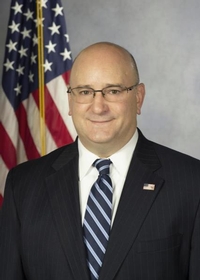
Ben Sanchez
Ben Sanchez House · District 153
D
Strong +
82% 28
Bridget Malloy Kosierowski
Bridget Malloy Kosierowski House · District 114
D
Strong +
81% 27
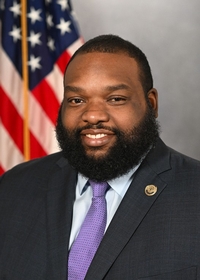
Jordan Harris
Jordan Harris House · District 186
D
Strong +
81% 27
Abigail Salisbury
Abigail Salisbury House · District 34
D
Strong +
81% 26
Aerion Abney
Aerion Abney House · District 19
D
Strong +
81% 26
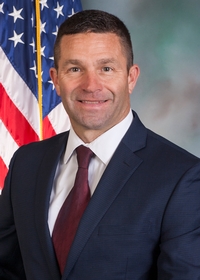
Thomas Kutz
Thomas Kutz House · District 87
R
Strong −
18% 28
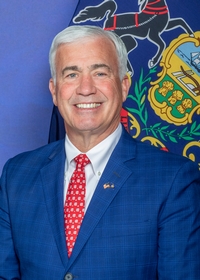
Jim Struzzi
Jim Struzzi House · District 62
R
Strong −
19% 27
Charity Krupa
Charity Krupa House · District 51
R
Strong −
19% 26
Jamie Barton
Jamie Barton House · District 124
R
Strong −
19% 26
Ann Flood
Ann Flood House · District 138
R
Strong −
20% 25
Showing 31–40 of 67 bills

All labor & employment bills

in committee · Pennsylvania · House Mar 26, 2025

HB 1056: An Act providing for criteria for independent contractors in the traveling sales industry and for the powers and duties of the Department of Labor and Industry; and imposing penalties.

HB 1056 requires employers in Pennsylvania’s traveling sales industry (groups selling goods/services door-to-door or in public places) to classify workers as employees - not independent contractors - unless specific conditions are met. It mandates employer registration with the Department of Labor and Industry, prohibits misclassification for benefits like workers’ compensation and unemployment insurance, and imposes fines for violations. The bill directly affects businesses employing traveling sales crews, with penalties including administrative fines and potential stop-work orders for noncompliance. Key provisions include mandatory registration, proof of employee status, and prohibitions against retaliation for workers reporting violations.
in committee · Pennsylvania · House Feb 24, 2025

HB 715: An Act amending the act of January 17, 1968 (P.L.11, No.5), known as The Minimum Wage Act of 1968, further providing for penalties.

HB 715 amends Pennsylvania's Minimum Wage Act of 1968 to increase penalties for employers who pay workers below the required minimum wage. It reclassifies violations based on the number of offenses and the total unpaid wages: under $150 for a first offense is a summary offense, while over $150 for a first or second offense becomes a misdemeanor, and third or subsequent offenses are felonies. The bill also establishes that each week an employee is underpaid and each affected employee counts as a separate offense, making penalties more severe for repeated violations. Employers cannot avoid liability by having employees agree to work for less than the minimum wage.
in committee · Pennsylvania · House Feb 24, 2025

HB 718: An Act amending the act of July 14, 1961 (P.L.637, No.329), known as the Wage Payment and Collection Law, further providing for definitions; providing for duty of department to report and for investigations; further providing for civil remedies and penalties, for liquidated damages and for criminal penalties; providing for employer liability; and establishing the Wage Enforcement Fund.

HB 718 amends Pennsylvania's Wage Payment and Collection Law to strengthen wage enforcement, directly affecting employers (including state/local governments, corporations, and contractors) and workers owed unpaid wages. It requires the Department of Labor to collect quarterly data on wage violations, fines, unpaid wages, and complaint resolution, then submit semiannual reports to lawmakers and post them publicly. The bill mandates quarterly investigations of "high-violation industries" (those with 25+ violations in two years) and updates penalties to $2,000 per violation or triple unpaid wages, whichever is greater, plus attorney fees. Employers failing to pay within 10 days of notice face these penalties, with each week of underpayment counted as a separate violation.
in committee · Pennsylvania · House Mar 4, 2025

HB 805: An Act amending the the act of October 24, 2012 (P.L.1209, No.151), known as the Child Labor Act, further providing for administration and for penalties.

HB 805 amends Pennsylvania's Child Labor Act to strengthen oversight of child labor enforcement. It requires the Department of Labor and Industry to submit an annual report to the General Assembly by April 1, detailing complaints, violations (including by industry and county), and specific data on cases involving unaccompanied alien minors released by federal authorities. The bill also clarifies that knowingly employing minors without proper care is a second-degree misdemeanor, punishable by fines up to $5,000 or up to two years in jail per violation. Additionally, it mandates cross-reporting to Immigration and Customs Enforcement for suspected immigration violations and to Human Services for child abuse concerns during investigations.
in committee · Pennsylvania · House Mar 17, 2025

HB 933: An Act amending the act of October 13, 2010 (P.L.506, No.72), known as the Construction Workplace Misclassification Act, further providing for improper classification of employees, for administrative penalties, for stop-work orders, for certain agreement prohibited and for use of penalty funds.

HB 933 increases penalties for construction employers who misclassify workers as independent contractors, raising fines to $2,500 for a first violation and $5,000 for subsequent violations. It expands accountability to include general contractors and other parties who knowingly contract with employers that misclassify workers, subjecting them to the same penalties. The bill also adds a three-year ban on public contracts for intentional violators and clarifies that stop-work orders can require construction to halt within 24 hours for intentional misclassification, applying to successor businesses.
in committee · Pennsylvania · House Apr 23, 2025

HB 1292: An Act amending Title 64 (Public Authorities and Quasi-Public Corporations) of the Pennsylvania Consolidated Statutes, in Pennsylvania Broadband Development Authority, further providing for grant applications and process.

HB 1292 requires broadband grant programs under Pennsylvania's Broadband Development Authority to comply with the state's prevailing wage law. It mandates that grant materials include prevailing wage requirements and directs the Department of Labor to create new wage classifications specifically for broadband infrastructure workers, such as teledata linemen, groundmen, and cable splicers. The department must set fair wages based on federal standards and include labor market surveys to determine rates. This affects broadband project funders and contractors receiving state grants, ensuring workers on these projects earn locally established fair wages.
in committee · Pennsylvania · Senate Apr 28, 2025

SB 679: An Act amending the act of March 10, 1949 (P.L.30, No.14), known as the Public School Code of 1949, in preliminary provisions, providing for minimum hourly wage or living wage for education support professionals; in duties and powers of boards of school directors, further providing for majority vote required and recording; and imposing duties on the Department of Labor and Industry.

Senate Bill 679 proposes to establish a minimum hourly wage or a living wage for education support professionals in Pennsylvania's public schools, such as aides, custodians, and cafeteria staff. Starting in the 2025-2026 school year, these employees would be paid at least $20 per hour or a living wage, whichever is greater, with overtime at one and a half times that rate. The Department of Labor and Industry would be responsible for determining and annually adjusting the living wage for each school entity. Public school entities would receive supplemental reimbursements from the Department of Education to help cover these increased wage costs, including payments for existing contracts that fall below the new minimum.
in committee · Pennsylvania · House Mar 24, 2025

HB 1023: An Act amending the act of January 17, 1968 (P.L.11, No.5), known as The Minimum Wage Act of 1968, providing for employment in executive capacity, for employment in administrative capacity and for employment in professional capacity.

This bill amends Pennsylvania's Minimum Wage Act to establish new salary thresholds for employees classified as exempt in executive, administrative, or professional roles, affecting employers and workers in these positions. It defines "executive capacity" as requiring management duties, directing two or more employees, and having hiring/firing authority, with a minimum weekly salary starting at $844 (effective October 2027), rising to $1,128 by 2029, and then adjusting every three years based on Pennsylvania's 10th percentile wage for exempt workers. Employers may meet up to 10% of the salary requirement through nondiscretionary bonuses, incentives, or commissions paid annually. The bill does not alter minimum wage rates for non-exempt workers but clarifies exemption criteria for specific job classifications.
in committee · Pennsylvania · Senate Feb 4, 2025

SB 237: An Act amending the act of December 17, 1959 (P.L.1913, No.694), known as the Equal Pay Law, further providing for definitions, for wage rates and for collection of unpaid wages.

SB 237 amends Pennsylvania's Equal Pay Law to clarify that "wages" include all compensation (salaries, benefits, and supplements) and define "comparable work" as requiring similar skill, effort, and working conditions - not just matching job titles. It strengthens protections by requiring employers to prove pay differences are based on job-related factors (like experience or performance), not sex, and prohibits lowering wages to comply with the law. The bill also allows the Attorney General to sue for unpaid wages with no filing fees and extends the statute of limitations to three years for willful violations. It directly affects all employers in Pennsylvania, including state and local government, and workers experiencing pay discrimination.
in committee · Pennsylvania · Senate Apr 28, 2025

SB 678: An Act amending the act of July 14, 1961 (P.L.637, No.329), known as the Wage Payment and Collection Law, further providing for definitions; and providing for specific liability.

SB 678 amends Pennsylvania's Wage Payment and Collection Law to establish specific liability for general contractors in the construction industry. It makes general contractors jointly responsible for violations of wage payment laws committed by subcontractors providing construction services. The bill also requires subcontractors to repay general contractors for these liabilities, including wages and fees, unless otherwise specified in their contract or if the general contractor caused the violation by not paying promptly. These changes apply to construction contracts entered into on or after the bill's effective date.
Sub-Topics Labor Standards
Showing 31 to 40 of 67 bills
Previous 1 3 4 5 7 Next