

Issue · Labor & Employment
Labor & Employment
Every labor & employment bill, vote, and legislator stance in Pennsylvania, automatically classified by Maddy, our AI policy reader.
Total bills
325
2025-2026 Regular Session
Top supporter
Frank Farry
93% support rate
Top opponent
Dawn Keefer
15% support rate
Ranked legislators
10
5 support · 5 oppose
Key legislators
Who's moving labor & employment in Pennsylvania
| Legislator | Party | Stance | Support rate | Votes |
|---|---|---|---|---|
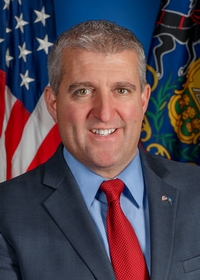
Frank Farry
Senate · District 6
|
R |
Strong +
|
93% | 45 |
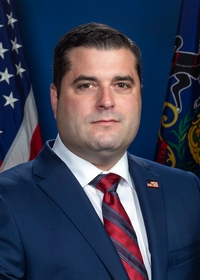
Devlin Robinson
Senate · District 37
|
R |
Strong +
|
90% | 52 |
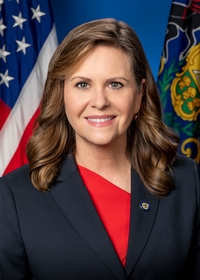
Camera Bartolotta
Senate · District 46
|
R |
Strong +
|
89% | 51 |
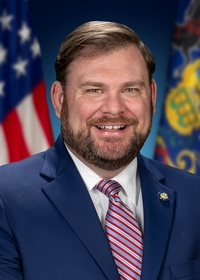
Joe Pittman
Senate · District 41
|
R |
Strong +
|
89% | 55 |
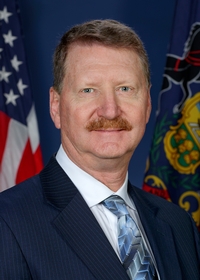
Elder Vogel
Senate · District 47
|
R |
Strong +
|
88% | 56 |
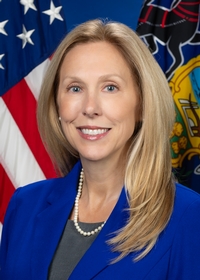
Dawn Keefer
Senate · District 31
|
R |
Strong −
|
15% | 46 |
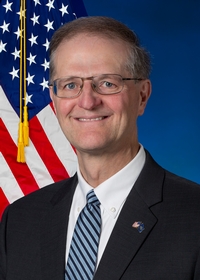
Scott Hutchinson
Senate · District 21
|
R |
Oppose
|
29% | 46 |
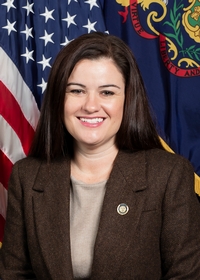
Charity Krupa
House · District 51
|
R |
Oppose
|
29% | 256 |
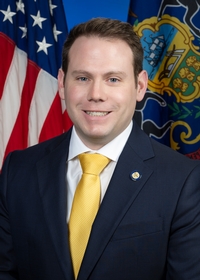
Jarrett Coleman
Senate · District 16
|
R |
Oppose
|
29% | 54 |

Stephanie Borowicz
House · District 76
|
R |
Oppose
|
31% | 214 |
Showing 291–300 of 325
bills
All labor & employment bills
HB 1617: An Act amending the act of July 14, 1961 (P.L.637, No.329), known as the Wage Payment and Collection Law, further providing for definitions; and providing for specific liability.
Sub-Topics
Labor Standards
HB 777: An Act amending the act of March 10, 1949 (P.L.30, No.14), known as the Public School Code of 1949, in preliminary provisions, providing for minimum hourly wage or living wage for education support professionals; in duties and powers of boards of school directors, further providing for majority vote required and recording; and imposing duties on the Department of Labor and Industry.
Topics
✓ EducationSupports EducationMandates $20+ minimum wage for education support staff, strengthening workforce compensation and retention in schools per bill summary.
✓ Labor & EmploymentSupports Labor & EmploymentMandates $20/hour minimum wage + COLA-adjusted living wage for school support staff, directly increasing compensation standards and protecting worker pay rights.
Sub-Topics
Minimum Wage
SR 157: A Resolution encouraging Federal, State and local policymakers, educational institutions, workplaces and other organizations to adopt and uphold diversity, equity and inclusion principles that promote inclusivity, protect freedom of expression, remove barriers and provide equitable opportunities for all individuals to pursue their American Dream.
Topics
✓ EducationSupports EducationEncourages DEI principles in educational institutions to promote inclusivity, remove barriers, and provide equitable opportunities for all students and educators.
✓ Labor & EmploymentSupports Labor & EmploymentBill promotes equitable workplace opportunities and removes barriers through DEI principles, aligning with labor & employment protections by fostering inclusive work environments.
HB 1826: An Act amending the act of October 27, 1955 (P.L.744, No.222), known as the Pennsylvania Human Relations Act, further providing for definitions.
HB 455: An Act providing for grants to organizations that host or offer education, workforce training or skills development to young adults; establishing the Building a Better Future Grant Program; imposing duties on the Department of Labor and Industry; and making an appropriation.
Topics
✓ Budget & TaxesSupports Budget & TaxesBill creates new state appropriation for youth workforce training grants, explicitly increasing public funding for essential services targeting vulnerable populations.
✓ EducationSupports EducationCreates grant program funding education/workforce training for underserved youth (16-24), expanding access and support for disconnected students.
✓ Labor & EmploymentSupports Labor & EmploymentEstablishes grants for youth workforce training and education, directly advancing employment opportunities for vulnerable populations through skills development programs.
HB 1923: An Act providing for regulation of the meat packing and food processing industry by creating facility health and safety committees in the workplace; establishing the industry workers' rights coordinator within the Department of Labor and Industry; and imposing penalties.
Topics
✓ HealthcareSupports HealthcareBill mandates public health emergency protections for workers during outbreaks, requiring employers to follow state health guidelines. This directly advances public health programs and worker safety in healthcare-adjacent settings.
✓ Labor & EmploymentSupports Labor & EmploymentMandates facility health/safety committees, creates workers' rights coordinator, and adds public health emergency protections for workers in meat/packing industries, directly strengthening workplace safety and rights.
HB 145: An Act amending the act of December 5, 1936 (2nd Sp.Sess., 1937 P.L.2897, No.1), known as the Unemployment Compensation Law, in compensation, further providing for ineligibility for compensation.
Topics
✓ Labor & EmploymentSupports Labor & EmploymentAdds protections preventing disqualification for leaving jobs due to disability (suitable work available), union activity, or military spouse relocation - strengthens unemployment eligibility under Labor & Employment policies.
✓ VeteransSupports VeteransBill protects unemployment benefits for workers leaving jobs to accompany military spouses relocating due to active duty orders, supporting military-connected families and veterans' support systems.
SB 1053: An Act amending the act of June 2, 1915 (P.L.736, No.338), known as the Workers' Compensation Act, in additional coverages, further providing for the definition of "employe."
Sub-Topics
Workers' Compensation