Issue · Labor & Employment

Labor & Employment (Minimum Wage)

Every labor & employment bill, vote, and legislator stance in Pennsylvania, automatically classified by Maddy, our AI policy reader.

Total bills
26
2025-2026 Regular Session
Top supporter
Ben Sanchez
78% support rate
Top opponent
Jim Struzzi
22% support rate
Ranked legislators
10
5 support · 5 oppose
Key legislators

Who's moving minimum wage in Pennsylvania

Legislators moving minimum wage in Pennsylvania
Legislator Party Stance Support rate Votes
Ben Sanchez
Ben Sanchez House · District 153
D
Support
78% 9
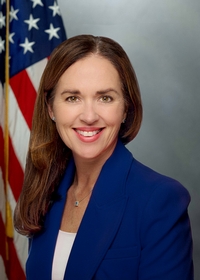
Bridget Malloy Kosierowski
Bridget Malloy Kosierowski House · District 114
D
Support
78% 9
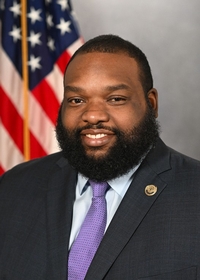
Jordan Harris
Jordan Harris House · District 186
D
Support
78% 9
Abigail Salisbury
Abigail Salisbury House · District 34
D
Support
75% 8
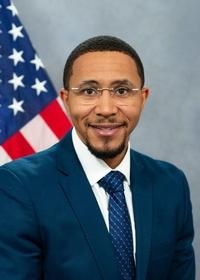
Aerion Abney
Aerion Abney House · District 19
D
Support
75% 8
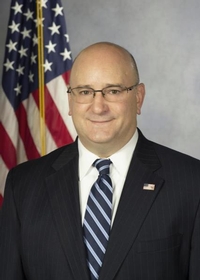
Jim Struzzi
Jim Struzzi House · District 62
R
Oppose
22% 9
Thomas Kutz
Thomas Kutz House · District 87
R
Oppose
22% 9
Ann Flood
Ann Flood House · District 138
R
Oppose
25% 8
Charity Krupa
Charity Krupa House · District 51
R
Oppose
25% 8
Eric Davanzo
Eric Davanzo House · District 58
R
Oppose
25% 8
Showing 21–26 of 26 bills

All labor & employment bills

in committee · Pennsylvania · House Jul 1, 2025

HB 1688: An Act amending the act of December 5, 1936 (2nd Sp.Sess., 1937 P.L.2897, No.1), known as the Unemployment Compensation Law, in compensation, further providing for rate and amount of compensation.

HB 1688 updates Pennsylvania's unemployment compensation law to adjust the calculation method for weekly benefit amounts. It sets a minimum weekly benefit of $68 (previously lower) and revises the wage-to-benefit table, linking higher average quarterly wages to increased weekly payments (e.g., wages of $1,688-$1,712 now yield $68 weekly). This directly affects unemployed Pennsylvania workers who qualify for state unemployment benefits, ensuring their payments align with current wage levels. The bill modifies specific sections of the 1936 law governing benefit rates without changing eligibility rules or employer contributions.
in committee · Pennsylvania · Senate Jun 18, 2025

SB 853: An Act amending the act of March 4, 1971 (P.L.6, No.2), known as the Tax Reform Code of 1971, providing for small business minimum wage increase tax credit.

SB 853 creates a tax credit for small Pennsylvania businesses (with 50 or fewer full-time equivalent employees) affected by minimum wage increases. It allows employers to claim a credit equal to 50% of the wage increase cost in the first year after a minimum wage hike, and 25% in the second year, against their state tax liability. Unused credit can be carried over for up to three years but cannot be refunded or carried back. Pass-through businesses may also transfer unused credits to owners in proportion to their share of business income.
Sub-Topics Business Taxes Tax Credits Minimum Wage Tags Small Business
in committee · Pennsylvania · House Mar 18, 2025

HB 777: An Act amending the act of March 10, 1949 (P.L.30, No.14), known as the Public School Code of 1949, in preliminary provisions, providing for minimum hourly wage or living wage for education support professionals; in duties and powers of boards of school directors, further providing for majority vote required and recording; and imposing duties on the Department of Labor and Industry.

HB 777 requires Pennsylvania public school districts to pay education support professionals (like aides and clerical staff) a minimum hourly wage of $20 or a living wage based on cost-of-living adjustments, starting in the 2025-2026 school year. School districts must make supplemental payments to cover wage gaps for existing contracts below this rate through 2029-2030, with the Department of Labor setting and annually adjusting the living wage using the Consumer Price Index. The Department of Education will reimburse districts for these supplemental payments, adding the reconciled amount to their annual funding allocation. This applies directly to over 500 school districts and their education support staff, ensuring wage standards align with inflation.
Sub-Topics Minimum Wage
in committee · Pennsylvania · Senate Mar 10, 2025

SB 413: An Act providing for statutory construction of Pennsylvania wage and hour laws.

SB 413, the "Statutory Construction of Wage and Hour Laws Act," aligns Pennsylvania's Minimum Wage Act of 1968 with federal Fair Labor Standards Act (FLSA) updates to reduce confusion for employers and workers. It requires Pennsylvania wage laws to be interpreted consistently with federal FLSA provisions, including automatic adjustments to the tipped employee minimum cash wage ($2.83/hour) if federal rates increase. The bill ensures Pennsylvania employers following federal standards won’t accidentally violate state law due to outdated state regulations. It does not change existing laws like the 2008 healthcare overtime ban or override federal standards.
in committee · Pennsylvania · Senate Nov 17, 2025

SB 1093: An Act amending the act of January 17, 1968 (P.L.11, No.5), known as The Minimum Wage Act of 1968, further providing for minimum wages, for exemptions and for duty of employer.

SB 1093 raises Pennsylvania's minimum wage to $9.00 per hour starting January 1, 2026; $10.00 per hour starting January 1, 2027; and $11.00 per hour starting January 1, 2028. It also adds two new exemptions: one for employees working in the personal staff of elected officials or as immediate advisers, and another for minor league baseball players covered by collective bargaining agreements. These changes directly affect most private-sector employers and workers in Pennsylvania, with new wage rates taking effect on the specified dates. The bill updates the 1968 Minimum Wage Act but does not alter existing overtime requirements.
passed · Pennsylvania · House Jun 18, 2025

HB 1549: An Act amending the act of January 17, 1968 (P.L.11, No.5), known as The Minimum Wage Act of 1968, further providing for definitions, for minimum wages and for exemptions.

HB 1549 updates Pennsylvania's minimum wage law by establishing new hourly rates for workers in different county classifications, effective starting in 2026. It sets a $15 per hour minimum wage for workers in first-class counties (like Philadelphia) beginning January 1, 2026, with annual cost-of-living adjustments tied to the CPI-U index for the PA/NJ/DE/MD region. For other counties (second, third, fourth, or sixth class based on 2020 census populations), it sets a $12 hourly rate starting in 2026, increasing to $15 by 2028, followed by the same CPI-based annual adjustments. This directly affects all hourly workers in Pennsylvania, with rates varying by county size and population.
Showing 21 to 26 of 26 bills