Issue · Labor & Employment

Labor & Employment (Labor Standards)

Every labor & employment bill, vote, and legislator stance in Pennsylvania, automatically classified by Maddy, our AI policy reader.

Total bills
67
2025-2026 Regular Session
Top supporter
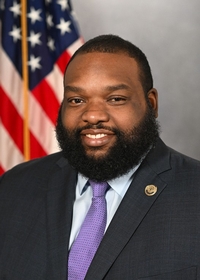
Ben Sanchez
82% support rate
Top opponent
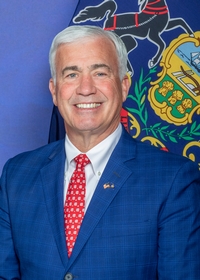
Thomas Kutz
18% support rate
Ranked legislators
10
5 support · 5 oppose
Key legislators

Who's moving labor standards in Pennsylvania

Legislators moving labor standards in Pennsylvania
Legislator Party Stance Support rate Votes
Ben Sanchez
Ben Sanchez House · District 153
D
Strong +
82% 28
Bridget Malloy Kosierowski
Bridget Malloy Kosierowski House · District 114
D
Strong +
81% 27
Jordan Harris
Jordan Harris House · District 186
D
Strong +
81% 27
Abigail Salisbury
Abigail Salisbury House · District 34
D
Strong +
81% 26
Aerion Abney
Aerion Abney House · District 19
D
Strong +
81% 26
Thomas Kutz
Thomas Kutz House · District 87
R
Strong −
18% 28
Jim Struzzi
Jim Struzzi House · District 62
R
Strong −
19% 27
Charity Krupa
Charity Krupa House · District 51
R
Strong −
19% 26
Jamie Barton
Jamie Barton House · District 124
R
Strong −
19% 26
Ann Flood
Ann Flood House · District 138
R
Strong −
20% 25
Showing 21–30 of 67 bills

All labor & employment bills

in committee · Pennsylvania · House Jan 27, 2025

HB 367: An Act providing for employee's right to request a flexible working arrangement; imposing duties on the Department of Labor and Industry; and imposing penalties.

HB 367, the Flexible Working Arrangements Act, gives employees in Pennsylvania with employers of 50+ staff the right to request flexible work options like adjusted hours, remote work, or job sharing once yearly. Employers must consider these requests in good faith, respond in writing if requested, and cannot retaliate - though they may deny requests only if they would harm business operations (e.g., cause excessive costs or disrupt service). The Department of Labor and Industry will enforce the law, issuing warnings for first violations and imposing up to $500 per violation for repeat offenses. The bill does not override existing employment rights or collective bargaining agreements.
in committee · Pennsylvania · House Jan 23, 2025

HB 288: An Act amending the act of March 4, 1971 (P.L.6, No.2), known as the Tax Reform Code of 1971, providing for construction tax credit requirements.

HB 288 amends Pennsylvania's Tax Reform Code to add new requirements for construction tax credits, affecting taxpayers making capital expenditures over $25,000 for facility construction or renovation. To qualify for these credits, taxpayers must verify good-faith local hiring efforts and confirm that all workers on the project are paid the prevailing wage rate under Pennsylvania's Prevailing Wage Act. The Department of Labor and Industry will enforce these rules, requiring pre-construction wage rate determinations and compliance with prevailing wage standards for all new construction jobs. Violations of these requirements could trigger a 10% refund of the awarded tax credit.
Sub-Topics Labor Standards
in committee · Pennsylvania · Senate Jan 22, 2025

SB 29: An Act prohibiting discrimination against individuals based on unemployment status; providing for powers and duties of the Department of Labor and Industry; and imposing a penalty.

SB 29, the Fair Chance for Employment Act, prohibits employers (including government entities and businesses with 5+ employees) from considering an applicant's unemployment status when making hiring or pay decisions. The law explicitly bans using current or recent joblessness as a factor, though it allows employers to require specific licenses, education, or experience as job qualifications. Violations can result in a $500 penalty assessed by the Department of Labor and Industry after an investigation. The bill takes effect 90 days after passage and directly affects job applicants and employers across Pennsylvania.
in committee · Pennsylvania · House Jan 30, 2025

HB 421: An Act protecting workers from training repayment agreement provisions; conferring powers and imposing duties on the Department of Labor and Industry; and imposing penalties.

HB 421 prohibits Pennsylvania employers from requiring employees to sign training repayment agreements as a condition of employment. The bill directly affects workers who might otherwise be forced to repay training costs if they leave a job, excluding government employers and agreements under collective bargaining. It makes such agreements void and unenforceable, with the Department of Labor and Industry empowered to investigate violations. Employers violating the law face civil penalties of up to $25,000 per violation, increasing to $25,000 per affected employee for repeat offenses. The law takes effect 60 days after enactment.
in committee · Pennsylvania · House Feb 12, 2025

HB 567: An Act providing for assumption of employment relationship, for terms of yearly employment contract, for prohibition on waivers or limitations of employment protections, for elements of wrongful discharge, for remedies for wrongful discharge and for probationary period of employment.

HB 567, the "Employment Clarification Act," proposes ending Pennsylvania's at-will employment doctrine by presuming all employment relationships are yearly contracts requiring "good cause" for termination. It directly affects employers with 15+ employees in Pennsylvania, prohibiting waivers of employment protections and defining "good cause" to include gross incompetence, felonies, or financial exigency. Key provisions establish that employees can only be fired for specific, job-related reasons (not arbitrary decisions), define "constructive discharge" (when intolerable conditions force resignation), and require employers to provide remedies for wrongful termination. The bill aims to shift bargaining power toward employees while giving employers clearer termination standards under state law.
in committee · Pennsylvania · Senate Feb 26, 2025

SB 341: An Act amending the act of July 14, 1961 (P.L.637, No.329), known as the Wage Payment and Collection Law, further providing for definitions; providing for duty of department to report; further providing for civil remedies and penalties, for liquidated damages and for criminal penalties; providing for employer liability; and establishing the Wage Enforcement Fund.

SB 341 strengthens Pennsylvania's Wage Payment and Collection Law by expanding the definition of "employer" to include the Commonwealth, local governments, and public authorities, ensuring all public and private employers are covered. It requires the Department of Labor to collect and report quarterly data on wage violations, unpaid wages, and investigations to lawmakers and the public, and mandates quarterly reviews of "high violation industries" (those with 25+ violations in two years). The bill increases penalties for wage theft to $2,000 per violation or triple unpaid wages, whichever is greater, and adds stronger protections against employer retaliation for workers who file complaints or cooperate with investigations. These changes directly affect all employers in Pennsylvania and workers owed unpaid wages.
Sub-Topics Labor Standards
in committee · Pennsylvania · Senate Feb 26, 2025

SB 321: An Act relating to transfers of operations, terminations of operations, mass layoffs and changes in control.

SB 321, the Mandatory Severance for Mass Layoffs Act, requires employers with 50+ employees to provide severance pay and advance notice when shutting down a facility, transferring operations, or laying off 50+ workers within 30 days. It mandates 90 days' notice (or federal requirements if longer) to employees, the state labor department, and local officials before such events. Severance pay equals one week of average pay per full year of employment, with an additional four weeks if notice is shorter than required. This applies to most full-time employees but excludes managers, temporary workers, and part-timers working under 20 hours weekly.
in committee · Pennsylvania · House Mar 11, 2025

HB 884: An Act establishing the Four-Day Workweek Pilot Program; providing for tax credits to qualifying employers; and imposing duties on the Department of Labor and Industry and the Department of Revenue.

HB 884 establishes Pennsylvania's Four-Day Workweek Pilot Program, allowing private and public employers to test a four-day workweek for at least 30 employees without pay or benefit cuts. Employers participating must apply to the Department of Labor and Industry, submit a transition plan, and allow the department to study impacts through surveys. Qualifying employers receive tax credits of either $250,000 per business or $5,000 per participating employee, capped at $15 million total annually. The program requires the Department of Labor and Revenue to coordinate administration, study outcomes, and encourage public-sector adoption, with the pilot set to expire after its initial implementation period.
in committee · Pennsylvania · House Feb 12, 2025

HB 560: An Act amending the act of December 17, 1959 (P.L.1913, No.694), known as the Equal Pay Law, providing for pay ranges.

HB 560 amends Pennsylvania's Equal Pay Law to require employers with 15 or more employees to disclose pay ranges for job postings and internal transfer or promotion opportunities. Specifically, employers must provide the pay range to job applicants when a position is advertised and to current employees considered for internal moves. The bill also mandates that employers give new hires and update annually in writing the pay range for the employee's job title and for substantially similar positions within the company. This amendment, which would take effect 60 days after enactment, aims to increase pay transparency under the existing Equal Pay Law.
in committee · Pennsylvania · Senate Mar 21, 2025

SB 487: An Act providing for notification of wage theft and for protection for employees who report wage theft; imposing duties on the Department of Labor and Industry; establishing the Wage Theft Notification and Protection Restricted Account; and imposing penalties and other relief.

SB 487, the Wage Theft Notification and Protection Act, requires employers in Pennsylvania to provide employees with a plain-language summary of wage theft examples, reporting procedures, and anti-retaliation protections. Employers must post this summary visibly at workplaces or make it electronically accessible within 90 days of hiring or the law's effective date. The bill prohibits retaliation against employees who report wage theft and imposes $500 civil penalties for failing to provide the required notice or comply with posting rules. Funds from these penalties will support enforcement through a newly created Wage Theft Notification and Protection Restricted Account. The law directly affects employers across all sectors and strengthens protections for workers reporting unpaid wages under existing state labor laws.
Sub-Topics Labor Standards
Showing 21 to 30 of 67 bills
Previous 1 2 3 4 7 Next