Issue · Labor & Employment

Labor & Employment (Collective Bargaining)

Every labor & employment bill, vote, and legislator stance in Pennsylvania, automatically classified by Maddy, our AI policy reader.

Total bills
39
2025-2026 Regular Session
Top supporter
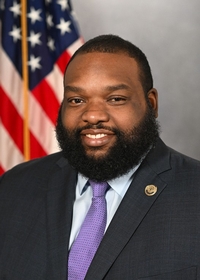
Ben Sanchez
100% support rate
Top opponent
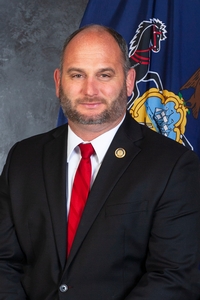
Jim Struzzi
0% support rate
Ranked legislators
10
5 support · 5 oppose
Key legislators

Who's moving collective bargaining in Pennsylvania

Legislators moving collective bargaining in Pennsylvania
Legislator Party Stance Support rate Votes
Ben Sanchez
Ben Sanchez House · District 153
D
Strong +
100% 8
Bridget Malloy Kosierowski
Bridget Malloy Kosierowski House · District 114
D
Strong +
100% 8
Jordan Harris
Jordan Harris House · District 186
D
Strong +
100% 8
Kyle Mullins
Kyle Mullins House · District 112
D
Strong +
100% 7
Pat Gallagher
Pat Gallagher House · District 173
D
Strong +
100% 7
Jim Struzzi
Jim Struzzi House · District 62
R
Strong −
0% 8
Ann Flood
Ann Flood House · District 138
R
Strong −
0% 6
Charity Krupa
Charity Krupa House · District 51
R
Strong −
0% 6
Eric Davanzo
Eric Davanzo House · District 58
R
Strong −
0% 6
Eric Nelson
Eric Nelson House · District 57
R
Strong −
0% 6
Showing 11–20 of 39 bills

All labor & employment bills

in committee · Pennsylvania · Senate Aug 25, 2025

SB 976: An Act amending Title 48 (Lodging and Housing) of the Pennsylvania Consolidated Statutes, in hotels, providing for protection of hotel employees; and imposing penalties.

SB 976 requires hotels with 100+ guest rooms in Pennsylvania to provide hotel employees working alone in guest rooms with a safety device (like a two-way radio) at no cost. The bill mandates that hotels must respond immediately when an employee activates the device due to threats of violence, sexual assault, harassment, or other emergencies, and reassign the employee to a safer area without losing pay. Hotels must also protect employees from retaliation for using the device, notify staff about guests who caused incidents, and provide safety education. Violations result in a $5,000 administrative penalty per offense after a warning. This applies to all hotel employers not covered by existing collective bargaining agreements.
in committee · Pennsylvania · House Sep 25, 2025

HB 1879: An Act amending the act of July 23, 1970 (P.L.563, No.195), known as the Public Employe Relations Act, in scope of bargaining, further providing for proper subjects of collective bargaining.

HB 1879 amends Pennsylvania's Public Employe Relations Act to clarify that public employers cannot negotiate over certain personal employee data as part of collective bargaining. The bill specifically prohibits bargaining about Social Security numbers, driver's license details, bank information, health data, home addresses, phone numbers, and personal email addresses - except where already covered by existing collective bargaining agreements. This directly affects public sector unions and employers across Pennsylvania, including state and local government workers and employees of nonprofit organizations covered under the Act. The change takes immediate effect upon passage, restricting the scope of topics subject to negotiation.
in committee · Pennsylvania · Senate Mar 6, 2025

SB 397: An Act amending the act of July 23, 1970 (P.L.563, No.195), known as the Public Employe Relations Act, in employee rights, providing for reporting of dues and for annual report; in Pennsylvania Labor Relations Board, providing for report availability; and, in collective bargaining agreement, providing for forwarding agreement to board.

SB 397 amends Pennsylvania's Public Employe Relations Act to require public employee unions to report how membership dues are spent. It mandates that unions file quarterly reports with the Pennsylvania Labor Relations Board detailing officer salaries, benefits, all expenses (including travel), and political spending related to elections. The bill also requires public employers to forward signed collective bargaining agreements to the board within 15 days and directs the board to make all reports and agreements publicly accessible online. These changes directly affect public-sector unions and the Labor Relations Board, increasing transparency around union finances and contract terms. The law takes effect January 1, 2026.
in committee · Pennsylvania · House Mar 19, 2025

HB 970: An Act providing for guidelines and procedures governing certain investigations and interrogations of correctional and forensic employees; authorizing certain civil suits by correctional officers; and providing for impact of collective bargaining agreements and for summary suspensions.

HB 970 establishes clear procedures for investigating Pennsylvania correctional and forensic employees (those responsible for inmate or patient care). It requires recorded interrogations, informs employees of their rights (including the right to counsel and protection from polygraph coercion), and prohibits adverse actions for exercising these rights. The bill ensures suspensions during investigations are with pay and benefits unless criminal charges trigger specific rules, and clarifies that union contracts cannot reduce these protections. It directly affects correctional officers and forensic staff employed by the state's Department of Corrections or Department of Human Services. The law takes effect 60 days after enactment.
in committee · Pennsylvania · House Jan 22, 2025

HB 241: An Act amending Title 53 (Municipalities Generally) of the Pennsylvania Consolidated Statutes, in preemptions, providing for employer mandates by municipalities.

This bill prohibits Pennsylvania municipalities from regulating or enforcing mandates related to employer policies or practices (such as wages, hiring, scheduling, or workplace rules) for private businesses. It directly affects private employers across the state by preventing local governments from imposing such requirements. Key exceptions include mandates for municipal employees, provisions under the Pennsylvania Human Relations Act, and collective bargaining agreements. Violating the prohibition after January 1, 2015, voids the ordinance, and affected businesses can seek court-ordered relief, damages, and reasonable expenses like attorney fees.
Sub-Topics Collective Bargaining Labor Standards Tags Local Government
in committee · Pennsylvania · House Jan 27, 2025

HB 367: An Act providing for employee's right to request a flexible working arrangement; imposing duties on the Department of Labor and Industry; and imposing penalties.

HB 367, the Flexible Working Arrangements Act, gives employees in Pennsylvania with employers of 50+ staff the right to request flexible work options like adjusted hours, remote work, or job sharing once yearly. Employers must consider these requests in good faith, respond in writing if requested, and cannot retaliate - though they may deny requests only if they would harm business operations (e.g., cause excessive costs or disrupt service). The Department of Labor and Industry will enforce the law, issuing warnings for first violations and imposing up to $500 per violation for repeat offenses. The bill does not override existing employment rights or collective bargaining agreements.
in committee · Pennsylvania · House Jan 22, 2025

HB 262: An Act amending the act of July 23, 1970 (P.L.563, No.195), known as the Public Employe Relations Act, in employee rights, providing for rights and privileges, for civil actions, for limitation of rights and remedies and for notice.

HB 262 amends Pennsylvania's Public Employe Relations Act to strengthen rights for public-sector union members. It guarantees equal voting rights in unions, prohibits sudden fee increases without member approval (requiring secret ballot votes), and ensures members can pursue legal action or communicate with legislators without union restrictions. The bill also mandates that unions provide all members with copies of collective bargaining agreements upon request. These changes apply to most public employees (excluding police/firefighters under separate law) and take effect 60 days after enactment.
in committee · Pennsylvania · House Feb 4, 2025

HB 466: An Act amending the act of July 23, 1970 (P.L.563, No.195), known as the Public Employe Relations Act, in definitions, further providing for definitions; and, in scope of bargaining, providing for political contributions.

HB 466 prohibits public employers from deducting wages to fund political contributions made by employee unions, except for existing collective bargaining agreements in place before the law took effect. It directly affects public employee unions and their ability to use payroll deductions for political activities. The bill adds a new provision banning such deductions in new or renewed contracts while allowing pre-existing agreements to continue. It exempts employees covered by the Policemen and Firemen Collective Bargaining Act, who are generally prohibited from striking.
in committee · Pennsylvania · House Feb 25, 2025

HB 724: An Act amending the act of March 4, 1971 (P.L.6, No.2), known as the Tax Reform Code of 1971, prohibiting tax deductions for anti-union activities.

HB 724 amends Pennsylvania's tax code to prohibit businesses from deducting expenses related to opposing workers' unionization efforts. It applies to all business entities operating in Pennsylvania - including corporations, limited liability companies, and partnerships - that spend money to influence employees against forming or joining labor organizations. The law specifically blocks tax deductions for costs like hiring anti-union consultants, running campaigns against unionization, or other activities aimed at discouraging union membership. This change increases taxable income for businesses engaging in such activities, directly affecting employers in the state who previously deducted these expenses.
in committee · Pennsylvania · House Feb 25, 2025

HB 723: An Act amending the act of March 4, 1971 (P.L.6, No.2), known as the Tax Reform Code of 1971, in tax credit and tax benefit administration, further providing for determination of eligibility and method of submission.

HB 723 amends Pennsylvania's Tax Reform Code to require state departments to check if applicants for tax credits or benefits have engaged in anti-union activities within the past decade. It directly affects businesses or individuals seeking tax benefits by blocking eligibility if they have: - Faced federal or state unfair labor practice complaints (e.g., under NLRB rules or Pennsylvania Labor Relations Act), - Settled union-related charges without formal complaints, or - Violated court orders or state labor board decisions. The bill adds specific screening steps to the tax credit application process, defining "anti-union activity" through clear legal references. It takes effect 60 days after enactment.
Showing 11 to 20 of 39 bills
Previous 1 2 3 4 Next