Issue · Healthcare

Healthcare

Every healthcare bill, vote, and legislator stance in Pennsylvania, automatically classified by Maddy, our AI policy reader.

Total bills
703
2025-2026 Regular Session
Top supporter
Joe Pittman
96% support rate
Top opponent
Eric Weaknecht
14% support rate
Ranked legislators
10
5 support · 5 oppose
Key legislators

Who's moving healthcare in Pennsylvania

Legislators moving healthcare in Pennsylvania
Legislator Party Stance Support rate Votes
Joe Pittman
Joe Pittman Senate · District 41
R
Strong +
96% 70
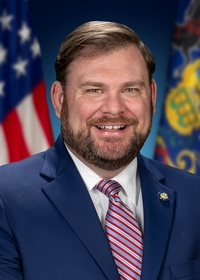
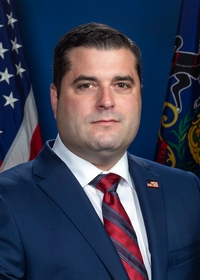
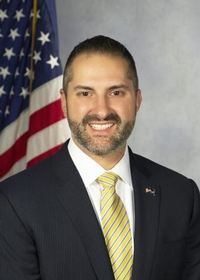
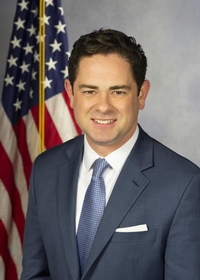
Bridget Malloy Kosierowski
Bridget Malloy Kosierowski House · District 114
D
Strong +
94% 270
Devlin Robinson
Devlin Robinson Senate · District 37
R
Strong +
93% 72
Steve Malagari
Steve Malagari House · District 53
D
Strong +
93% 228
Kyle Mullins
Kyle Mullins House · District 112
D
Strong +
92% 224
Eric Weaknecht
Eric Weaknecht House · District 5
R
Strong −
14% 185
Jamie Walsh
Jamie Walsh House · District 117
R
Strong −
14% 221
Scott Barger
Scott Barger House · District 80
R
Strong −
14% 212
Ryan Warner
Ryan Warner House · District 52
R
Strong −
14% 196
Joe Hamm
Joe Hamm House · District 84
R
Strong −
14% 204
Showing 561–570 of 703 bills

All healthcare bills

in committee · Pennsylvania · Senate Jun 18, 2025

SB 865: An Act amending Title 35 (Health and Safety) of the Pennsylvania Consolidated Statutes, in miscellaneous provisions, further providing for urine drug screening requirement and providing for medetomidine awareness education.

SB 865 requires emergency departments in Pennsylvania hospitals to test patient urine samples for fentanyl, medetomidine, and xylazine when conducting drug screenings for diagnosis, provided such testing is available. It mandates reporting positive results (meeting department-set thresholds) to the Department of Health, with deidentified data used for awareness efforts. The bill also creates a new requirement for the Department of Drug and Alcohol Programs to develop educational materials about the dangers of human medetomidine use - highlighting its veterinary origins, health effects, and how to discuss risks with others. These provisions directly affect emergency departments, patients receiving screenings, and residents through public health education. The law takes effect 60 days after enactment.
in committee · Pennsylvania · House Mar 6, 2025

HB 821: An Act amending the act of June 13, 1967 (P.L.31, No.21), known as the Human Services Code, in departmental powers and duties as to licensing, further providing for regulations.

HB 821 amends Pennsylvania's Human Services Code to require the Department of Human Services to add assisted living services and supplemental health care services to the Community HealthChoices Medicaid program within 60 days. This change directly affects licensed assisted living residences, allowing them to become certified as medical assistance providers for these services. The bill mandates that the department submit necessary documentation to the federal Centers for Medicare and Medicaid Services (CMS) to implement the expansion. The policy change will enable these facilities to participate in the state's Medicaid program for covered services. The bill takes effect 60 days after enactment.
in committee · Pennsylvania · House Mar 10, 2025

HB 840: An Act amending the act of March 10, 1949 (P.L.30, No.14), known as the Public School Code of 1949, in reimbursements by Commonwealth and between school districts, further providing for Targeted Industry Cluster Certificate Scholarship Program.

HB 840 establishes the Targeted Industry Cluster Certificate Scholarship Program to provide financial assistance for Pennsylvania residents pursuing specific short-term education programs. The program, administered by the Pennsylvania Higher Education Assistance Agency, offers grants for eligible students enrolled in approved courses that take two to four years to complete, including nursing, public health, and community health bachelor's degrees. The Department of Education and Department of Labor and Industry will collaborate to identify workforce-focused programs and approve eligible educational providers. This bill directly affects students seeking credentials in high-demand fields and requires the agency to set grant awards based on available funding.
in committee · Pennsylvania · House Apr 15, 2025

HB 1192: An Act amending Title 42 (Judiciary and Judicial Procedure) of the Pennsylvania Consolidated Statutes, in courts of common pleas, further providing for problem-solving courts; and, in minor courts, providing for the Mothers Treatment Court Pilot Program.

HB 1192 establishes a "Mothers Treatment Court Pilot Program" within Pennsylvania's minor courts, targeting mothers involved in the criminal justice system who require substance abuse or mental health treatment. The bill requires the Administrative Office of Pennsylvania Courts to create guidelines within six months for identifying eligible mothers, addressing their specific needs, and collecting data on program outcomes. Counties implementing the program must track participant referrals, charges, outcomes, and report annually - without personally identifiable information - to a public website. This pilot program, initially limited to minor courts, aims to provide court-supervised treatment alternatives rather than standard criminal penalties for qualifying mothers.
Sub-Topics Courts Substance Abuse
in committee · Pennsylvania · Senate Feb 20, 2025

SB 269: An Act amending the act of September 9, 1965 (P.L.497, No.251), known as the Newborn Child Testing Act, further providing for Newborn Child Screening and Follow-up Program.

SB 269 amends Pennsylvania's 1965 Newborn Child Testing Act to add Duchenne muscular dystrophy to the list of conditions screened for in newborns. The bill requires healthcare providers to administer screening tests for this condition as part of the existing newborn screening program. This directly affects newborns in Pennsylvania and the healthcare facilities that conduct these screenings, aiming to identify the condition early to prevent disability or death. The change takes effect 60 days after enactment.
in committee · Pennsylvania · House Mar 18, 2025

HB 949: An Act amending the act of May 17, 1921 (P.L.682, No.284), known as The Insurance Company Law of 1921, in casualty insurance, further providing for speech therapy for stuttering.

HB 949 requires health insurance policies in Pennsylvania to cover habilitative and rehabilitative speech therapy for childhood stuttering and apraxia. This applies to all health insurance policies issued, renewed, or filed with the state within 180 days of the law's effective date. The bill defines "childhood stuttering" (ages 2-6) and "apraxia" (a neurological speech disorder), specifying coverage must follow standard policy terms like medical necessity and cost-sharing. It explicitly excludes school-based therapy covered solely through an individualized education program (IEP). The law takes effect 60 days after enactment.
Sub-Topics Insurance
in committee · Pennsylvania · Senate Jul 8, 2025

SB 921: An Act amending the act of July 19, 1979 (P.L.130, No.48), known as the Health Care Facilities Act, in licensing of health care facilities, providing for surgical smoke evacuation systems.

SB 921 requires hospitals and ambulatory surgical facilities in Pennsylvania to adopt policies using smoke evacuation systems by January 1, 2027, to prevent exposure to surgical smoke generated during procedures. The bill defines "surgical smoke" as the plume from energy-based surgical tools, including harmful bio-aerosols and contaminants. The Department of Health will enforce this during facility inspections and when addressing complaints about violations. This policy directly affects healthcare facilities by mandating specific safety equipment to protect staff and patients from respiratory and eye exposure during surgeries.
in committee · Pennsylvania · Senate Sep 19, 2025

SB 1016: An Act amending the act of June 13, 2008 (P.L.182, No.27), known as the Clean Indoor Air Act, further providing for title of act, for definitions, for prohibition, for signage, for enforcement, for preemption of local ordinances and for repeal; and making editorial changes.

This bill amends Pennsylvania's Clean Indoor Air Act (2008) to update definitions, expand smoking prohibitions, clarify signage requirements, strengthen enforcement mechanisms, and clarify that state law preempts stricter local smoking ordinances. It directly affects businesses operating in public spaces (like restaurants, bars, and workplaces) and local governments that previously enacted more restrictive smoking bans. The key change is reinforcing state-level rules over local ones, while making editorial updates to the existing law's structure. This focuses on maintaining consistent indoor air quality standards across the state.
in committee · Pennsylvania · House Jan 23, 2025

HB 298: An Act amending the act of June 13, 1967 (P.L.31, No.21), known as the Human Services Code, in public assistance, providing for waivers to be requested for medical assistance.

HB 298 (Pennsylvania, 2025) requests federal approval for a waiver to change how medical assistance eligibility is managed for certain adults. It would allow Pennsylvania to deny eligibility for up to six months if nondisabled, nonpregnant adults aged 19-64 fail to report changes affecting their benefits, require biannual eligibility reviews (instead of annual), and eliminate automatic renewal requirements. The bill directly affects adults in this age group who don’t report income or other changes impacting their medical assistance. If approved, the state must report the waiver to state officials and publish it in the Pennsylvania Bulletin. This focuses on administrative process changes, not eligibility criteria.
Sub-Topics Medicaid
in committee · Pennsylvania · House Feb 24, 2025

HB 720: An Act amending the act of July 19, 1979 (P.L.130, No.48), known as the Health Care Facilities Act, in licensing of health care facilities, providing for do-not-resuscitate orders for minors.

HB 720, or "Simon's Law," amends Pennsylvania's Health Care Facilities Act to require written parental consent for do-not-resuscitate (DNR) orders for minors. It prohibits healthcare facilities or providers from implementing DNR orders or restricting life-sustaining measures without written permission from at least one parent or legal guardian. The bill mandates detailed documentation of consent (including names, relationships, and dates) and allows parents to revoke consent in writing, which overrides prior agreements. It also requires facilities to make good-faith efforts to contact parents within 48 hours and prohibits interfering with parents seeking second opinions or transferring care to another facility. This directly affects hospitals, clinics, and healthcare providers treating minors in Pennsylvania.
Showing 561 to 570 of 703 bills
Previous 1 56 57 58 71 Next