

Issue · Healthcare
Healthcare
Every healthcare bill, vote, and legislator stance in Pennsylvania, automatically classified by Maddy, our AI policy reader.
Total bills
672
2025-2026 Regular Session
Top supporter
Joe Pittman
96% support rate
Top opponent
Eric Weaknecht
14% support rate
Ranked legislators
10
5 support · 5 oppose
Key legislators
Who's moving healthcare in Pennsylvania
| Legislator | Party | Stance | Support rate | Decisive votes |
|---|---|---|---|---|
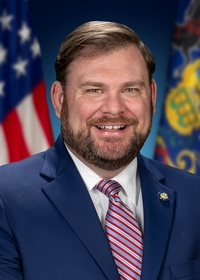
Joe Pittman
Senate · District 41
|
R |
Strong +
|
96% | 24 |
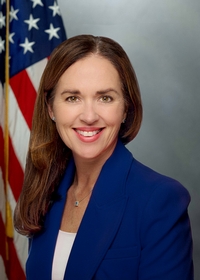
Bridget Malloy Kosierowski
House · District 114
|
D |
Strong +
|
94% | 113 |

Devlin Robinson
Senate · District 37
|
R |
Strong +
|
93% | 29 |
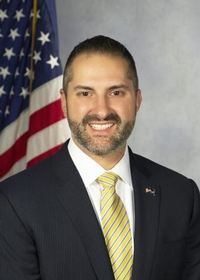
Steve Malagari
House · District 53
|
D |
Strong +
|
93% | 95 |
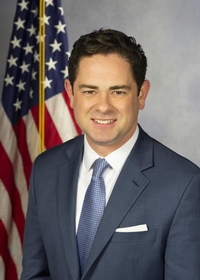
Kyle Mullins
House · District 112
|
D |
Strong +
|
92% | 91 |

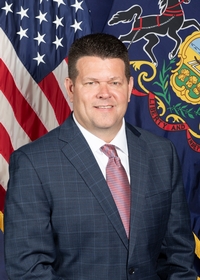
Eric Weaknecht
House · District 5
|
R |
Strong −
|
14% | 66 |
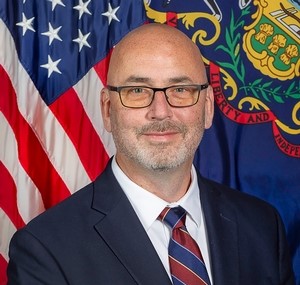
Jamie Walsh
House · District 117
|
R |
Strong −
|
14% | 80 |
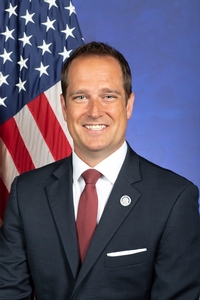
Scott Barger
House · District 80
|
R |
Strong −
|
14% | 72 |
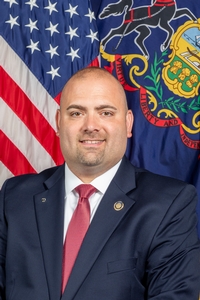
Ryan Warner
House · District 52
|
R |
Strong −
|
14% | 77 |
Joe Hamm
House · District 84
|
R |
Strong −
|
14% | 76 |
Showing 421–430 of 672
bills
All healthcare bills
HB 1923: An Act providing for regulation of the meat packing and food processing industry by creating facility health and safety committees in the workplace; establishing the industry workers' rights coordinator within the Department of Labor and Industry; and imposing penalties.
Topics
✓ HealthcareSupports HealthcareBill mandates public health emergency protections for workers during outbreaks, requiring employers to follow state health guidelines. This directly advances public health programs and worker safety in healthcare-adjacent settings.
✓ Labor & EmploymentSupports Labor & EmploymentMandates facility health/safety committees, creates workers' rights coordinator, and adds public health emergency protections for workers in meat/packing industries, directly strengthening workplace safety and rights.
HB 563: An Act amending the act of July 9, 1987 (P.L.220, No.39), known as the Social Workers, Marriage and Family Therapists and Professional Counselors Act, providing for licensing and regulating the practice of music therapy; and making editorial changes.
Sub-Topics
Mental Health
HR 105: A Resolution directing the Joint State Government Commission to conduct a study on the availability, type and demand for supportive housing.
Topics
✓ HealthcareSupports HealthcareStudies supportive housing for populations with chronic health conditions, aiming to improve healthcare access through housing solutions for vulnerable groups.
✓ HousingSupports HousingBill directs study on supportive housing for vulnerable populations (homelessness, chronic health, low income), aiming to inform policy recommendations that would advance affordable housing initiatives.
Sub-Topics
Homelessness
HB 672: An Act amending the act of May 17, 1921 (P.L.682, No.284), known as The Insurance Company Law of 1921, in casualty insurance, providing for coverage of allergenic protein dietary supplements.
Sub-Topics
Insurance
SB 999: An Act amending the act of March 10, 1949 (P.L.30, No.14), known as the Public School Code of 1949, in school health services, further providing for seizure recognition and related first aid training.
Topics
✓ EducationSupports EducationBill mandates seizure recognition and first aid training for school staff, directly enhancing student safety within school health services under the educational environment.
✓ HealthcareSupports HealthcareMandates seizure recognition and first aid training for school staff to improve emergency health response, directly enhancing school-based health services.
✓ Labor & EmploymentSupports Labor & EmploymentMandates seizure recognition and first aid training for school staff, improving workplace safety for employees as required under school health services.
HB 282: An Act amending the act of June 13, 1967 (P.L.31, No.21), known as the Human Services Code, in public assistance, further providing for persons eligible for medical assistance.
Sub-Topics
Medicaid
SB 787: An Act amending Title 61 (Prisons and Parole) of the Pennsylvania Consolidated Statutes, providing for solitary confinement.
Topics
✓ Criminal JusticeSupports Criminal JusticeProhibits solitary confinement for vulnerable populations and limits duration, advancing criminal justice reform by protecting civil rights and reducing harmful practices.
✓ HealthcareSupports HealthcareRequires medical evaluations for vulnerable populations (including mental health patients) before solitary confinement, protecting mental health rights in prison settings.
SB 930: An Act amending the act of March 10, 1949 (P.L.30, No.14), known as the Public School Code of 1949, in student supports, further providing for definitions; in school safety and security, further providing for definitions, for School Safety and Security Committee, for school safety and security assessment providers, for School Safety and Security Grant Program, for school safety and security coordinator, for school safety and security training and for reporting and memorandum of understanding; in school security, further providing for training, for school resource officers, for school security guards and for duties of commission; in Safe2Say Program, further providing for intent, for definitions, for Safe2Say Program and for annual report; in threat assessment, further providing for definitions, for threat assessment teams and for threat assessment guidelines, training and information materials; and making editorial changes.
Topics
✓ Budget & TaxesSupports Budget & TaxesCreates School Safety Grant Program funding mental health and cyber security services, allocating state funds for public safety programs.
✓ EducationSupports EducationCreates grant program for mental health/cybersecurity services and mandates safety training, strengthening school safety infrastructure under education framework.
✓ HealthcareSupports HealthcareCreates grant program funding mental health services and mental health awareness training in schools, directly advancing healthcare access through school-based mental health initiatives.
✓ TechnologySupports TechnologyMandates cyber safety training and funds cybersecurity measures (e.g., preventing data breaches) to protect student data within school systems.