Issue · Healthcare

Healthcare

Every healthcare bill, vote, and legislator stance in Pennsylvania, automatically classified by Maddy, our AI policy reader.

Total bills
672
2025-2026 Regular Session
Top supporter
Joe Pittman
96% support rate
Top opponent
Eric Weaknecht
14% support rate
Ranked legislators
10
5 support · 5 oppose
Key legislators

Who's moving healthcare in Pennsylvania

Legislators moving healthcare in Pennsylvania
Legislator Party Stance Support rate Decisive votes
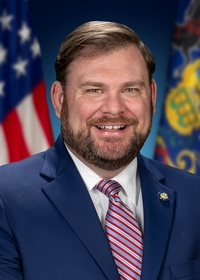
Joe Pittman
Joe Pittman Senate · District 41
R
Strong +
96% 24
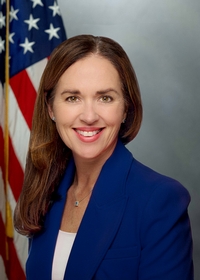
Bridget Malloy Kosierowski
Bridget Malloy Kosierowski House · District 114
D
Strong +
94% 113
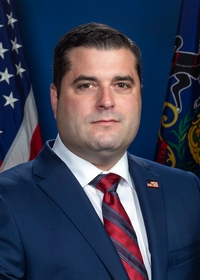
Devlin Robinson
Devlin Robinson Senate · District 37
R
Strong +
93% 29
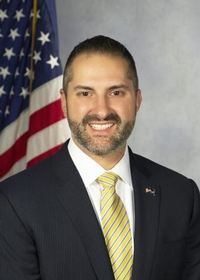
Steve Malagari
Steve Malagari House · District 53
D
Strong +
93% 95
Kyle Mullins
Kyle Mullins House · District 112
D
Strong +
92% 91
Eric Weaknecht
Eric Weaknecht House · District 5
R
Strong −
14% 66
Jamie Walsh
Jamie Walsh House · District 117
R
Strong −
14% 80
Scott Barger
Scott Barger House · District 80
R
Strong −
14% 72
Ryan Warner
Ryan Warner House · District 52
R
Strong −
14% 77
Joe Hamm
Joe Hamm House · District 84
R
Strong −
14% 76
Showing 361–370 of 672 bills

All healthcare bills

in committee · Pennsylvania · Senate May 12, 2025

SB 657: An Act amending the act of June 13, 1967 (P.L.31, No.21), known as the Human Services Code, in departmental powers and duties as to licensing, further providing for regulations.

SB 657 amends Pennsylvania's Human Services Code to update regulations concerning home- and community-based services. It requires the Department of Human Services to develop regulations that maximize the types of settings available and prioritize individual choice for people receiving residential, day programming, or vocational services through waivers. The bill specifies that these regulations cannot impose requirements beyond federal law or exclude settings based on factors like location or size, unless federal law mandates it. The department must amend existing inconsistent rules and regulations within 180 days to comply with these new directives.
in committee · Pennsylvania · Senate Jun 24, 2025

SB 888: An Act providing for the use of certain credentialing applications and for credentialing requirements for health insurers; imposing penalties; and conferring powers and imposing duties on the Insurance Department.

This bill, the Health Care Practitioner Credentialing Act, requires Pennsylvania health insurers to accept the CAQH credentialing application or a nationally recognized alternative for health care practitioners seeking to join provider networks. It sets clear timelines: insurers must notify practitioners within 10 business days if an application is incomplete and issue a credentialing decision within 45 business days for complete applications. Insurers failing to comply may face administrative penalties, though the bill does not guarantee practitioners a spot in any insurer's network. The law applies broadly to most health insurers (including Medicaid managed care organizations) but excludes certain coverage types like accident-only or vision insurance.
in committee · Pennsylvania · House Dec 15, 2025

HB 1676: An Act establishing the Nursing Shortage Assistance Program; and imposing duties on the Department of Labor and Industry.

HB 1676 establishes Pennsylvania's Nursing Shortage Assistance Program, which provides state grants to "qualified nursing servicers" to help nursing students repay loans after graduation. The program requires partner hospitals to match state funds 1:1 for loan repayment and commit to hiring graduates, with grants only covering tuition expenses (not administrative costs). Nursing students working at participating hospitals may receive up to $10,000 annually or $30,000 total in loan repayment assistance. The Department of Labor and Industry administers the program, sets application rules, and reports annually on its effectiveness to the legislature.
in committee · Pennsylvania · House Oct 17, 2025

HB 1965: An Act amending Title 35 (Health and Safety) of the Pennsylvania Consolidated Statutes, providing for certification of community paramedicine providers, for community paramedicine service coverage by casualty insurance carriers and for medical assistance reimbursement.

HB 1965 establishes a certification process for community paramedicine providers in Pennsylvania, requiring them to meet state standards to deliver certain medical services. It mandates that casualty insurance carriers cover community paramedicine services in their policies and requires state medical assistance programs to reimburse providers for these services. The bill directly affects community paramedicine providers (who must certify), insurance companies (who must provide coverage), and state health programs (which must pay for covered services). These changes aim to formalize and expand access to community-based emergency medical care through standardized provider qualifications and insurance coverage.
Sub-Topics Insurance
in committee · Pennsylvania · House Apr 22, 2025

HB 1231: An Act amending the act of July 9, 1987 (P.L.220, No.39), known as the Social Workers, Marriage and Family Therapists and Professional Counselors Act, further providing for State Board of Social Workers, Marriage and Family Therapists and Professional Counselors.

HB 1231 amends Pennsylvania's 1987 Social Workers, Marriage and Family Therapists and Professional Counselors Act to revise the composition of the State Board of Social Workers, Marriage and Family Therapists and Professional Counselors. The bill specifies that the 13-member board must include exactly five licensed social workers (with at least one being a clinical social worker), two licensed marriage and family therapists, two licensed professional counselors, one member who rotates between marriage/family therapy and counseling roles, two public members, and the Commissioner of Professional and Occupational Affairs. This change directly affects the licensing oversight board and the professionals regulated under this law, including social workers, marriage therapists, and counselors seeking or maintaining licensure in Pennsylvania.
Sub-Topics Medical Licensing
passed · Pennsylvania · Senate Oct 8, 2025

SB 955: An Act amending Title 75 (Vehicles) of the Pennsylvania Consolidated Statutes, in registration of vehicles, providing for mental health registration plate; in fees, further providing for payments to special funds; and establishing the Mental Health Restricted Account.

SB 955 creates a new mental health registration plate for Pennsylvania vehicles, featuring the Liberty Bell with a teal and purple ribbon and the phrase "Mental Health Matters." Vehicle owners (motorcycles, passenger cars, trucks under 14,000 pounds, or motor homes) can apply for this plate by paying a $42 fee, with $15 of that fee directed to a new Mental Health Restricted Account. This account, established under the bill, is specifically funded to support the 988 Suicide and Crisis Lifeline or its successor through the Department of Human Services. The bill directly affects vehicle owners seeking to display the plate and ensures dedicated funding for mental health crisis services.
Sub-Topics Mental Health
in committee · Pennsylvania · Senate Nov 5, 2025

SB 1083: An Act amending Title 58 (Oil and Gas) of the Pennsylvania Consolidated Statutes, in development, further providing for well location restrictions.

SB 1083 increases the required distance between oil and gas wells and certain structures in Pennsylvania. It raises the minimum distance for unconventional gas wells from 500 feet to 2,500 feet from buildings and from 1,000 feet to 2,500 feet from water wells and water supply points. The bill also prohibits drilling within 5,000 feet of any school or hospital. Well operators seeking to drill closer must apply for a variance with a detailed safety plan and additional measures, and the law takes effect 60 days after enactment.
Sub-Topics Hospitals
in committee · Pennsylvania · Senate Jan 29, 2025

SB 196: An Act amending the act of July 15, 2004 (P.L.731, No.85), known as the Elderly Immunization Act, further providing for definitions; and making editorial changes.

SB 196 amends Pennsylvania's Elderly Immunization Act to update eligibility criteria for free flu and pneumonia vaccines. It changes the definition of "eligible person" to include individuals aged 50 or older for influenza vaccination (previously 65+) and 65 or older for pneumococcal vaccination. The bill clarifies who qualifies for existing state-funded immunization programs without creating new requirements or funding. It directly affects elderly and high-risk Pennsylvania residents seeking these preventative vaccines through the state's current program. The changes are primarily editorial and definitional, with no new program provisions.
Sub-Topics Public Health
passed · Pennsylvania · House Jun 18, 2026

HB 836: An Act protecting an individual's choice to use assisted reproductive technology.

HB 836 prohibits Pennsylvania from interfering with the use of medically appropriate assisted reproductive technology (ART), such as in vitro fertilization (IVF), ensuring individuals can access these services without state restrictions. The bill defines ART to include specific fertility procedures and requires that any new state laws must comply with this protection unless explicitly exempted by the legislature. It takes effect immediately, providing direct safeguards for individuals seeking ART services and healthcare providers offering them.
passed · Pennsylvania · House Jun 25, 2026

HB 1117: An Act amending the act of April 9, 1929 (P.L.177, No.175), known as The Administrative Code of 1929, in powers and duties of the Department of Drug and Alcohol Programs, further providing for powers and duties.

HB 1117 amends Pennsylvania's 1929 Administrative Code to redefine the Department of Drug and Alcohol Programs' responsibilities for addressing substance use disorders. The department must now develop a comprehensive State plan coordinating prevention, treatment, research, and education across all state agencies and local communities - including health, law enforcement, education, and workforce sectors - to avoid duplication. The plan requires annual review and updates, and mandates the department to provide assistance to local governments while collaborating with medical professionals on drug use guidelines. This change formalizes existing coordination efforts under a unified framework, directly affecting state agencies and local entities managing substance use disorder services.
Sub-Topics Substance Abuse
Showing 361 to 370 of 672 bills
Previous 1 … 36 37 38 … 68 Next