

Issue · Healthcare
Healthcare
Every healthcare bill, vote, and legislator stance in Pennsylvania, automatically classified by Maddy, our AI policy reader.
Total bills
703
2025-2026 Regular Session
Top supporter
Joe Pittman
96% support rate
Top opponent
Eric Weaknecht
14% support rate
Ranked legislators
10
5 support · 5 oppose
Key legislators
Who's moving healthcare in Pennsylvania
| Legislator | Party | Stance | Support rate | Decisive votes |
|---|---|---|---|---|
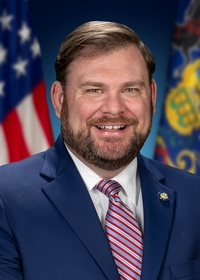
Joe Pittman
Senate · District 41
|
R |
Strong +
|
96% | 24 |
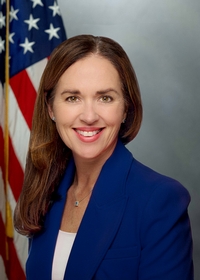
Bridget Malloy Kosierowski
House · District 114
|
D |
Strong +
|
94% | 113 |

Devlin Robinson
Senate · District 37
|
R |
Strong +
|
93% | 29 |
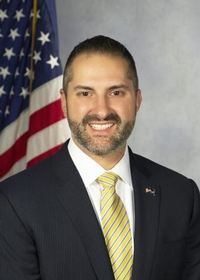
Steve Malagari
House · District 53
|
D |
Strong +
|
93% | 95 |
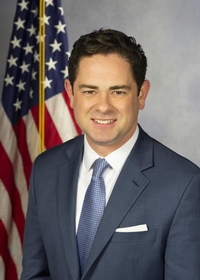
Kyle Mullins
House · District 112
|
D |
Strong +
|
92% | 91 |
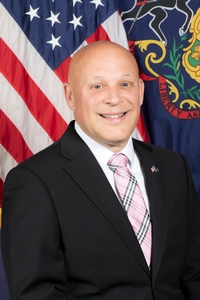
Eric Weaknecht
House · District 5
|
R |
Strong −
|
14% | 66 |
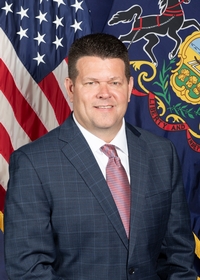
Jamie Walsh
House · District 117
|
R |
Strong −
|
14% | 80 |

Scott Barger
House · District 80
|
R |
Strong −
|
14% | 72 |
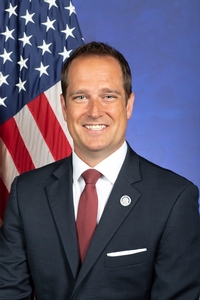
Ryan Warner
House · District 52
|
R |
Strong −
|
14% | 77 |
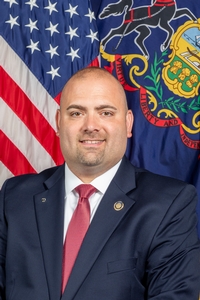
Joe Hamm
House · District 84
|
R |
Strong −
|
14% | 76 |
Showing 311–320 of 703
bills
All healthcare bills
HB 631: A Joint Resolution proposing an amendment to the Constitution of the Commonwealth of Pennsylvania, providing for an economic bill of rights.
Topics
✓ HealthcareSupports HealthcareBill explicitly guarantees 'affordable healthcare and health opportunities' as a constitutional right (Section 30b), directly advancing healthcare access and rights per indicators.
✓ Labor & EmploymentSupports Labor & EmploymentBill explicitly guarantees safe working conditions (30d) and living wage (30a), directly advancing labor and employment rights through constitutional amendment.
✓ TransportationSupports TransportationBill explicitly guarantees 'safe transportation infrastructure' (Section 30c) as a constitutional right, directly advancing transportation safety standards.
Sub-Topics
Minimum Wage
HB 33: An Act amending the act of April 17, 2016 (P.L.84, No.16), known as the Medical Marijuana Act, in preliminary provisions, further providing for definitions; in practitioners, further providing for practitioner registration; in medical marijuana controls, further providing for electronic tracking and for laboratory; and, in Medical Marijuana Advisory Board, further providing for advisory board.
SB 308: An Act amending Title 51 (Military Affairs) of the Pennsylvania Consolidated Statutes, in military educational programs relating to medical officer or health officer incentive program, further providing for definitions, for establishment of program, for program stipend, for additional incentives, for recoupment of incentive payments, for adjustment of stipend amounts and for eligibility; and making editorial changes.
HB 416: An Act amending the act of April 9, 1929 (P.L.343, No.176), known as The Fiscal Code, providing for Child Care Staff Recruitment and Retention Program; in 911 Emergency Communication Services, further providing for surcharge; in Department of Revenue, further providing for exclusion from classes of income and providing for research and experimental expenditures and qualified production property, for report to General Assembly and for interest expense; in joint underwriting association, further providing for findings and for definitions, repealing provisions relating to sunset and providing for risk-based capital certification, for fund transfers, for association oversight and additional duties, for Joint Underwriting Association Board, for board meetings, for construction, for dissolution, for appropriations and for reports and hearings; in State Health Insurance Exchange Affordability Program, further providing for Exchange Affordability Assistance Account; providing for Rural Health Transformation Program; in Treasury Department, providing for waiver of interest, costs and fees; in procedure for disbursement of money from the State Treasury, further providing for use and appropriation of unused Commonwealth funds; in oil and gas wells, further providing for Oil and Gas Lease Fund; providing for advanced air mobility sites and for public transportation vehicles; in human services, further providing for resident care and related costs; in Attorney General, providing for home improvement contractor registration fee; providing for Rare Disease Advisory Council, for affordable housing tax credit and for working Pennsylvanians tax credit; in additional keystone opportunity expansion zones, providing for additional keystone opportunity expansion zones for certain counties of the fourth class; providing for additional extensions of keystone opportunity zones; in special funds, further providing for funding, for expiration and for other grants; in additional special funds and restricted accounts, further providing for establishment of special fund and account, for use of fund and for distributions from Pennsylvania Race Horse Development Fund and providing for refund of 2003 assessment by Insurance Department; in additional special funds and restricted accounts relating to Service and Infrastructure Improvement Fund, further providing for deposits and providing for Property Tax Relief Fund; in general budget implementation, further providing Executive Offices, for Department of Community and Economic Development, for Department of Environmental Protection, for Pennsylvania Fish and Boat Commission, for Pennsylvania Higher Education Assistance Agency and for Commonwealth Financing Authority, providing for stenography services, further providing for surcharges, for Federal and Commonwealth use of forest land and for Multimodal Transportation Fund and providing for State Sexual Offenders Assessment Board, for interest transfers, for fund transfers and for miscellaneous provisions; in 2024-2025 budget implementation, further providing for Department of Education, for Department of Environmental Protection and for Department of Human Services; in Streamlining Permits for Economic Expansion and Development Program, further providing for scope of article, for definitions and for the Streamlining Permits for Economic Expansion and Development Program, providing for review and determination of specific permits and for State agency permits and further providing for construction; providing for electricity load forecast accountability, for 2025-2026 budget implementation and for 2025-2026 restrictions on appropriations for funds and accounts; making repeals; and making editorial changes.
Topics
✓ Budget & TaxesSupports Budget & TaxesBill funds essential programs (Child Care, Rural Health) and provides tax credits (affordable housing, working Pennsylvanians), supporting budget allocation and tax relief.
✓ HealthcareSupports HealthcareBill establishes Rural Health Transformation Program to improve healthcare access in underserved areas, directly advancing healthcare services and access.
✓ HousingSupports HousingBill explicitly includes 'affordable housing tax credit' as a direct funding mechanism for affordable housing programs.
✓ TransportationSupports TransportationBill explicitly mentions 'public transportation vehicles' and 'advanced air mobility sites' in title, directly supporting transportation infrastructure expansion.
Sub-Topics
Fees & Licensing
Property Tax
State Budget
Insurance
Substance Abuse
Affordable Housing
Property Development
Property Taxes
Vehicle Registration
HB 1078: An Act amending the act of March 10, 1949 (P.L.30, No.14), known as the Public School Code of 1949, in school health services, further providing for health services and for vision screening and examinations, providing for eye health examinations and further providing for examinations by examiners of own choice.
Topics
✓ EducationSupports EducationMandates annual vision screenings and follow-up exams for students, strengthening health services to support educational access and learning readiness in schools.
✓ HealthcareSupports HealthcareMandates annual vision screenings and required eye exams in schools, strengthening student access to eye health services under public health programs.
HB 2027: An Act amending the act of April 9, 1929 (P.L.343, No.176), known as The Fiscal Code, in general budget implementation, further providing for executive offices.
Topics
✓ Budget & TaxesSupports Budget & TaxesRedirects $3.8M unspent funds to fund safety equipment for state employees, promoting fiscal responsibility through reallocation of existing budget resources.
✓ HealthcareSupports HealthcareAllocates $3.8M for safety equipment (lift kits, postural devices) specifically for healthcare workers handling patients, directly funding workforce safety in healthcare settings.
✓ Labor & EmploymentSupports Labor & EmploymentCreates dedicated fund for safety equipment in high-risk jobs, directly improving workplace safety standards for state workers.
HR 157: A Resolution urging the Congress of the United States to pass H.R. 1947, the Treatment and Relief through Emerging and Accessible Therapy for PTSD Act or similar legislation dealing with stellate ganglion block therapy to veterans and members of the armed forces of the United States with post-traumatic stress disorder, during the 119th United States Congress.
Topics
✓ HealthcareSupports HealthcareUrges VA/DoD to provide SGB therapy for veterans' PTSD, expanding access to mental health treatment and directly advancing healthcare services for a specific condition.
✓ VeteransSupports VeteransUrges VA/DoD to provide SGB therapy for veterans' PTSD, expanding healthcare access to new treatment option for mental health care.
Sub-Topics
Veteran Mental Health
HB 923: An Act amending the act of August 26, 1971 (P.L.351, No.91), known as the State Lottery Law, in pharmaceutical assistance for the elderly, further providing for determination of eligibility.
Topics
✓ Budget & TaxesSupports Budget & TaxesRedirects existing lottery revenue to fund pharmaceutical assistance for seniors, increasing public service funding without new taxes. Directly allocates budget resources to essential healthcare program.
✓ HealthcareSupports HealthcareRedirects lottery revenue to fund pharmaceutical assistance for elderly, expanding prescription drug access via updated eligibility criteria for state aid programs.
Sub-Topics
Prescription Drugs
HB 82: An Act amending the act of March 10, 1949 (P.L.30, No.14), known as the Public School Code of 1949, in school health services, establishing the School Bus Driver Epinephrine Auto-injector Training Grant Program; and imposing duties on the Department of Education.
Topics
✓ EducationSupports EducationEstablishes grant program for school bus driver anaphylaxis training, enhancing student safety through Department of Education-administered funding and requirements for school entities.
✓ HealthcareSupports HealthcareBill creates a grant program to train school bus drivers in epinephrine administration for anaphylaxis, improving emergency health response in schools and advancing public health access.