

Issue · Healthcare
Healthcare
Every healthcare bill, vote, and legislator stance in Pennsylvania, automatically classified by Maddy, our AI policy reader.
Total bills
703
2025-2026 Regular Session
Top supporter
Joe Pittman
96% support rate
Top opponent
Eric Weaknecht
14% support rate
Ranked legislators
10
5 support · 5 oppose
Key legislators
Who's moving healthcare in Pennsylvania
| Legislator | Party | Stance | Support rate | Decisive votes |
|---|---|---|---|---|
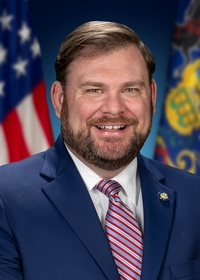
Joe Pittman
Senate · District 41
|
R |
Strong +
|
96% | 24 |

Bridget Malloy Kosierowski
House · District 114
|
D |
Strong +
|
94% | 113 |
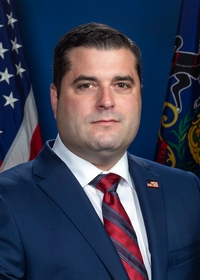
Devlin Robinson
Senate · District 37
|
R |
Strong +
|
93% | 29 |
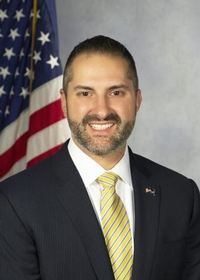
Steve Malagari
House · District 53
|
D |
Strong +
|
93% | 95 |
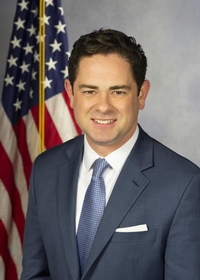
Kyle Mullins
House · District 112
|
D |
Strong +
|
92% | 91 |
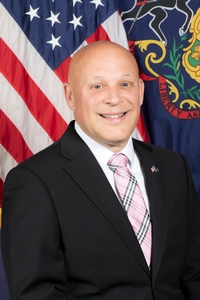
Eric Weaknecht
House · District 5
|
R |
Strong −
|
14% | 66 |
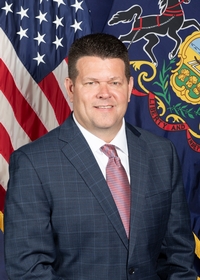
Jamie Walsh
House · District 117
|
R |
Strong −
|
14% | 80 |

Scott Barger
House · District 80
|
R |
Strong −
|
14% | 72 |
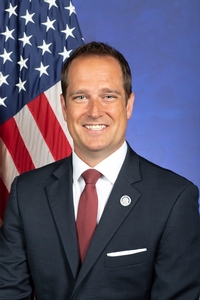
Ryan Warner
House · District 52
|
R |
Strong −
|
14% | 77 |
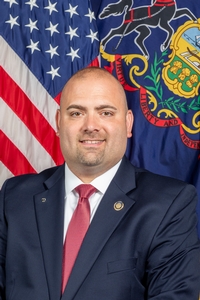
Joe Hamm
House · District 84
|
R |
Strong −
|
14% | 76 |
Showing 271–280 of 703
bills
All healthcare bills
SB 760: An Act amending the act of March 10, 1949 (P.L.30, No.14), known as the Public School Code of 1949, in grounds and buildings, providing for radon testing.
Topics
✓ EducationSupports EducationMandates radon testing and mitigation in school buildings to protect student/staff health, enhancing school safety infrastructure as a core educational environment factor.
✓ HealthcareSupports HealthcareBill mandates radon testing/mitigation in schools to prevent exposure to a known carcinogen, directly advancing public health protection under healthcare policies.
HB 1943: An Act amending the act of March 10, 1949 (P.L.30, No.14), known as the Public School Code of 1949, in school health services, further providing for automatic external defibrillators, providing for automated external defibrillators and training, further providing for sudden cardiac arrest and electrocardiogram testing and providing for electrocardiogram testing for interscholastic athletics; and, in terms and courses of study, further providing for cardiopulmonary resuscitation education.
Topics
✓ EducationSupports EducationMandates AEDs, CPR training, and ECG testing for student athletes, enhancing school safety protocols to protect students and staff in educational settings.
✓ HealthcareSupports HealthcareMandates AEDs, CPR training, and ECG testing for student athletes to prevent sudden cardiac death, directly improving school health safety protocols and patient access to emergency care.
Sub-Topics
Student Health
HB 1644: An Act amending Title 35 (Health and Safety) of the Pennsylvania Consolidated Statutes, in public safety, establishing the Reproductive Health Services Address Confidentiality Program; and imposing penalties.
Sub-Topics
Women's Health
SR 122: A Resolution urging the Congress of the United States to expand post-traumatic stress disorder treatment for veterans and service members by authorizing stellate ganglion block therapy through passage of H.R. 1947, the Treatment and Relief through Emerging and Accessible Therapy for PTSD Act.
Topics
✓ HealthcareSupports HealthcareAuthorizes expanded access to SGB therapy for veteran PTSD, advancing mental health treatment options and improving patient access to proven care.
✓ VeteransSupports VeteransUrges expansion of PTSD treatment access via SGB therapy, directly improving veterans' healthcare benefits and addressing untreated PTSD risks.
SB 1035: An Act amending the act of April 17, 2016 (P.L.84, No.16), known as the Medical Marijuana Act, providing for compassionate access to medical marijuana.
HB 66: An Act establishing the Social Worker Educational Enrollment and Training Program; and providing for authorization of internships, for award of internships and for funding of the Social Worker Educational Enrollment and Training Program.
Topics
✓ Budget & TaxesSupports Budget & TaxesAllocates state budget funds for $5,000 semester stipends to MSW students, directly funding an educational program through public expenditure.
✓ HealthcareSupports HealthcareFunds MSW education/internships to expand mental health workforce, directly supporting healthcare access through workforce development and clinical training requirements.
Sub-Topics
State Budget
HB 1945: An Act amending the act of April 14, 1972 (P.L.233, No.64), known as The Controlled Substance, Drug, Device and Cosmetic Act, further providing for drug overdose response immunity.
Topics
✓ Criminal JusticeSupports Criminal JusticeExpands immunity from drug possession charges for overdose callers, reducing criminalization and encouraging emergency response - aligns with criminal justice reform by protecting civil rights during health crises.
✓ HealthcareSupports HealthcareExpands immunity for calling 911 during overdoses, removing legal barriers to emergency medical care and encouraging timely treatment for substance use crises.
SB 754: An Act providing for hospital closure procedure requirements, for notice of proposed general hospital closure or significant impact closure, for health equity impact assessments, for closure plans and for enforcement actions.
SB 612: An Act providing for the provision of disposable menstrual products.
Topics
✓ Criminal JusticeSupports Criminal JusticeRequires correctional facilities to provide free menstrual products, improving health and dignity for incarcerated individuals, a direct reform in corrections within criminal justice.
✓ HealthcareSupports HealthcareProvides free menstrual products in public facilities to ensure access to essential health necessities, supporting public health initiatives and reducing barriers to health access.
✓ Labor & EmploymentSupports Labor & EmploymentRequires free menstrual products in workplaces like government offices (e.g., unemployment assistance), enhancing dignity and safety for employees, aligning with workplace standards.
Sub-Topics
Unemployment