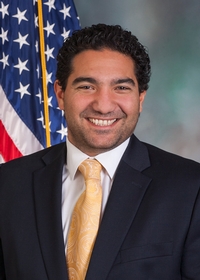
Key legislators
Who's moving school funding in Pennsylvania
Showing 5 of 5
bills
All education bills
Pennsylvania House Bill 2735 updates the Public School Code of 1949 to restrict school districts from increasing real property taxes unless their projected ending fund balances meet specific limits. The bill establishes a sliding scale where larger districts with higher total budgeted expenditures must maintain lower percentages of committed, assigned, and unassigned funds compared to smaller districts. To ensure compliance, each district that approves a tax increase must submit certification data to the Department of Education by August 15 of each year starting in 2027.
This bill limits how much school districts that span multiple counties or municipalities can increase their property tax rates. It allows a district's tax rate to rise only by the amount of a specific index adjustment plus any prior year's rate, unless the increase is due to a formal reassessment of property values or a successful voter referendum. The rules apply to tax years starting after June 30, 2026, and are designed to prevent significant jumps in local property taxes for these multi-jurisdictional districts.
HB 817 amends Pennsylvania's Taxpayer Relief Act to add a new rule for school district tax increases. It prohibits the Department of Education from approving a school district's request to raise certain taxes if that district received an exception under prior tax rules for the previous two fiscal years. This directly affects Pennsylvania school districts seeking to increase local taxes, requiring them to avoid recent exceptions to gain departmental approval. The bill modifies existing tax approval procedures without changing the public referendum requirement for tax hikes.
HB 1005 would repeal Pennsylvania's Use and Storage Tax Act of 1953, which imposed a tax on the use and storage of physical goods (like furniture, electronics, or vehicles) within the state. This law required businesses selling such goods to register, collect the tax from customers, and remit it to the state, with the revenue funding public schools. The bill would eliminate this tax obligation for businesses and remove the administrative requirements for collecting and reporting the tax. The repeal directly affects businesses that previously collected this tax and the public school funding mechanism tied to it.
This resolution (SR 68) urges the U.S. Congress to cooperate with federal efforts to eliminate the U.S. Department of Education. It states Pennsylvania seeks to exercise its state authority over education, arguing federal mandates limit the state's ability to address local needs like teacher shortages and student outcomes. The resolution cites Pennsylvania's constitutional duty to provide public education and claims federal education funding (e.g., $15 billion in Title I) could be redirected to state priorities if the Department of Education is dismantled. As a non-binding resolution, it does not change federal law but expresses Pennsylvania's position on education policy.