

Issue · Criminal Justice
Criminal Justice (Probation & Parole)
Every criminal justice bill, vote, and legislator stance in Pennsylvania, automatically classified by Maddy, our AI policy reader.
Total bills
48
2025-2026 Regular Session
Top supporter
Ben Sanchez
83% support rate
Top opponent
John Lawrence
15% support rate
Ranked legislators
10
5 support · 5 oppose
Key legislators
Who's moving probation & parole in Pennsylvania
| Legislator | Party | Stance | Support rate | Votes |
|---|---|---|---|---|
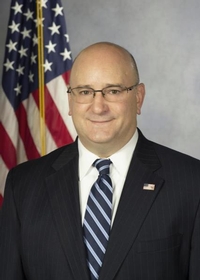
Ben Sanchez
House · District 153
|
D |
Strong +
|
83% | 24 |

Bridget Malloy Kosierowski
House · District 114
|
D |
Strong +
|
82% | 17 |
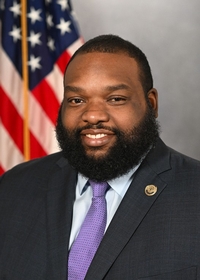
Jordan Harris
House · District 186
|
D |
Strong +
|
82% | 17 |
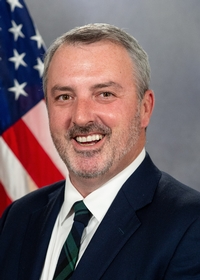
Kyle Donahue
House · District 113
|
D |
Strong +
|
82% | 22 |

La'Tasha Mayes
House · District 24
|
D |
Strong +
|
82% | 22 |
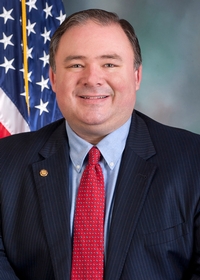
John Lawrence
House · District 13
|
R |
Strong −
|
15% | 13 |

Stephanie Borowicz
House · District 76
|
R |
Strong −
|
20% | 20 |

Ann Flood
House · District 138
|
R |
Strong −
|
20% | 15 |
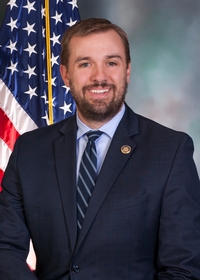
Bryan Cutler
House · District 100
|
R |
Strong −
|
20% | 15 |

Clint Owlett
House · District 68
|
R |
Strong −
|
20% | 15 |
Showing 21–30 of 48
bills
All criminal justice bills
HB 731: An Act amending the act of April 14, 1972 (P.L.233, No.64), known as The Controlled Substance, Drug, Device and Cosmetic Act, further providing for probation without verdict.
Topics
✓ Criminal JusticeSupports Criminal JusticeAllows treatment-focused probation without conviction for nonviolent drug offenses, reducing incarceration and promoting rehabilitation per bill summary.
✓ HealthcareSupports HealthcareRequiring medical evaluation for drug dependency treatment shifts focus from punishment to healthcare, aligning with treatment-focused healthcare support.
HB 496: An Act amending Title 61 (Prisons and Parole) of the Pennsylvania Consolidated Statutes, in miscellaneous provisions relating to inmate confinement, providing for voter registration.
SB 691: An Act amending Titles 35 (Health and Safety), 42 (Judiciary and Judicial Procedure) and 61 (Prisons and Parole) of the Pennsylvania Consolidated Statutes, establishing the Nonnarcotic Medication Substance Use Disorder Treatment Program; in organization and jurisdiction of courts of common pleas, providing for court assessments for substance use disorder treatment; in other criminal provisions, further providing for supervisory relationship to offenders; and, in Pennsylvania Board of Probation and Parole, further providing for supervisory relationship to offenders.
Topics
✓ Criminal JusticeSupports Criminal JusticeEstablishes nonnarcotic medication-assisted treatment program for offenders with substance use disorders, aiming to reduce recidivism through rehabilitation rather than punishment, aligning with criminal justice reform goals.
✓ HealthcareSupports HealthcareFunds nonnarcotic medication-assisted treatment for substance use disorders via grants to local agencies, expanding healthcare access for offenders under court supervision.
HB 605: An Act amending Title 61 (Prisons and Parole) of the Pennsylvania Consolidated Statutes, in Pennsylvania Board of Probation and Parole, providing for earned compliance credit.
SB 744: An Act amending Title 61 (Prisons and Parole) of the Pennsylvania Consolidated Statutes, in miscellaneous provisions relating to inmate confinement, providing for overwatch towers.
HB 1454: An Act amending Title 42 (Judiciary and Judicial Procedure) of the Pennsylvania Consolidated Statutes, in judicial boards and commissions, further providing for powers and duties of commission, providing for adoption of guidelines for bail and pretrial release conditions and further providing for publication of guidelines for sentencing, resentencing and parole, risk assessment instrument and recommitment ranges following revocation.
SB 788: An Act amending Title 61 (Prisons and Parole) of the Pennsylvania Consolidated Statutes, providing for solitary confinement.
SB 787: An Act amending Title 61 (Prisons and Parole) of the Pennsylvania Consolidated Statutes, providing for solitary confinement.
Topics
✓ Criminal JusticeSupports Criminal JusticeProhibits solitary confinement for vulnerable populations and limits duration, advancing criminal justice reform by protecting civil rights and reducing harmful practices.
✓ HealthcareSupports HealthcareRequires medical evaluations for vulnerable populations (including mental health patients) before solitary confinement, protecting mental health rights in prison settings.