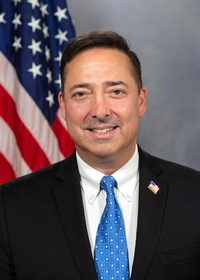
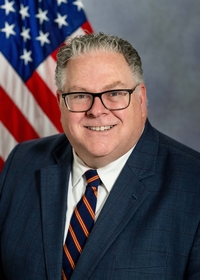
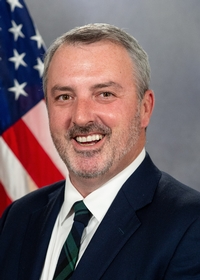
Issue · Criminal Justice

Criminal Justice

Every criminal justice bill, vote, and legislator stance in Pennsylvania, automatically classified by Maddy, our AI policy reader.

Total bills
412
2025-2026 Regular Session
Top supporter
Lindsey Williams
85% support rate
Top opponent
Dawn Keefer
14% support rate
Ranked legislators
10
5 support · 5 oppose
Key legislators

Who's moving criminal justice in Pennsylvania

Legislators moving criminal justice in Pennsylvania
Legislator Party Stance Support rate Decisive votes
Lindsey Williams
Lindsey Williams Senate · District 38
D
Strong +
85% 13
Chris Pielli
Chris Pielli House · District 156
D
Strong +
84% 85
Tim Briggs
Tim Briggs House · District 149
D
Strong +
84% 85
Kyle Donahue
Kyle Donahue House · District 113
D
Strong +
84% 91
Melissa Shusterman
Melissa Shusterman House · District 157
D
Strong +
83% 89
Dawn Keefer
Dawn Keefer Senate · District 31
R
Strong −
14% 14
James Malone
James Malone Senate · District 36
D
Strong −
14% 7
Doug Mastriano
Doug Mastriano Senate · District 33
R
Strong −
15% 26
Scott Hutchinson
Scott Hutchinson Senate · District 21
R
Strong −
17% 12
Stephanie Borowicz
Stephanie Borowicz House · District 76
R
Strong −
17% 87
Showing 221–230 of 412 bills

All criminal justice bills

in committee · Pennsylvania · House May 1, 2025

HB 1363: An Act amending Title 18 (Crimes and Offenses) of the Pennsylvania Consolidated Statutes, in assault, providing for the offense of assault of emergency responder.

This bill creates new felony offenses for assaulting emergency responders (like police, EMTs, or firefighters) by exposing them to fentanyl or its derivatives. Intentionally throwing fentanyl at a responder while they are on duty (and knowing they are a responder) is a felony of the second degree. Unlawfully possessing fentanyl and causing a responder to come into contact with it is a felony of the third degree. The law defines "emergency responder" using existing Pennsylvania law and takes effect 60 days after enactment.
in committee · Pennsylvania · Senate Jan 29, 2025

SB 192: An Act amending the act of June 3, 1937 (P.L.1333, No.320), known as the Pennsylvania Election Code, in preliminary provisions, further providing for definitions; in qualifications of electors, further providing for rules for determining residence; in voting by qualified absentee electors, further providing for qualified absentee electors and providing for voting by absentee electors in correctional institutions; and imposing duties on the Department of State.

SB 192 amends Pennsylvania's Election Code to improve voting access for two specific groups: homeless residents and individuals confined in correctional facilities for non-felony offenses (including misdemeanors, pretrial detainees, and those awaiting sentencing). It defines "homeless" using federal standards, allowing voters without a physical address to register using geographic descriptions like maps or coordinates. The bill also requires correctional facilities to designate staff to assist inmates with voter registration, absentee ballots, and civic education, while mandating data collection on inmate voting participation. These changes aim to streamline voting procedures for these populations without altering eligibility criteria.
Sub-Topics Corrections Sentencing Tags Elections
in committee · Pennsylvania · House Mar 20, 2025

HB 983: An Act amending Title 18 (Crimes and Offenses) of the Pennsylvania Consolidated Statutes, in firearms and other dangerous articles, further providing for persons not to possess, use, manufacture, control, sell or transfer firearms and for sale or transfer of firearms and providing for Gun Violence Task Force in cities of the first class.

HB 983 establishes a Gun Violence Task Force in each of Pennsylvania's cities of the first class (such as Philadelphia and Pittsburgh), under the Attorney General's authority. The task force will investigate and prosecute violations of state laws prohibiting illegal firearm possession and sales. It will include members from local district attorneys, city police, state police, and other law enforcement agencies. The task force will be funded through state appropriations and requires member agencies to notify it of relevant arrests within 48 hours.
in committee · Pennsylvania · Senate Feb 20, 2025

SB 262: An Act amending Title 42 (Judiciary and Judicial Procedure) of the Pennsylvania Consolidated Statutes, in actions, proceedings and other matters generally, providing for extreme risk protection orders.

Pennsylvania's SB 262 creates a legal process for courts to temporarily remove firearms from individuals who pose a significant risk of harming themselves or others with a firearm. Family members, household members, or law enforcement can petition a court if they reasonably believe a person has firearms and is at risk of violence, requiring specific evidence like recent threats or acts. The court must hold a hearing within 14 days, and if it finds the risk is "more likely than not," it issues a one-year order requiring the person to surrender all firearms. The bill prohibits fees or bonds for petitioners and mandates law enforcement to enforce firearm surrender, with clear procedures for service, notice, and reporting.
Sub-Topics Courts Firearms
passed · Pennsylvania · House Feb 13, 2026

HB 886: An Act amending Title 61 (Prisons and Parole) of the Pennsylvania Consolidated Statutes, in general administration relating to correctional institutions, providing for prerelease briefings on veterans benefits.

HB 886 requires Pennsylvania correctional institutions to provide prerelease briefings to inmates who are veterans, specifically informing them about available veterans' benefits. This bill directly affects incarcerated veterans transitioning back into civilian life by ensuring they receive information about benefits they may qualify for. The key provision mandates that these briefings be part of the general administration process for correctional facilities under Title 61 of the Pennsylvania Consolidated Statutes. The bill focuses on improving access to benefits information as part of reentry support, without altering eligibility or benefit amounts.
in committee · Pennsylvania · Senate Feb 13, 2025

SB 249: An Act amending the act of November 24, 1998 (P.L.882, No.111), known as the Crime Victims Act, in crime victims, further providing for responsibilities of State and local law enforcement agencies.

SB 249, nicknamed "Tara's Law," amends Pennsylvania's Crime Victims Act to require state and local law enforcement agencies to make a reasonable effort to contact surviving family members of murder victims or intervenors (those who helped during a crime) before publicly releasing the victim's identity. The bill creates an exception allowing immediate public release if needed for an ongoing murder investigation. This change directly affects law enforcement agencies' protocols when handling sensitive victim information. The law takes effect 60 days after enactment.
Sub-Topics Victims' Rights
in committee · Pennsylvania · House May 29, 2025

HB 1513: An Act amending Title 18 (Crimes and Offenses) of the Pennsylvania Consolidated Statutes, in computer offenses, providing for liability for Internet publishers and distributors of material harmful to minors.

HB 1513 would amend Pennsylvania's criminal code to establish criminal liability for internet publishers and distributors who knowingly make material harmful to minors available online. The bill targets content such as explicit sexual material deemed harmful to minors, creating a legal framework for prosecution without requiring proof of intent to harm minors. It directly affects online platforms, website operators, and content distributors that host or share such material. The bill is currently pending in the Communications & Technology committee for further review.
Sub-Topics Social Media
in committee · Pennsylvania · Senate May 22, 2025

SB 771: An Act amending Title 18 (Crimes and Offenses) of the Pennsylvania Consolidated Statutes, in general principles of justification, further providing for use of force in self-protection.

SB 771 amends Pennsylvania's self-defense laws to clarify when deadly force is legally justified. It removes the duty to retreat from one's home or workplace before using force (unless the person was the initial aggressor), creating a "stand your ground" provision in those locations. The bill specifies that deadly force is only justified to prevent death, serious injury, kidnapping, or sexual assault, and requires the person using force to believe it was immediately necessary. It also prohibits using deadly force against a police officer acting in their official duties, and exempts the "stand your ground" rule if the attacker has a weapon. This directly affects Pennsylvanians using force in self-defense, particularly in home or workplace settings.
Sub-Topics Policing Violent Crime
in committee · Pennsylvania · Senate May 22, 2025

SB 770: An Act amending Title 18 (Crimes and Offenses) of the Pennsylvania Consolidated Statutes, in minors, providing for the offense of access to firearms by minors; and imposing penalties.

This Pennsylvania bill (SB 770) requires firearm owners to store guns securely on their premises if minors might access them without permission. It makes insecure storage a violation, with penalties ranging from a minor violation (first offense) to a felony (if the firearm is used in a crime causing death or injury). Key defenses include proving the gun was locked securely, the minor accessed it via unlawful entry, or the minor was under adult supervision during lawful activities like hunting. Retailers must post clear notices about these storage rules and penalties.
Sub-Topics Firearms
in committee · Pennsylvania · Senate Mar 26, 2025

SB 452: An Act amending the act of April 9, 1929 (P.L.343, No.176), known as The Fiscal Code, in additional special funds and restricted accounts, providing for Safe Path Restricted Account; and making a transfer.

SB 452 establishes the "Safe Path Restricted Account" within Pennsylvania's General Fund, transferring $50 million for fiscal year 2025-2026. The Pennsylvania Commission on Crime and Delinquency will use these funds to award grants to political subdivisions and nonprofits operating safe passage programs. These programs aim to improve safety for youth and adults traveling to and from schools and community centers. Priority is given to applicants in areas with high gun violence rates, as determined by the Commission.
Showing 221 to 230 of 412 bills
Previous 1 22 23 24 42 Next