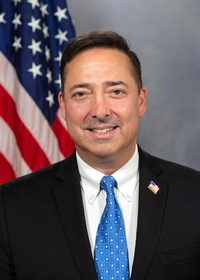
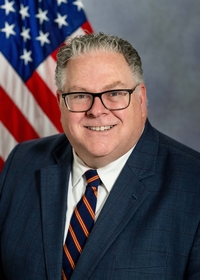
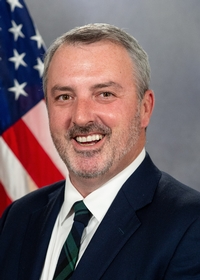
House Bill 1042 creates a system in Pennsylvania allowing eligible incarcerated individuals to earn credits that reduce their minimum sentence. Inmates can receive sentence reductions for completing vocational training, educational programs like a GED or college degree, and other department-required programming. The bill sets specific credit amounts for different achievements, with a maximum limit of one-fourth of an inmate's minimum sentence. However, individuals convicted of certain serious offenses, such as murder or sexual assault, are excluded from earning these credits.
HB 2154 establishes Pennsylvania's Prison Industry Enhancement Authority to create job opportunities for incarcerated individuals in state correctional facilities through partnerships with private industry. The bill requires private companies to employ incarcerated people under specific guidelines, including setting fair wages (with deductions allowed for room/board, victim compensation, and family support), while explicitly prohibiting displacement of civilian jobs or privatization of prisons. It mandates that private sector prison industry programs must operate within the state's "open market" and cannot create competitive advantages for participating businesses. The law aims to develop work skills for post-release employment and strengthen family ties through structured compensation mechanisms.
HB 377 adds tianeptine - a medication sometimes misused as an opioid substitute - to Pennsylvania's list of prohibited substances under the Controlled Substance Act. It makes it illegal for unregistered individuals or unlicensed practitioners to manufacture, deliver, or possess tianeptine with intent to distribute. Violators face felony charges punishable by up to five years in prison, a $15,000 fine, or both. The bill directly affects healthcare providers, pharmacies, and anyone handling tianeptine without proper authorization under state drug laws. This amendment updates existing penalties to address emerging misuse of tianeptine.
HB 1935 requires individuals convicted of terroristic threats to pay restitution for costs incurred during evacuations, including emergency response, transportation, and employee wages for first responders. It also mandates a sentencing enhancement for threats targeting schools or institutions of higher education, which the Pennsylvania Commission on Sentencing must consider. The bill defines "school entity" to include public, charter, private, and cyber charter schools, and "institution of higher education" to cover specific universities like Penn State, Pitt, Temple, and others. These changes directly affect offenders who make terroristic threats in educational settings, holding them financially accountable for the costs their actions trigger.
HB 144 amends Pennsylvania's juvenile justice laws to adjust the process for "informal adjustment" in court cases involving minors. It directly affects youth and families involved in juvenile court by changing how cases can be resolved without formal court proceedings. The bill modifies specific provisions related to informal adjustment procedures within juvenile matters, while also making minor editorial corrections to the statute. This is a procedural change focused on streamlining court handling of certain juvenile cases, not a major policy shift.
HB 1936 amends Pennsylvania's juvenile justice laws to change procedures for handling cases involving minors. It specifies when courts must hold hearings before releasing or committing a juvenile, alters where juveniles can be placed for treatment or supervision, and adds requirements for reviewing dispositions (how cases are resolved) after commitment. The bill directly affects juveniles charged with offenses, their families, and juvenile court judges and probation officers who manage these cases. Key changes include setting clearer timelines for hearings, limiting where juveniles can be committed (e.g., away from home), and mandating periodic reviews of their case plans. These provisions aim to standardize court processes while prioritizing youth safety and appropriate supervision.
HB 1615 amends Pennsylvania laws related to sentencing, driver licensing, and traffic offenses. It requires notice to drivers when their Accelerated Rehabilitative Disposition (ARD) for a traffic offense is accepted, and updates penalties for driving under the influence (DUI), including stricter grading for repeat offenses and enhanced penalties for homicide by vehicle while driving under the influence. The bill also revises procedures for licensing when a driver's privilege is suspended or revoked. These changes directly affect drivers facing traffic-related charges, courts processing these cases, and prosecutors seeking appropriate penalties. The bill is currently under review in the Transportation committee.
HB 150 proposes changes to Pennsylvania's sentencing laws by removing outdated rules about transferring inmates requiring medical care and creating a new process for judges to modify prison terms when an individual's illness prevents them from serving their full sentence. The bill directly affects people incarcerated in Pennsylvania who develop serious medical conditions during their sentence. Key provisions include ending the current transfer system for medical cases and establishing a clear procedure for courts to adjust sentences based on documented health issues. This would allow judges to shorten sentences for health-related reasons without requiring a separate legal process. The bill is currently under review in the Appropriations committee.
HB 1859 proposed changes to Pennsylvania's firearm laws, targeting individuals prohibited from possessing firearms (such as those under extreme risk protection orders) and establishing rules for safely surrendering firearms. It added provisions for "extreme risk protection orders" (court orders to temporarily remove firearms from high-risk individuals), clarified restrictions on firearm possession, and required the Attorney General to create a system for reporting firearm abandonment. The bill also updated procedures for community courts and imposed penalties for violations, but it was defeated in final passage on September 30, 2025.
Pennsylvania's SB 649 (now Act No. 35 of 2025) creates a new criminal offense for "digital forgery," targeting individuals who create and distribute fake digital images or audio recordings of real people without consent, intending to defraud or cause harm. It defines a "forged digital likeness" as a computer-generated representation that materially changes a person's appearance, speech, or behavior to deceive others, with penalties ranging from a misdemeanor to a felony for fraud schemes. The law explicitly excludes satire, political commentary, law enforcement activities, and technology providers from prosecution, and allows a defense if the creator clearly disclosed the content as fake. This law directly affects creators of deceptive digital content and aims to protect individuals from identity-based fraud or harm.