

Issue · Budget & Taxes
Budget & Taxes
Every budget & taxes bill, vote, and legislator stance in Pennsylvania, automatically classified by Maddy, our AI policy reader.
Total bills
655
2025-2026 Regular Session
Top supporter
Camera Bartolotta
94% support rate
Top opponent
Katie Muth
23% support rate
Ranked legislators
10
5 support · 5 oppose
Key legislators
Who's moving budget & taxes in Pennsylvania
| Legislator | Party | Stance | Support rate | Votes |
|---|---|---|---|---|
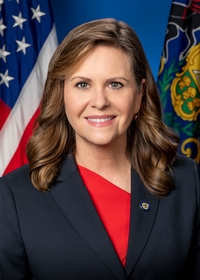
Camera Bartolotta
Senate · District 46
|
R |
Strong +
|
94% | 74 |
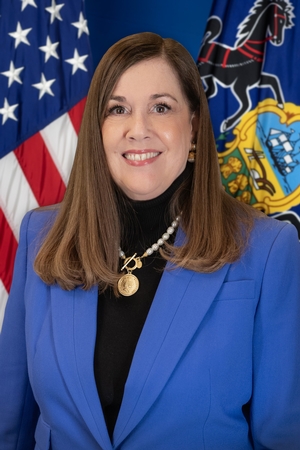
Lisa Baker
Senate · District 20
|
R |
Strong +
|
93% | 61 |

Joe Picozzi
Senate · District 5
|
R |
Strong +
|
92% | 83 |
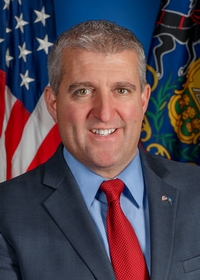
Frank Farry
Senate · District 6
|
R |
Strong +
|
92% | 67 |
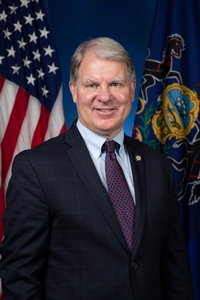
Dave Argall
Senate · District 29
|
R |
Strong +
|
91% | 80 |
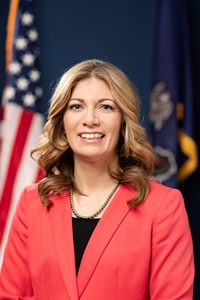
Katie Muth
Senate · District 44
|
D |
Oppose
|
23% | 74 |

Art Haywood
Senate · District 4
|
D |
Oppose
|
29% | 83 |

Lindsey Williams
Senate · District 38
|
D |
Oppose
|
30% | 74 |
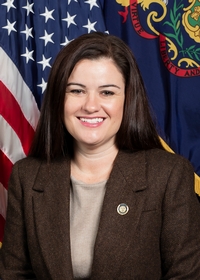
Charity Krupa
House · District 51
|
R |
Oppose
|
31% | 292 |
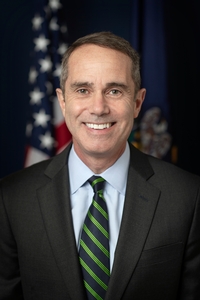
Steve Santarsiero
Senate · District 10
|
D |
Oppose
|
32% | 68 |
Showing 211–220 of 655
bills
All budget & taxes bills
SB 86: An Act amending the act of March 10, 1949 (P.L.30, No.14), known as the Public School Code of 1949, providing for in-State tuition for undocumented individuals.
Topics
✓ Budget & TaxesSupports Budget & TaxesExpands state financial aid eligibility for undocumented students, increasing public higher education funding through PHEAA without SSN requirement.
✓ EducationSupports EducationExpands higher education access for undocumented students by eliminating out-of-state tuition barriers and enabling state financial aid eligibility without Social Security numbers.
✓ ImmigrationSupports ImmigrationBill provides in-state tuition and financial aid access to undocumented students meeting residency criteria, directly advancing immigrant integration and services per indicators.
Sub-Topics
Higher Education
K-12 Education
Student Financial Aid
DACA & Dreamers
Driver Licenses & IDs
HB 1221: An Act amending Title 15 (Corporations and Unincorporated Associations) of the Pennsylvania Consolidated Statutes, in general provisions relating to partnerships and limited liability companies, providing for duties of nonprofit corporations in public-private partnerships with the Commonwealth.
Tags
Government Transparency
HB 1500: An Act amending the act of March 10, 1949 (P.L.30, No.14), known as the Public School Code of 1949, in preliminary provisions, providing for Cyber Charter School Funding and Policy Council and further providing for advertising and sponsorships; in pupils and attendance, further providing for exceptional children and education and training; in charter schools, further providing for definitions, for funding for cyber charter schools, for powers and duties of department and for assessment and evaluation, providing for fund balance limits, further providing for cyber charter school requirements and prohibitions, providing for cyber charter school fund balance accountability, further providing for establishment of cyber charter school, for cyber charter school application, for enrollment and notification, for enrollee wellness checks and for applicability of other provisions of this act and of other acts and regulations and providing for cyber charter school moratorium; and, in reimbursements by Commonwealth and between school districts, further providing for extraordinary special education program expenses.
Topics
✓ Budget & TaxesSupports Budget & TaxesBill mandates fund balance limits, cost-tracking for special education, and establishes a funding council for cyber charters, promoting fiscal accountability in state budget allocation for education.
✓ EducationSupports EducationEstablishes cyber charter school funding framework, policy council, and accountability measures, advancing alternative school funding models and special education cost-tracking.
HB 1768: An Act establishing the Local Food Purchasing Incentive Grant Program, the Keystone Producer Grant Program, the Keystone Assistance Grant Program and the Keystone Fresh Farm to School Account; and imposing duties on the Department of Education and the Department of Agriculture.
Topics
✓ Budget & TaxesSupports Budget & TaxesBill allocates state funds via new grant programs (Local Food Purchasing, Keystone Producer, etc.) for agricultural support, increasing government spending on food system initiatives.
✓ EducationSupports EducationBill creates Keystone Fresh Farm to School Account funding school meal programs sourcing local farms, directly supporting student nutrition and access within K-12 education system.
Sub-Topics
Procurement
SB 1020: An Act amending Title 34 (Game) of the Pennsylvania Consolidated Statutes, in hunting and furtaking licenses, further providing for resident license and fee exemptions.
Sub-Topics
Fees & Licensing
HB 972: An Act providing for an inventory of State-owned assets for the development of fixed broadband services in unserved areas; establishing the Broadband Services Restricted Account; and providing for underserved areas of this Commonwealth.
Topics
✓ Budget & TaxesSupports Budget & TaxesCreates Broadband Services Restricted Account funded by lease payments from state assets to finance broadband infrastructure expansion, directly allocating public resources for essential service development.
✓ TechnologySupports TechnologyBill mandates cataloging state assets to fund broadband expansion in unserved areas, directly advancing internet access infrastructure per topic description.
Sub-Topics
Broadband Access
SB 563: An Act amending Titles 24 (Education) and 71 (State Government) of the Pennsylvania Consolidated Statutes, in membership, contributions and benefits, providing for supplemental annuity commencing 2025; and, in benefits, providing for supplemental annuity commencing 2025.
Sub-Topics
Pensions
HB 1890: An Act amending the act of March 10, 1949 (P.L.30, No.14), known as the Public School Code of 1949, establishing the Scratch Cooked Meals for Students Pilot Grant Program.
Topics
✓ Budget & TaxesSupports Budget & TaxesCreates state grant program funding scratch-cooked school meals, increasing public education spending through direct appropriations.
✓ EducationSupports EducationCreates state grants for schools to fund scratch-cooked meals, enhancing student nutrition programs and school meal services under Public School Code.
Sub-Topics
Student Health
HB 1765: An Act amending Title 53 (Municipalities Generally) of the Pennsylvania Consolidated Statutes, in employees, providing for insurance benefits for part-time police officers.
Topics
✓ Budget & TaxesSupports Budget & TaxesMandates municipalities to fund insurance benefits for part-time police, increasing public safety spending requirements.
✓ Criminal JusticeSupports Criminal JusticeExtends insurance benefits to part-time police officers, supporting law enforcement personnel welfare without direct reform impact.
✓ HealthcareSupports HealthcareExtends health insurance coverage to part-time police officers, expanding access to healthcare benefits for municipal employees under existing insurance provisions.
✓ Labor & EmploymentSupports Labor & EmploymentExtends mandatory insurance benefits to part-time police officers, expanding worker benefits under Labor & Employment policies