

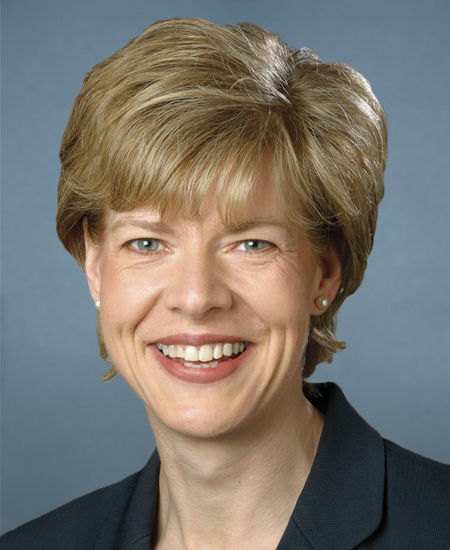
States Achieve Medicaid Expansion Act of 2021 or the SAME Act of 2021 This bill provides an enhanced federal matching rate to every state that expands Medicaid coverage for individuals who are newly eligible under the Patient Protection and Affordable Care Act, regardless of when such expansion takes place. Under current law, the enhanced Federal Medical Assistance Percentage (FMAP) is equivalent to 100% in 2014 through 2016, 95% in 2017, 94% in 2018, 93% in 2019, and 90% thereafter. The bill retains this enhanced FMAP, but bases it on a term of years rather than on specific dates. The bill applies retroactively.
Sponsored bills
Safe and Affordable Drugs from Canada Act of 2021 This bill requires the Food and Drug Administration (FDA) to allow for the personal importation of prescription drugs from Canada in certain instances. Such a drug must (1) be purchased from an approved Canadian pharmacy and dispensed by a pharmacist licensed in Canada; (2) be purchased by an individual for personal use only and in quantities not to exceed a 90-day supply; (3) be filled using a valid prescription from a physician licensed in a U.S. state; and (4) have the same active ingredients, route of administration, dosage form, and strength as an FDA-approved drug. Certain types of drugs may not be imported under this program, such as controlled substances, biological products, or intravenously injected drugs. An approved pharmacy under this program must be located and licensed in Canada and meet additional requirements, such as participation in ongoing and comprehensive quality assurance programs. The FDA shall publish a list of approved Canadian pharmacies on a website.
COVID-19 Whistleblower Protection Act This bill establishes whistleblower protections for government contractors and private sector workers who may witness waste, fraud, or abuse or be victims of misconduct with respect to a COVID-19 (i.e., coronavirus disease 2019) pandemic-related program, project, or activity. Specifically, employers may not discharge, demote, or otherwise discriminate against such protected individuals who disclose information concerning fraud, misuse, or other misconduct related to COVID-19 program funds. A protected individual may submit to the Department of Labor a complaint alleging a violation of these protections and Labor may adjudicate such complaints and award relief in accordance with the Internal Revenue Service whistleblower procedures.
Real Economic Support That Acknowledges Unique Restaurant Assistance Needed To Survive Act of 2021 or the RESTAURANTS Act of 2021 This bill temporarily establishes and provides funding for the Restaurant Revitalization Fund, from which the Department of the Treasury shall make grants to eligible food and beverage purveyors to cover specified costs such as payroll, operational expenses, and paid sick leave. For the grant program's initial period, Treasury must (1) prioritize awarding grants to marginalized and underrepresented communities, and (2) only award grants to eligible food and beverage purveyors with annual revenues of less than $1.5 million in 2019. For tax purposes, grant amounts are excluded from the recipient's gross income. An entity that received a loan under the Paycheck Protection Program established to support small businesses in response to COVID-19 (i.e., coronavirus disease 2019) may not apply for or use a restaurant revitalization grant for the same expenses for which the entity received the paycheck protection loan. Further, a grant applicant may request an additional amount to cover the cost of providing 10 days of paid sick leave to its employees. Treasury must report a list of grant recipients with the amount each recipient received, as well as demographics and other specified information.
Emergency Assistance for Rural Water Systems Act of 2021 This bill allows, and provides funds for, the Department of Agriculture (USDA) to provide grants and loans, as well as loan forgiveness, modification, and refinancing, to rural water, wastewater, or waste disposal facilities. Specifically, USDA may provide such assistance for purposes of ensuring public health, safety, and order and to address financial hardships, in particular those due to the COVID-19 (i.e., coronavirus disease 2019) public health emergency.
Secure Data and Privacy for Contact Tracing Act of 2021 This bill establishes grants for state, tribal, and territorial health departments to incorporate digital contact tracing technology in COVID-19 (i.e., coronavirus disease 2019) contact tracing programs. The Centers for Disease Control and Prevention must award the grants. Any technology developed or procured with these grants must meet privacy, security, and other conditions. Grantees that acquire technology that does not meet these conditions lose eligibility for this, and future, funding for COVID-19 contact tracing technology. In addition, federal privacy standards for personal health information expressly apply to information transmitted or maintained by grant-funded programs. Current law restricts the use and disclosure of personal health information by health care providers, health plans, health clearinghouses, and their business associates. However, there is an exception to these standards for information used by, or disclosed to, a public health authority. The bill also prohibits the use of data derived from the contact tracing technology in legal proceedings or for immigration enforcement. The Government Accountability Office must evaluate this program.
Paycheck Fairness Act This bill addresses wage discrimination on the basis of sex. Specifically, it (1) limits an employer's defense that a pay differential is based on a factor other than sex to only bona fide job-related factors in wage discrimination claims, (2) enhances nonretaliation prohibitions, (3) makes it unlawful to require an employee to sign a contract or waiver prohibiting the employee from disclosing information about the employee's wages, and (4) increases civil penalties for violations of equal pay provisions. Additionally, the Equal Employment Opportunity Commission (EEOC) and the Office of Federal Contract Compliance Programs must train EEOC employees and other affected parties on wage discrimination. The bill directs the Department of Labor to (1) establish and carry out a grant program for negotiation skills training for girls and women, (2) conduct studies to eliminate pay disparities between men and women, and (3) make available information on wage discrimination to assist the public in understanding and addressing such discrimination. The bill also establishes the Secretary of Labor's National Award for Pay Equity in the Workplace for an employer who has made a substantial effort to eliminate pay disparities between men and women. Finally, the bill requires the EEOC to issue regulations for collecting from employers compensation and other employment data according to the sex, race, and national origin of employees for use in enforcing laws prohibiting pay discrimination.
Spotlight Act This bill renders null and void final Internal Revenue Service (IRS) regulations published on May 28, 2020, relating to the reporting requirements of tax-exempt organizations. The bill requires tax-exempt organizations that fall under sections 501(c)(4), 501(c)(5), and 501(c)(6) of the Internal Revenue Code (e.g., social welfare organizations, labor organizations, business leagues) to disclose the names and addresses of all substantial contributors (persons who contribute more than $5,000 per year to such organizations) on their information returns. The bill also eliminates the authority of the IRS to provide exceptions to the disclosure requirements for tax-exempt organizations. This provision does not apply to determinations made by the IRS before July 16, 2018.
Access Technology Affordability Act of 2021 This bill allows a refundable tax credit equal to the amounts paid for qualified access technology for use by a blind individual who is the taxpayer, the taxpayer's spouse, or a dependent of the taxpayer. Qualified access technology is hardware, software, or other information technology with the primary function of converting or adapting information that is visually represented into forms or formats useable by blind individuals. The credit is limited to (1) costs that are not compensated by insurance or otherwise, and (2) an aggregate amount of $2,000 per blind individual in any period of three consecutive taxable years. The credit must be adjusted for inflation after 2022 and terminates after 2026.
Supporting Eating Disorders Recovery Through Vital Expansion Act or the SERVE Act This bill provides for inpatient and outpatient treatment of eating disorders under TRICARE for dependents of members of the uniformed services. Dependents are eligible for such care regardless of their age, except with respect to residential service. The bill also requires the Department of Defense (DOD) and the Department of Homeland Security (with respect to the Coast Guard) to identify, treat, and rehabilitate members of the armed forces who have an eating disorder. Finally, DOD and the Department of Veterans Affairs must jointly develop, publish, and disseminate clinical practice criteria and guidelines on the identification and treatment of eating disorders.