

Reinventing Economic Partnerships And Infrastructure Redevelopment Act or the REPAIR Act This bill addresses the financing of infrastructure projects through the establishment of the Infrastructure Financing Authority (IFA) and increases the national limitation on the amount of tax-exempt highway or surface freight transfer facility bonds. Specifically, the bill directs the IFA to provide direct loans and loan guarantees to facilitate certain infrastructure projects that are economically viable, in the public interest, and of regional or national significance, including the construction, consolidation, alteration, or repair of airports and air traffic control systems, highway facilities, and transmission or distribution pipelines; sets forth terms and limitations on direct loans and loan guarantees; establishes a funding mechanism to make the IFA a self-sustaining entity, including through fees and risk premiums on loans and loan guarantees; and increases from $15 billion to $16 billion the national limitation on the amount of tax-exempt financing for highway or surface freight transfer facilities.
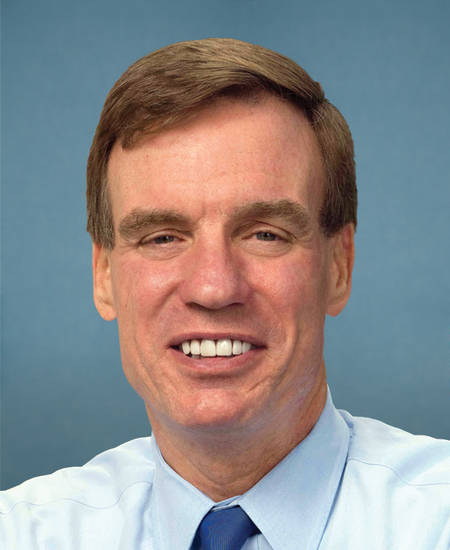
Sen. Mark R. Warner
Sponsored bills
Revitalizing the Economy of Coal Communities by Leveraging Local Activities and Investing More Act of 2021 or the RECLAIM Act of 2021 This bill revises requirements concerning the Abandoned Mine Reclamation Fund, including by expanding the eligible uses of the fund. Specifically, the bill allows the fund to be used to provide support for economic revitalization, diversification, and development in economically distressed mining communities through the reclamation and restoration of land and water resources adversely affected by abandoned coal mines. In addition, it requires specified amounts to be annually distributed from the fund through FY2026 to states and Indian tribes for reclaiming and restoring lands and waters so affected.
Military Hunger Prevention Act This bill requires the Department of Defense (DOD) to pay a basic needs allowance to certain low-income members of the Armed Forces. Specifically, those eligible for the basic needs allowance are members who (1) have completed initial entry training, (2) have a gross household income that did not exceed an amount equal to 130% of the federal poverty guidelines of the Department of Health and Human Services (HHS), and (3) do not elect to decline the allowance. In situations where a household contains two or more eligible members, the bill specifies that only one allowance may be paid per year to one member they jointly elect. The amount of the allowance must be the aggregate amount equal to 130% of the HHS federal poverty guidelines minus the gross household income of the covered member during the preceding year divided by 12. The Defense Finance and Accounting Service (DFAS) of DOD must notify, in writing, individuals determined to be eligible for the allowance. The notice must include information regarding financial management and assistance programs administered by DOD for which the individuals are also eligible. Individuals who seek to receive the allowance must submit specified information to DFAS.
Gabriella Miller Kids First Research Act 2.0 This bill modifies funding for a pediatric disease research initiative within the National Institutes of Health (NIH). Currently, this initiative receives funding through FY2023 from the 10-Year Pediatric Research Initiative Fund. This bill directs certain penalties assessed by the Securities and Exchange Commission against pharmaceutical companies for specified violations to that fund. In making allocations from the fund, the NIH must prioritize pediatric research that does not duplicate existing research activities.
USTR Inspector General Act of 2021 This bill requires the President to appoint an Inspector General of the Office of the U.S. Trade Representative (USTR). Among other responsibilities, the Inspector General shall (1) conduct and supervise audits and investigations relating to the programs and operations of the USTR, (2) recommend policies for preventing and detecting fraud and abuse in those programs, and (3) provide a means for keeping the USTR and Congress informed about problems and deficiencies in those programs and operations.
Abandoned Mine Land Reclamation Fee Extension Act This bill extends through FY2036 the reclamation fee that each operator of a coal mining operation must pay to the Department of the Interior for the Abandoned Mine Reclamation Fund. Under the existing Abandoned Mine Land Reclamation Program, Interior collects a fee from coal mining companies for each ton of coal produced. The fees are deposited into the fund, which may be used to address hazards to public health, safety, and the environment from coal mining sites that were abandoned or unreclaimed as of August 3, 1977. Interior's authority to collect the fee expires on September 30, 2021.
This bill provides for the award of Congressional Gold Medals posthumously to Glen Doherty, Tyrone Woods, J. Christopher Stevens, and Sean Smith (four Americans who were killed in the September 11, 2012, attack on the U.S. consulate in Benghazi, Libya) in recognition of their contributions to the nation.
Puppy Protection Act of 2021 This bill requires the Department of Agriculture to expand standards that govern the humane handling, care, treatment, and transportation of animals to include new requirements for commercial dog dealers. Specifically, the standards must require dog dealers to provide to dogs adequate housing, exercise, and veterinary care; appropriate and nutritious food; continuous access to potable water; and meaningful socialization with humans and compatible dogs for at least 30 minutes each day. The standards must also include requirements for breeders to use safe breeding practices and make all reasonable efforts to find humane placement for retired breeding dogs.
This resolution declares racism a public health crisis and supports efforts to address health disparities and inequities across all sectors.
Lymphedema Treatment Act This bill provides for Medicare coverage of lymphedema compression treatment items. Specifically, the bill provides for coverage of (1) standard and custom fitted gradient compression garments that are prescribed by a physician or other specified health care professional to treat lymphedema, and (2) other devices determined to be effective in the prevention or treatment of lymphedema.