

Maddy summaryThis Senate resolution (SRES 390) designates September 2025 as "National Voting Rights Month" to honor voting rights history and encourage civic engagement. It does not create new laws but urges Congress to advance voting rights legislation (like the John Lewis Voting Rights Advancement Act), recommends schools teach about voting history and suppression, and encourages media campaigns to promote voter registration and election awareness. The resolution directly affects all U.S. citizens by highlighting voting access issues and promoting educational efforts, though it has no legal force. It follows historical context about voter suppression and recent voting rights challenges, including the 2013 Shelby County v. Holder Supreme Court decision.
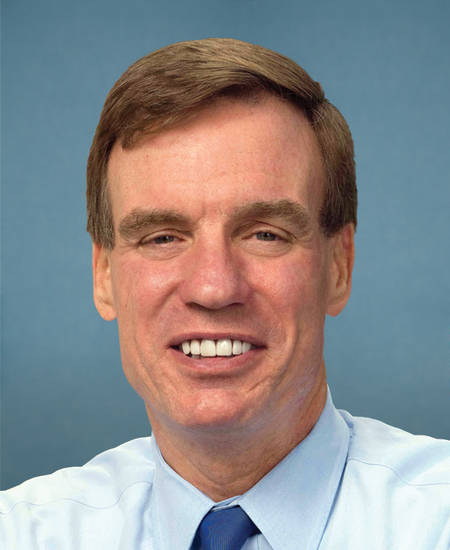
Sen. Mark R. Warner
Sponsored bills
Maddy summaryThis bill prohibits Federal Reserve Board members, bank presidents, directors, and senior employees from holding other government positions appointed by the President (including on leave). It specifically bans dual appointments to prevent conflicts of interest between political roles and monetary policy decisions. The law requires clear separation between elected officials and Fed leadership by eliminating any overlap in appointments. This aims to strengthen the Federal Reserve's institutional independence, as emphasized in the bill's congressional findings.
Maddy summaryS 2777, the Small Business RELIEF Act, exempts small businesses from import duties imposed under Executive Order 14257 (related to national emergencies) for goods they import. It requires the President to refund all duties paid under that order within 90 days of the bill's enactment. The bill directly affects small business concerns as defined by the Small Business Act (15 U.S.C. 632), which typically covers businesses with fewer than 500 employees. This policy change removes a financial burden on qualifying small importers and provides retroactive refunds for past payments.
Maddy summaryThis bill amends the Federal Deposit Insurance Act to change how banks count "reciprocal deposits" (deposits from other banks) when calculating brokered funds. It sets tiered percentage limits: banks with under $1 billion in total deposits can count up to 50% of reciprocal deposits as local, while larger banks face lower percentages (40% for $1B-$10B, 30% for $10B-$250B, etc.). The rule directly affects banks that use deposit brokers, particularly medium and large institutions, by allowing them to count more reciprocal deposits toward local deposit requirements. This reduces the portion of deposits classified as "brokered," potentially easing compliance for banks seeking to maintain local deposit ratios.
Maddy summaryThis bill would make several administrative changes to the Social Security Administration, including exempting it from the jurisdiction of the Department of Government Efficiency (DOGE) and certain executive orders, restricting political appointees from accessing beneficiary data systems, and preventing closure of field offices while requiring maintenance of staff levels. It also creates new offices within the SSA for civil rights, transformation, and analytics, and provides additional funding for administrative costs and customer experience improvements. These provisions would directly affect how the SSA manages its operations, protects beneficiary data, and delivers services to beneficiaries. The bill's title is misleading as it does not address billionaires or their relationship with Social Security.
Maddy summaryThis bill requires NASA to reimburse the Town of Chincoteague, Virginia, for costs related to replacing contaminated drinking water wells located on NASA property. It mandates a 5-year agreement between NASA and the town to remove three specific wells and establish new wells on town-controlled land, including details on relocation sites, costs, and engineering. NASA must submit the agreement to Congress within 18 months for oversight by the Senate Commerce Committee and House Science Committee. The law directly affects Chincoteague residents relying on these wells and shifts responsibility for relocation costs to NASA.
Maddy summarySRES 374 is a non-binding Senate resolution expressing that Secretary of Health and Human Services Robert F. Kennedy Jr. lacks the confidence of the Senate and American people to serve in his role. The resolution cites specific actions including the termination of $11 billion in public health funding, mass firings of scientists (notably eliminating 8 Offices of Minority Health), replacing all 17 members of the vaccine advisory committee (ACIP) with critics of vaccines, and dismantling programs supporting maternal health, disability services, and chronic disease research. It alleges these actions violated federal law, undermined scientific integrity, and endangered public health during a measles outbreak. The resolution calls for the Secretary’s removal but has no legal effect, as it is a symbolic statement of disapproval.
Maddy summaryS 2718 amends the Community Development Banking and Financial Institutions Act of 1994 to expand liquidity support for community development financial institutions (CDFIs). The bill increases annual funding from $5 million to $20 million and allows the Fund to purchase CDFI loans, provide guarantees, or offer other support to boost CDFI liquidity. It also broadens eligibility to include non-CDFI organizations focused on community development, with priority given to those with experience in loan structures or serving underserved areas. The bill requires annual reports to Congress detailing how funds are used, including loan purchases, housing support, and impacts on CDFI competitiveness and liquidity.
Maddy summaryThe CDFI Fund Transparency Act (S 2704) requires the Treasury Secretary (or their designee) to annually testify before the Senate Banking Committee and House Financial Services Committee about the Community Development Financial Institutions (CDFI) Fund's operations. This testimony would cover the previous fiscal year's activities, at the committees' discretion. The bill directly affects the Treasury Department and the CDFI Fund, aiming to increase transparency in how the fund operates. It does not change funding or program rules, only adding a reporting requirement for the Treasury.
Maddy summaryThe LIFT Homebuyers Act of 2025 creates a federal program to help low-income first-time homebuyers purchase single-family homes. It establishes the "LIFT HOME Fund" within HUD and USDA to support eligible mortgages with monthly payments capped at 100-110% of standard rates for comparable loans. The bill directly affects homebuyers with household income under 120% (or 140% in high-cost areas) of local median income who are both first-time buyers and first-generation homebuyers (with no prior home ownership by them or their parents). Key mechanisms include waiving some insurance premium caps, requiring borrower self-attestation for eligibility, and mandating outreach programs to expand participation.