

This joint resolution proposes a constitutional amendment prohibiting total outlays for a fiscal year from exceeding total receipts for that fiscal year unless Congress authorizes the excess by a two-thirds vote of each chamber. The prohibition excludes outlays for repayment of debt principal and receipts derived from borrowing. The amendment prohibits total outlays for any fiscal year from exceeding 18% of the gross domestic product of the United States, unless two-thirds of each chamber of Congress provides for a specific increase above this amount. The amendment requires a two-thirds vote of each chamber of Congress to impose a new tax, increase the statutory rate of any tax, or increase the aggregate amount of revenue. It requires a three-fifths vote of each chamber to increase the limit on the debt of the United States. The President must submit an annual budget in which total outlays do not exceed total receipts and 18% of the gross domestic product of the United States. The amendment prohibits a court from ordering a revenue increase to enforce the requirements. Congress may waive specified requirements when a declaration of war is in effect or the United States is engaged in a military conflict that causes an imminent and serious military threat to national security.
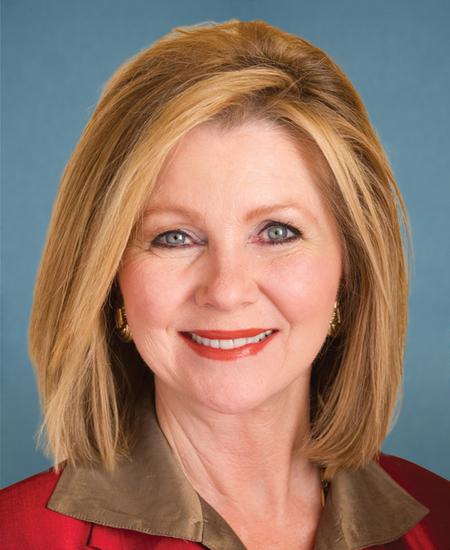
Sen. Marsha Blackburn
Sponsored bills
This resolution urges the President not to return the United States to the Joint Comprehensive Plan of Action—commonly known as the Iran nuclear deal—unless the agreement is revised and Iran meets specified conditions. Further, the resolution recommends that U.S. sanctions against Iran remain in place until Iran has complied with all elements of a revised agreement.
Put Students First Act of 2021 This bill prohibits the Department of Education (ED) from providing certain FY2021 education funds or COVID-19 (i.e., coronavirus disease 2019) relief funds to an elementary or secondary school that does not offer in-person instruction by April 30, 2021. A school must forfeit or return these funds if it does not offer in-person instruction by that date. Additionally, the bill outlines the use of forfeited and returned funds. A state may regain eligibility for these funds if it submits an implementation plan to ED that provides students with school choice options. If a state does not submit an implementation plan, then the funds must be provided as grants to states with the highest percentage of schools offering in-person instruction.
This resolution designates January 24-January 30, 2021, as National School Choice Week.
This resolution honors the life and legacy of Henry Louis Aaron for his accomplishments on and off the baseball field and for defying racism and breaking down racial barriers in the fight for equality.
Ensuring Parity in MA for Audio-Only Telehealth Act of 2021 This bill allows audio-only diagnoses that are made via telehealth to be used for purposes of determining risk adjustments to payments under Medicare Advantage. Additionally, the bill requires payments for Medicare telehealth services that are furnished during the public health emergency relating to COVID-19 (i.e., coronavirus disease 2019) to be made in the same amounts as those for in-person services.
Temporary Reciprocity to Ensure Access to Treatment Act or the TREAT Act This bill temporarily authorizes the interstate provision of in-person and telehealth services. This authorization applies during, and for at least 180 days after, the COVID-19 (i.e., coronavirus disease 2019) emergency. Specifically, subject to scope of practice and other requirements, a health care professional may provide health services in any U.S. jurisdiction based on that individual's authorization to practice in any one state or territory. The bill also provides certain related powers to health care professional regulatory bodies, such as medical boards. Specifically, a regulatory body may investigate and take disciplinary actions against a professional who provides services pursuant to this bill to a patient in that body's jurisdiction.
Equal Access to Care Act This bill temporarily authorizes a health care provider who is physically located and duly licensed in one state to provide telehealth services to individuals in one or more additional states in which the provider is not licensed during the COVID-19 (i.e., coronavirus disease 2019) emergency period.
This concurrent resolution calls for honoring the 235th anniversary of the enactment of the Virginia Statute for Religious Freedom on Religious Freedom Day, January 16, 2021. The resolution affirms that religious freedom includes the right of individuals of any faith and individuals of no faith to live, work, associate, and worship in accordance with their beliefs; all people of the United States can be unified in supporting religious freedom because it is a fundamental human right; and the American people will remain forever unshackled in matters of faith.
This resolution designates January 2021 as National Stalking Awareness Month. Additionally, it does the following: applauds the efforts of service providers, police, prosecutors, national and community organizations, campuses, and private sector supporters to promote awareness of stalking; encourages increased awareness of stalking and the availability of services for stalking victims; and urges national and community organizations, private businesses, and the media to promote awareness of the crime of stalking through National Stalking Awareness Month.