Maddy summaryThis bill changes U.S. immigration law to make certain fraud convictions deportable without requiring a minimum fraud loss amount. It targets immigrants (aliens) convicted of fraud against any private individual, fund, corporation, or government entity, removing the previous threshold for deportation. It also adds provisions to revoke citizenship for naturalized citizens convicted of such fraud crimes, requiring courts to cancel their naturalization certificates. The changes apply to fraud committed on or after September 30, 1996, if not previously charged before the bill's enactment.
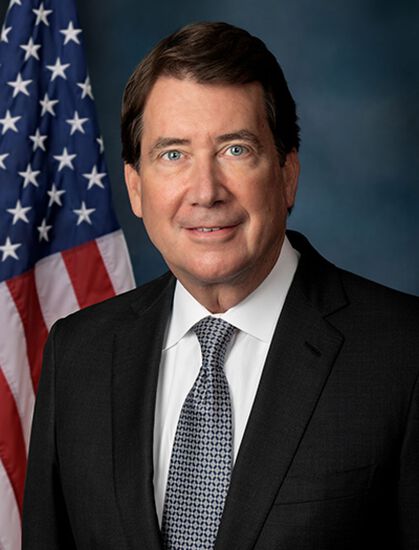
Sen. Bill Hagerty
Sponsored bills
Maddy summaryThis bill amends U.S. immigration law to classify certain driving under the influence (DUI) offenses as "aggravated felonies." It specifically targets convictions for DUI causing death or serious injury, regardless of whether the local conviction was labeled a misdemeanor or felony. Non-citizens convicted of such offenses - whether in state, federal, tribal, or local courts - would become inadmissible to the United States. The change applies to all relevant convictions, even if they occurred before the bill's enactment. This policy directly affects non-citizens with these specific DUI convictions, making them subject to immigration penalties like deportation or denial of entry.
Maddy summarySRES 547 is a Senate resolution expressing strong support for the U.S.-Japan alliance amid recent tensions with China. It condemns China's economic, military, and diplomatic pressure on Japan - including actions like blocking cultural events, suspending trade, and naval incursions - and reaffirms the U.S. commitment to the security treaty covering the Senkaku Islands. The resolution commends Japan's stance against unilateral changes to regional stability, particularly regarding the Taiwan Strait, and supports Japan's increased defense spending to enhance regional deterrence. It directly affects U.S. diplomatic relations with Japan and China, reinforcing alliance unity without proposing new laws or funding.
Maddy summaryS 3469, the BIOSECURE Act of 2025, prohibits U.S. federal agencies from contracting with or using biotechnology equipment/services from companies identified as "biotechnology companies of concern" (primarily those linked to foreign adversaries like China that pose national security risks, such as through unauthorized collection of genetic data). It directly affects federal agencies, contractors, and grant recipients by banning purchases or contracts involving such companies' products, with exceptions for intelligence activities, overseas health care for military personnel, and public health emergencies. Key mechanisms include a defined list of prohibited companies (updated annually), waiver options for national security needs (requiring congressional notice), and strict rules for identifying risks related to multiomic data (genomic, proteomic, etc.). The law aims to prevent U.S. citizens' biological data from being exploited by foreign adversaries through federal contracts.
Maddy summaryThis bill removes the requirement to test methamphetamine purity for sentencing under federal law. It amends the Controlled Substances Act to eliminate purity thresholds in sentencing guidelines for methamphetamine offenses, as current methamphetamine is consistently over 80% pure (95.1% in 2024), making purity testing unnecessary. The bill directs the U.S. Sentencing Commission to review and update sentencing guidelines for methamphetamine cases to maintain deterrent severity while focusing on factors like victim impact or weapon use. It directly affects federal prosecutors, courts, and defendants in methamphetamine trafficking cases by streamlining prosecutions and reducing laboratory burdens.
Maddy summarySRES 536 is a non-binding Senate resolution designating December 2, 2025, as "World Nuclear Energy Day." It commemorates nuclear energy's role in clean power generation, highlighting historical milestones like the first nuclear chain reaction (1942) and the first commercial nuclear plant (1957). The resolution celebrates nuclear energy's contributions to U.S. electricity (18% of generation, 43% carbon-free), job creation (over 70,000 direct jobs), and national security, without creating new laws or affecting any group. It serves as a symbolic recognition of the industry's achievements.
Maddy summaryThe Back the Blue Act of 2025 creates new federal criminal offenses for killing or assaulting law enforcement officers, judges, and certain public safety personnel (including firefighters and first responders) while they are on duty or because of their official status. It increases penalties for these crimes, including minimum 10-year prison terms for killing officers and longer sentences for assaults causing serious injury, with the death penalty possible for killings. The bill also adds a "flight to avoid prosecution" provision for those fleeing to evade charges for killing officers, expands law enforcement officers' rights to carry firearms in certain circumstances, and limits federal habeas corpus relief for individuals convicted of killing law enforcement officers. This legislation directly affects law enforcement officers, judges, and public safety personnel, as well as individuals who commit violence against them.
Maddy summaryS 3299, the "DSH in Tennessee Act," permanently restores federal funding for hospitals in Tennessee that serve many low-income patients, directly affecting those hospitals. For fiscal year 2026, it sets Tennessee's funding level equal to its 2015 amount, adjusted annually for inflation using the consumer price index. Starting in 2027, Tennessee will be treated as a "low DSH state," receiving annual funding increases based on the same inflation adjustment used for similar states. This bill specifically changes how Tennessee's Medicaid Disproportionate Share Hospital (DSH) funding is calculated and allocated.
Maddy summary# Summary of the Financial Services and General Government Appropriations Act, 2026 This comprehensive appropriations bill funds various federal agencies and programs for fiscal year 2026, containing numerous funding allocations, restrictions, and requirements. The key elements include: ## Major Funding Areas - Department of the Treasury - Department of Agriculture - Department of Commerce - Department of Justice - Various government-wide programs and services ## Key Restrictions and Provisions ### General Provisions (Government-Wide) - **Travel Restrictions**: Limits on first-class/business-class travel, conference spending ($500,000 limit per conference), and employee travel - **Contracting Restrictions**: Prohibits use of funds for certain contracts with entities having unpaid tax liabilities or criminal convictions - **Whistleblower Protections**: Requires nondisclosure agreements to not conflict with whistleblower protections - **Political Activity Restrictions**: Prohibits use of funds for publicity/propaganda to support or defeat legislation - **Privacy Protections**: Prohibits collection of personally identifiable information from internet use - **Employee Pay Restrictions**: Limits on pay increases for certain executive positions (including Executive Schedule positions) - **Reporting Requirements**: Mandates quarterly budget reports and detailed conference cost reporting ### District of Columbia Provisions - Specific funding allocations for District government - Restrictions on use of funds for certain activities (e.g., abortion except in specific cases, recreational marijuana) - Budget realignment requirements for District agencies - Limits on use of funds for official vehicles - Restrictions on using funds to support voting representation for DC in Congress - Requirements for budget submissions to Congress ### Specific Program Restrictions - Prohibits funding for certain types of medical research (e.g., abortion services except in specific cases) - Restricts funding for political activities related to DC statehood - Limits use of funds for contraceptive coverage unless religious exemptions apply - Prohibits funding for certain types of recreational activities (e.g., recreational marijuana) The bill contains over 700 specific provisions detailing how funds may and may not be used, with a strong emphasis on transparency, accountability, and preventing misuse of federal funds. It includes detailed requirements for reporting, restrictions on executive compensation, and numerous prohibitions on specific uses of funds across all federal agencies.

Maddy summarySRES 513 is a non-binding Senate resolution designating November 22, 2025, as National Adoption Day and all of November 2025 as National Adoption Month. It aims to promote public awareness of adoption, particularly for children in foster care awaiting permanent families, and encourages Americans to support adoption efforts. The resolution directly affects the public, adoption agencies, and foster care systems by formally recognizing these dates for nationwide awareness campaigns. It does not create new laws or policies but seeks to highlight existing adoption opportunities and the need for stable homes for children.