

Maddy summaryThe GENIUS Act of 2025 establishes a regulatory framework for payment stablecoins in the United States, requiring that only "permitted payment stablecoin issuers" (including bank subsidiaries, federally approved nonbank entities, and state-approved issuers) may issue stablecoins. The bill mandates that these issuers maintain 1:1 reserves backed by specific assets like U.S. currency, Treasury securities, or money market funds, and requires monthly public disclosure of reserve composition. It creates federal oversight by the Comptroller, Federal Reserve, FDIC, and NCUA, while allowing states to regulate smaller stablecoin issuers (under $10 billion market cap) if their rules are substantially similar to federal standards. The act also clarifies that payment stablecoins are not securities or commodities and gives holders priority in insolvency proceedings.
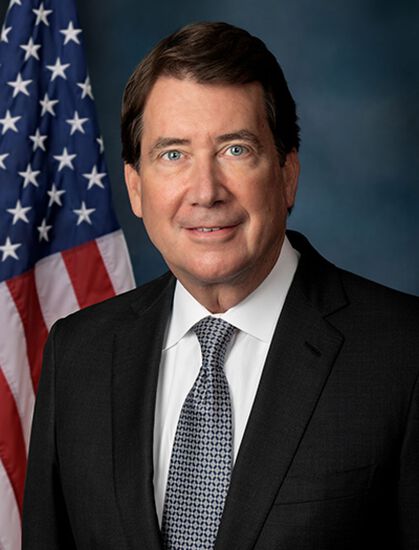
Sen. Bill Hagerty
Sponsored bills
Maddy summaryThe Fair Access to Banking Act (S 401) prohibits large financial institutions ($10 billion+ in assets) and payment networks from denying services to lawful businesses based on political or reputational factors, such as the type of legal business they operate. It requires banks to justify denials using objective, risk-based standards instead of category-based decisions, and mandates written explanations for denials. The law enables lawsuits against violators with treble damages and civil penalties up to 10% of service value (capped at $10,000 per violation). It directly affects major banks, payment processors, and credit unions that serve large-scale customers, ensuring fair access for businesses operating within federal law.
Maddy summaryThis bill permanently prohibits U.S. foreign assistance funds from being used for abortions, involuntary sterilizations, or related biomedical research. It amends the Foreign Assistance Act of 1961 and the Peace Corps Act to block funding for organizations supporting coercive abortion or sterilization programs. The law directly affects all U.S. government programs distributing foreign aid, including international health and development initiatives. It ensures funds cannot cover abortion services as family planning, lobbying on abortion, or programs involving coercion.
Maddy summaryThe American Music Fairness Act (S 326) requires terrestrial radio stations to pay royalties for public performances of music, a change from the current system where they do not pay. It establishes tiered royalty rates for small broadcasters: $10 annually for stations with under $100,000 in revenue, $100 for public broadcasters with $100,000-$1.5 million revenue, and $500 for other stations in that revenue range. The bill explicitly protects songwriters’ existing royalty rights and requires the Copyright Royalty Judges to consider how radio promotion affects music sales when setting rates. These changes amend copyright law to treat terrestrial radio similarly to internet streaming services for royalty purposes.
Maddy summaryThis bill establishes tax credits for individuals and corporations who contribute to scholarship granting organizations that provide educational scholarships for eligible students. The individual tax credit is limited to 10% of adjusted gross income or $5,000, while corporate credits are capped at 5% of taxable income. The bill defines "eligible students" as those from households with income not exceeding 300% of the area median gross income, and specifies that scholarships can cover tuition, materials, tutoring, and educational therapies. The bill includes a $10 billion annual cap on tax credits, with a first-come, first-served allocation system, and requires scholarship organizations to meet specific financial and operational standards.
Maddy summaryThe A PLUS Act (S 309) allows states to consolidate federal education funds for eligible programs into a single, flexible funding stream, reducing administrative complexity and enabling states to manage resources more efficiently to improve student achievement. States must submit a "declaration of intent" detailing which programs they will consolidate (excluding special education funds), commit to public accountability through annual reports on student progress, and ensure federal funds supplement - rather than replace - state education funding. The bill limits administrative costs to 1% of consolidated federal funds (3% if excluding Title I funds) and requires states to report how funds address achievement gaps for disadvantaged students. This directly affects states and local school districts that adopt the declaration, shifting how they administer and report on federal education dollars.
Laken Riley Act This act requires the Department of Homeland Security (DHS) to detain certain non-U.S. nationals ( aliens under federal law) who have been arrested for burglary, theft, larceny, shoplifting, assault of a law enforcement officer, or any crime that results in death or serious bodily injury to another person. The act also authorizes states to sue the federal government for decisions or alleged failures related to immigration enforcement. Under this act, DHS must detain an individual who (1) is unlawfully present in the United States or did not possess the necessary documents when applying for admission; and (2) has been charged with, arrested for, convicted of, or admits to having committed acts that constitute the essential elements of the above crimes. The act also authorizes state governments to sue for injunctive relief over certain immigration-related decisions or alleged failures by the federal government if the decision or failure caused the state or its residents harm, including financial harm of more than $100. Specifically, the state government may sue the federal government over a decision to release a non-U.S. national from custody; failure to fulfill requirements relating to inspecting individuals seeking admission into the United States, including requirements related to asylum interviews; failure to fulfill a requirement to stop issuing visas to nationals of a country that unreasonably denies or delays acceptance of nationals of that country; violation of limitations on immigration parole, such as the requirement that parole be granted only on a case-by-case basis; or failure to detain an individual who has been ordered removed from the United States.
Maddy summaryThis bill changes U.S. tax law by removing abortion expenses from the list of medical costs taxpayers can deduct. It specifically states that amounts paid for abortions cannot be counted toward medical expense deductions on federal tax returns, affecting individuals who pay for abortions and might have claimed them as deductible medical expenses. Exceptions apply for abortions needed to treat life-endangering physical conditions related to pregnancy, or in cases of rape or incest, as certified by a physician. The law would take effect for tax years beginning after its enactment. This is a tax policy change, not a restriction on abortion access.
Maddy summaryThis bill restricts health savings accounts (HSAs), Archer MSAs, health flexible spending accounts, and health reimbursement arrangements from covering most abortion expenses. It allows exceptions only for abortions resulting from rape or incest, or when a pregnancy poses a life-endangering risk to the woman (as certified by a physician). The law amends tax code provisions to exclude non-exempt abortion costs from being treated as qualified medical expenses for tax purposes. These changes take effect for taxable years beginning after December 31, 2025, directly affecting individuals using these specific tax-advantaged health accounts.
Maddy summaryThis bill amends immigration law to make non-citizens subject to deportation if convicted of assaulting a law enforcement officer, firefighter, or first responder while they were performing official duties, due to their duties, or because of their status. It defines "assault" under local law and expands "law enforcement officer" to include those preventing, investigating, or prosecuting crimes. The bill also requires the Department of Homeland Security to annually report the number of such deportations to Congress and the public. The policy directly affects non-citizens convicted of qualifying assaults against covered personnel, with no new enforcement mechanisms beyond existing deportation procedures.