

21st Century Conservation Corps Act This bill provides funding for FY2021 to the Department of Agriculture, the Department of the Interior, the Department of Homeland Security, the Department of Labor, and the Department of Commerce primarily for federal land management and other conservation purposes. The funding provided by this bill is designated as emergency spending, which is exempt from discretionary spending limits. The bill also establishes the Outfitters and Guides Relief Fund; expands the Every Kid Outdoors Program to include fifth and sixth grade students and home-schooled learners 11 and 12 years of age, who shall be provided free access to federal lands and waters under the program; establishes the Forest Service Legacy Roads and Trails Remediation Program; establishes the 21st Century Civilian Conservation Corps program to support youth and workforce development programs; provides for the temporary waiver of ski area permit and rental fees; provides for the temporary waiver of outdoor recreation land use permit fees; provides for the use of the Reforestation Trust Fund for the reforestation of certain National Forest System lands, Bureau of Land Management lands, and Bureau of Indian Affairs lands; establishes the Reforest America Grant Program; and extends through FY2030 and revises the Conservation Stewardship Program, including to provide additional funding for conservation activities related to climate stewardship practices.
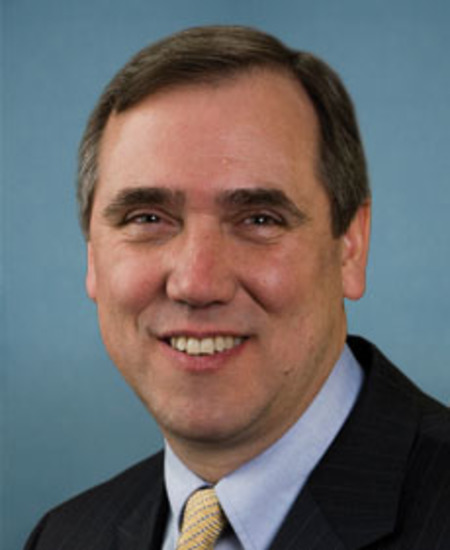
Sen. Jeff Merkley
Sponsored bills
Pandemic Heroes Compensation Act of 2021 This bill allows essential workers and their family members to file claims and receive compensation for harm or death suffered as a result of COVID-19 (i.e., coronavirus disease 2019). A Special Master appointed by the Department of Justice must review claims submitted and determine if a claimant is eligible for compensation, the extent of the harm to the claimant, and the amount of compensation to be awarded.
COVID-19 Health Disparities Action Act of 2021 This bill requires the Centers for Disease Control and Prevention (CDC) to raise awareness about COVID-19 (i.e., coronavirus disease 2019) and promote vaccination among racial and ethnic minority groups and other populations that have experienced health disparities related to the disease. The CDC must conduct, subject to available funding, a public awareness campaign that targets those populations. The CDC must coordinate the campaign with the White House COVID-19 Health Equity Task Force and other federal, state, tribal, and local entities. The CDC must also award grants to health departments for similar COVID-19 awareness campaigns. Grant-funded campaigns must complement the CDC's campaign, as well as other efforts to inform the public about the disease. In addition, the Department of Health and Human Services must develop prototype materials for grantees to use in their campaigns.
Mainstreaming Addiction Treatment Act of 2021 This bill removes the requirement that a health care practitioner apply for a separate waiver through the Drug Enforcement Administration (DEA) to dispense certain narcotic drugs (e.g., buprenorphine) for maintenance or detoxification treatment (i.e., substance use disorder treatment). Further, a community health aide or community health practitioner may dispense certain narcotic drugs for maintenance or detoxification treatment without registering with the DEA if the drug is prescribed by a health care practitioner through telemedicine. It preempts state laws related to licensure for this activity. The bill also directs the Substance Abuse and Mental Health Services Administration to conduct a national campaign to educate health care practitioners and encourage them to integrate substance use disorder treatment into their practices.
Taxpayer Research and Coronavirus Knowledge Act of 2021 This bill requires the Department of Health and Human Services (HHS) to coordinate with specified federal entities to compile a public database of federal contracts, tax benefits, and other support for COVID-19 (i.e., coronavirus disease 2019) biomedical research and development. HHS must develop the database within one month and update it every two weeks.
Democracy Restoration Act of 2021 This bill addresses the voting rights of individuals convicted of a criminal offense and the restoration of their voting rights. First, the bill declares that the right of a U.S. citizen to vote in any election for federal office shall not be denied or abridged because that individual has been convicted of a criminal offense unless, at the time of the election, such individual is serving a felony sentence. Further, the bill provides for enforcement of, and remedies for violations of, the bill. In addition, it sets forth requirements for state and federal notification of individuals of the restoration of their voting rights. Finally, the bill prohibits federal funding of construction or improvement of a place of incarceration unless U.S. citizens incarcerated in that jurisdiction are notified, upon release, of their voting rights.
This resolution recognizes Black History Month as an opportunity to reflect on U.S. history and to commemorate the contributions of African Americans. It calls for the United States to (1) honor the contribution of pioneers who helped to ensure its legacy; and (2) move forward as a nation "indivisible, with liberty and justice for all."
Generating Resilient, Environmentally Exceptional National Streets Act or the GREEN Streets Act This bill establishes national goals to reduce carbon dioxide and other greenhouse gas emissions and improve the resilience of the transportation system. Specifically, the bill directs the Department of Transportation (DOT) to establish minimum standards for states to decrease greenhouse gas emissions and per capita vehicle miles traveled (VMTs) on the National Highway System; DOT to establish measures for states to assess and reduce carbon dioxide; states and metropolitan planning organizations (MPOs) to consider projects and strategies that reduce carbon dioxide and other greenhouse gas emissions and decrease per capita VMT's; states and MPOs to publish an analysis of the impact on per capita VMTs and mobile source greenhouse gas emissions for each project that adds new lanes or otherwise increases traffic capacity and costs more than $25 million; states that are out of compliance with the per capita VMT standards or carbon dioxide or greenhouse gas emission measures to dedicate federal highway funding to achieve compliance; and DOT to establish national transit access standards and performance measures for transit accessibility, transit stop distance, and transit mode share.
This bill requires the President to establish an interagency task force, the China Censorship Monitor and Action Group. The task force shall oversee the development and execution of a federal government strategy to monitor and address Chinese government efforts to censor or intimidate individuals and entities in the United States, including U.S. companies doing business in China, when such individuals and entities are exercising their free speech rights. The Department of State shall seek to enter into an agreement with a qualified independent research entity to report to Congress on Chinese government efforts to censor or intimidate U.S. individuals and entities in the United States, including attempts to censor or intimidate U.S. companies doing business in China.
Iran Diplomacy Act of 2021 This bill outlines U.S. policy with respect to Iran and the Joint Comprehensive Plan of Action (JCPOA), commonly known as the Iran nuclear deal. Specifically, the bill states that the United States and Iran should promptly return to full compliance with their commitments under the JCPOA. Further, the bill encourages the United States to lead international efforts to advance diplomatic measures that promote U.S., regional, and international security.