

Comprehensive Paid Leave for Federal Employees Act This bill provides paid family and medical leave to federal employees. Currently, federal employees are entitled to 12 weeks of administrative leave for one or more of the following reasons: (1) the birth of a child, (2) the adoption or foster care of a child, (3) the care of an immediate family member with a serious health condition, (4) inability to work due to a serious health condition, and (5) exigencies relating to an immediate family member's active duty service in the Armed Forces. However, of these reasons, employees are entitled to paid administrative leave only in connection with the birth, adoption, or foster care of a child (i.e., parental leave). The bill provides 12 weeks of paid administrative leave for any of these reasons, and specifies that this leave is in addition to any annual or sick leave to which employees are entitled.
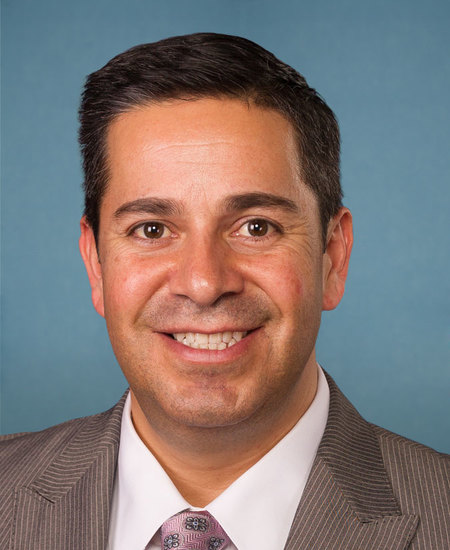
Sen. Ben Ray Luján
Sponsored bills
Tax Fairness for Workers Act This bill allows an above-the-line tax deduction for union dues and expenses. (An above-the-line deduction is subtracted from gross income and is available whether or not a taxpayer itemizes other deductions.) The bill also reinstates the miscellaneous itemized tax deduction for unreimbursed expenses attributable to the performance of services as an employee (Under current law, all miscellaneous itemized deductions are suspended through 2025).
This resolution recognizes the accomplishments and example of Cesar Estrada Chavez. The resolution also encourages the people of the United States to commemorate his legacy and to always remember his rallying cry, "Si, se puede!" (which means "Yes, we can!").
This resolution honors the memory of U.S. Capitol Police Officer William Francis "Billy" Evans for the selfless acts of heroism he displayed on April 2, 2021.
Defenders of Bataan and Corregidor Congressional Gold Medal Act This bill provides for the award of a Congressional Gold Medal to the troops from the United States and the Philippines who defended Bataan and Corregidor, in recognition of their personal sacrifice and service during World War II.
Shark Fin Sales Elimination Act of 20 21 This bill makes it illegal to possess, buy, sell, or transport shark fins or any product containing shark fins, except for certain dogfish fins. A person may possess a shark fin that was lawfully taken consistent with a license or permit under certain circumstances. Penalties are imposed for violations under the Magnuson-Stevens Fishery Conservation and Management Act.The maximum civil penalty for each violation shall be $100,000, or the fair market value of the shark fins involved, whichever is greater.
Asuncion Valdivia Heat Illness and Fatality Prevention Act of 2021 This bill requires the Department of Labor to promulgate an occupational safety or health standard on prevention of exposure to excessive heat. Excessive heat includes outdoor or indoor exposure to heat at levels that exceed the capacities of the body to maintain normal body functions and may cause heat-related injury, illness, or fatality. In addition, the bill establishes requirements concerning (1) training and education to prevent and respond to heat illness, and (2) whistle-blower protections.
This resolution expresses the sense of the Senate that access to reliable and clean drinking water is critically important to the health and welfare of American Indians and Alaska Natives. Further, the resolution calls upon the federal government to provide water access to tribal members and communities.
Flexible Financing for Rural America Act of 202 1 This bill allows rural utility service providers to submit to the Department of Agriculture (USDA) a request to adjust the interest rate or modify the terms of certain loans. The request shall include a report summarizing how the adjustment or modification will assist the borrower in providing critical utility services to a rural community. Specifically, on receipt of a request, USDA or the Department of the Treasury (in the case of a loan owned by the Federal Financing Bank) must adjust the interest rate on the loan to match certain interest rates for obligations of comparable maturity to the term remaining on the loan (or a higher rate requested by the borrower), and make modifications to the loan terms as necessary to address changes in the financial position of the borrower due to the COVID-19 public health emergency and to promote the financial sustainability of the borrower. In carrying out the adjustments or modifications, USDA or Treasury shall not impose or collect any fee from, or impose any penalty on, a borrower. The bill also provides funding to implement the adjustments and modifications and for the liquidation of residual intragovernmental amounts owed by the Federal Financing Bank in connection with certain loans.
Climate Change Education Act This bill declares that the evidence for human-induced climate change is overwhelming and undeniable. The National Oceanic and Atmospheric Administration (NOAA) must establish a Climate Change Education Program to increase the climate literacy of the United States by broadening the understanding of human-induced climate change, including possible consequences, disproportionate impacts of such consequences, and potential solutions; apply the latest scientific and technological discoveries to provide learning opportunities to people of all ages; and help people understand and promote implementation of new technologies, programs, and incentives related to climate change, climate adaptation and mitigation, climate resilience, climate justice, and environmental justice. NOAA must also establish a grant program for climate change education.