

Quality Care for Nursing Home Residents and Workers During COVID-19 Act This bill modifies several requirements for Medicare skilled nursing facilities (SNFs) and Medicaid nursing facilities (NFs) during the public health emergency relating to COVID-19 (i.e., coronavirus disease 2019). Specifically, SNFs and NFs must comply with specified quality of care, worker safety, and transparency requirements, subject to civil penalties. Requirements include (1) testing residents and employees for COVID-19 weekly or before shifts, respectively, and reporting any lack of available testing kits on a daily basis; (2) providing at least two weeks of paid sick leave to each employee; and (3) reporting the number of COVID-19 cases and deaths, including demographic information, on a daily basis. The Centers for Medicare & Medicaid Services must also distribute funds to allow states to establish strike teams that may be deployed to SNFs and NFs within 72 hours of three or more COVID-19 diagnoses to help separate those who have been exposed, supervise testing, and ensure enforcement of whistleblower protections, among other needs. Teams must include members of the National Guard, public health officials, medical experts, and representatives of residents and workers.
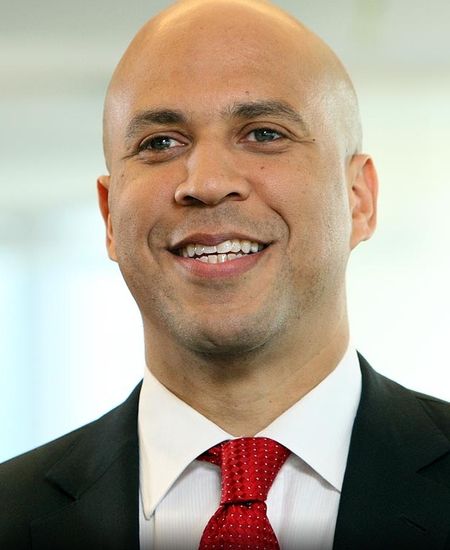
Sen. Cory A. Booker
Sponsored bills
Federal Correctional Facilities COVID-19 Response Act This bill establishes requirements to prevent and limit the spread of COVID-19 in federal correctional facilities (e.g., prisons). Among the requirements, correctional facilities must do the following: conduct weekly COVID-19 tests and offer vaccinations for incarcerated individuals and employees; submit weekly reports to the Department of Justice, the Centers for Disease Control and Prevention (CDC), and state public health authorities on COVID-19 cases, vaccinations, and outcomes; and report outbreaks to the CDC, which must deploy staff to prevent and mitigate the spread. Finally, the bill requires the Bureau of Prisons, in consultation with the CDC, to update its guidelines on managing COVID-19 in correctional facilities.
Expanding SNAP Options Act of 2021 This bill revises the Supplemental Nutrition Assistance Program (SNAP, formerly known as the food stamp program) to make the online redemption of benefits, including the acceptance of Electronic Benefits Transfer (EBT) cards, more widely available by requiring the implementation of online SNAP purchasing in every state and providing funding for an online redemption portal and a technical assistance center. The Department of Agriculture (USDA) must award on a competitive basis one or more contracts to develop an EBT Online Redemption Portal to (1) allow program participants to use online or mobile electronic benefits transactions to purchase program foods from, and make online payments to, authorized program retailers under SNAP; and (2) facilitate food purchase delivery for program participants using such electronic benefits transactions. The Food and Nutrition Service of USDA must award competitive grants or enter into cooperative agreements with nonprofit entities to establish a SNAP Online Purchasing Technical Assistance Center to provide state agencies, authorized program retailers, and program participants information on and technical assistance with accepting SNAP benefits through online transactions and use of the portal. In providing technical assistance, the center must give priority to entities that are small and limited-resource retailers. The bill provides funding for both the online redemption portal and the technical assistance center. USDA must maintain on its website a publicly available listing, organized and searchable by region, locality, and state, of all approved retail food stores accepting benefits from recipients of SNAP, including through online transactions.
This resolution recognizes Black History Month as an opportunity to reflect on U.S. history and to commemorate the contributions of African Americans. It calls for the United States to (1) honor the contribution of pioneers who helped to ensure its legacy; and (2) move forward as a nation "indivisible, with liberty and justice for all."
This resolution calls on the President to take executive action to cancel up to $50,000 in federal student loan debt for borrowers. Further, it encourages the President to (1) ensure that borrowers have no tax liability from the debt cancellation, (2) ensure that the debt cancellation helps close racial wealth gaps, and (3) pause student loan payments and interest accumulation on federal student loans for the duration of the COVID-19 (i.e., coronavirus disease 2019) pandemic.
This resolution expresses the sense of the Senate that the federal government has a duty to develop a holistic agenda to respond to racial injustice, unemployment, the COVID-19 (i.e., coronavirus disease 2019) pandemic, and climate change. The resolution further outlines the goals of this agenda to build a society with greater racial, economic, and gender justice; dignified work; healthy communities; and a stable climate. Additionally, the resolution identifies efforts to support these goals.
Justice for Black Farmers Act of 2021 This bill directs the Department of Agriculture (USDA) to provide a variety of assistance to address historical discrimination and disparities in the agricultural sector. For example, the bill establishes an equity commission in USDA to examine discrimination by the agency against Black farmers and ranchers and recommend actions to end the systematic disparities in the treatment of Black farmers and ranchers. USDA must also establish a Farm Conservation Corps to provide young adults who are from socially disadvantaged groups with the skills necessary to pursue careers in farming and ranching. The bill provides funding for historically Black colleges and universities to commence and expand courses of study that are focused on careers in agriculture or related disciplines. The bill also increases the authorization of appropriations for a program to resolve issues relating to ownership and succession on farmland. Additionally, it expands credit assistance for socially disadvantaged farmers and ranchers. Further, the bill (1) establishes that a minimum of 50% of a covered packer's (not including a packer that owns only one livestock processing plant) daily volume of livestock slaughter must be purchased through spot market sales from nonaffiliated producers; (2) increases funding for the Local Agriculture Market Program; and (3) gives priority to socially disadvantaged farmers and ranchers for conservation technical assistance, the Conservation Stewardship Program, and the Rural Energy for America Program.
Safe Environment from Countries Under Repression and Emergency Act or the SECURE Act This bill allows qualified nationals of a country that has or had a temporary protected status designation to obtain permanent resident status. Such an alien qualifies for permanent residence if the alien had temporary protected status, qualified for such status on certain dates, or was present in the United States due to having been granted deferred enforced departure status that extended past a certain date; has been continuously present in the United States for three years before applying for adjustment or before being removed after a certain date; is not inadmissible or deportable for certain reasons; and passes applicable background checks. The continuous presence requirement may be waived in certain instances. A spouse, domestic partner, child, or unmarried child of a qualifying alien may also obtain permanent resident status under the bill upon meeting certain requirements. An alien with a pending application shall receive work authorization and be eligible for travel authorization. An alien may not be removed if the alien (1) has a pending application, or (2) is prima facie eligible for permanent resident status under this bill and intends to apply. Information from applications may not be used or shared for immigration enforcement, with limited exceptions such as for identifying fraudulent claims. The Department of Homeland Security must report to Congress when terminating a country's temporary protected status designation with an explanation justifying the termination.
Arctic Refuge Protection Act of 2021 This bill designates approximately 1,559,538 acres of land within Alaska in the Arctic National Wildlife Refuge as a component of the National Wilderness Preservation System.
Gun Violence Prevention Research Act of 2021 This bill authorizes the Centers for Disease Control and Prevention to conduct or support research on firearms safety or gun violence prevention.