

Maddy summaryThe LEOSA Reform Act (S 1462) clarifies and expands federal protections for qualified active and retired law enforcement officers who carry concealed firearms, directly affecting those who meet specific standards. It updates existing law to explicitly allow these officers to carry firearms in National Park System areas and on public property (even with entry fees), while requiring retired officers to maintain recent firearms qualification standards (within 12-36 months) to retain their rights. The bill also explicitly permits qualified officers to carry firearms in certain Federal facilities open to the public, such as Security Level I or II buildings. These changes streamline federal firearm carry rules for law enforcement personnel without altering state laws or creating new restrictions.
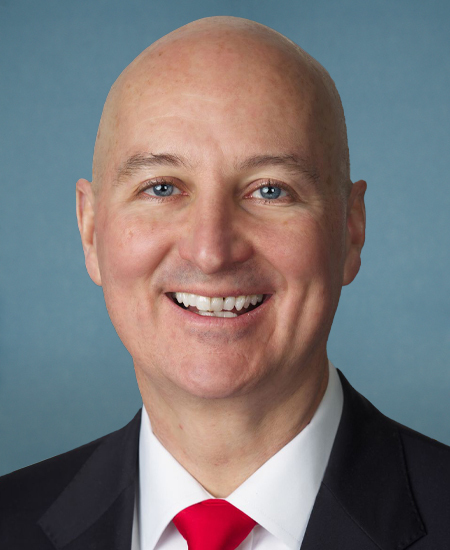
Sen. Pete Ricketts
Sponsored bills
Maddy summaryThe SPUR Act (S 1456) streamlines oil, gas, and mineral development on federal lands by requiring quarterly onshore oil and gas lease sales, allowing states to assume permitting authority for these activities, and limiting environmental review delays for energy projects. The bill reduces royalty rates for oil and gas leases to a minimum of 12.5 percent during its 5-year implementation period, prohibits the President from delaying energy leasing without congressional approval, and expedites LNG export approvals with a 45-day decision deadline. It directly affects oil and gas companies seeking permits, state governments that may take over permitting authority, and federal agencies like the Bureau of Land Management. The legislation aims to increase domestic energy production by making federal leasing and permitting processes faster and more predictable.
Maddy summarySRES 194 designates May 5, 2023, as National Day of Awareness for Missing and Murdered Native Women and Girls. The resolution directly addresses the disproportionate violence faced by Native American, Alaska Native, and Native Hawaiian women by calling for public commemoration of victims and solidarity with affected families. It uses May 5 - the birthday of Hanna Harris, a Northern Cheyenne woman whose case is cited in the resolution - as the designated date for awareness efforts. As a Senate resolution, it serves as a symbolic recognition of this issue rather than creating new legal obligations.
Maddy summaryThis bill creates an exemption from federal environmental liability for fire departments and facilities using specific firefighting foam. It protects entities with approved fire suppression systems that release PFAS-containing foam during lawful activities like training or emergency responses, provided the system meets current fire codes and engineering standards. The exemption does not apply if the entity acts with gross negligence or continues using the foam 5 years after safer alternatives become available. This directly affects fire departments, airports, and industrial facilities that use aqueous film-forming foam (AFFF) containing PFAS chemicals, shielding them from CERCLA cleanup cost claims for routine discharges.
Maddy summaryThis bill protects airport sponsors (like public airports or joint-use facilities) from federal environmental liability claims related to PFAS chemicals used in firefighting foam. It specifically exempts them from costs under the federal environmental law (CERCLA) if the PFAS release resulted solely from using the foam as required by the FAA for safety compliance and following FAA guidelines. The exemption does not apply if the airport sponsor acted with gross negligence or willful misconduct in using the foam. This law directly affects airports that use FAA-mandated firefighting foam but does not shield them from liability for reckless conduct.
Maddy summaryThis bill protects certain waste and compost facilities from federal environmental liability for PFAS releases under CERCLA. It exempts owners/operators of solid waste facilities and compost processors from lawsuits if PFAS was released during permitted disposal of municipal waste residuals, biosolids management, or compost processing under state law. The exemption does not apply if the facility acted with gross negligence or willful misconduct. This directly affects waste management companies, compost businesses, and government entities operating these facilities.
Maddy summaryThis bill protects public water systems, wastewater treatment facilities, and related entities from liability under federal environmental law for PFAS releases, provided they follow all applicable laws during treatment or disposal. It exempts these "protected entities" from cost-recovery claims under CERCLA when handling PFAS in ways consistent with existing water treatment practices, such as managing biosolids, discharging treated water, or disposing of filter media. The exemption does not apply if a facility acts with gross negligence or willful misconduct in handling PFAS. This directly affects water utilities and municipalities managing PFAS-contaminated water or byproducts under current federal and state regulations.
Maddy summaryThis bill exempts agricultural operations from liability under the federal CERCLA law for releases of specific PFAS chemicals used in farming. It directly affects farmers and agricultural businesses (defined as "protected entities") who produce or harvest crops, shielding them from lawsuits or cleanup costs related to covered PFAS substances. The exemption applies to non-volatile PFAS hazardous substances (excluding gases) used in agricultural practices, but does not protect against liability for gross negligence or willful misconduct. The law changes existing environmental liability rules to specifically exclude routine agricultural activities involving these chemicals.
Maddy summarySRES 188 is a symbolic Senate resolution celebrating the 75th anniversary of Israel's founding on May 14, 2023. It formally recognizes Israel's establishment, reaffirms the U.S.-Israel partnership, and highlights shared democratic values, security cooperation, and diplomatic achievements like the Abraham Accords. The resolution has no policy impact or direct effect on individuals or legislation - it serves solely as a ceremonial expression of support. It was introduced by a bipartisan group of senators and passed without implementing new laws or funding.
Maddy summaryThis bill (S 1400) amends USDA conservation programs to expand access to technical service providers (TSPs) who help farmers and ranchers implement conservation practices. It creates new pathways for non-Federal entities (like state agencies, agricultural cooperatives, or professional societies) to certify TSPs, streamlines certification for existing professionals (e.g., certified crop advisors), and sets fair payment rates for TSP services. The law requires USDA to maintain a public registry of certified providers, track usage metrics, and report on how TSPs improve conservation outcomes. This directly affects agricultural producers seeking technical assistance and TSPs wanting to deliver services under USDA programs.