

Maddy summaryThe Background Check Expansion Act requires most private firearm transfers between unlicensed individuals to go through a licensed dealer, who must conduct a background check as if the dealer were selling the firearm. Exceptions include transfers between close family members (like parents and children), law enforcement, temporary safety-related transfers (e.g., preventing domestic violence), and transfers for hunting or target shooting with specific safeguards. Licensed dealers must provide a notice about the background check requirement and have the buyer sign a certification form. The bill does not create a national gun registry and preserves states' authority to enact stricter firearm laws. It takes effect 180 days after enactment.
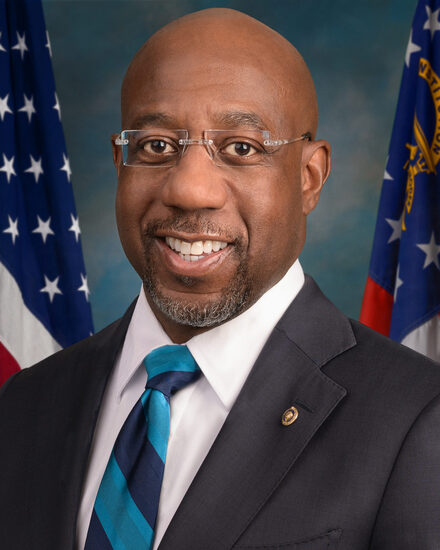
Sen. Raphael G. Warnock
Sponsored bills
Maddy summaryS 3209, the NOPAIN for Veterans Act, requires the Department of Veterans Affairs (VA) to include non-opioid pain medications in its national formulary for veterans. The bill defines "non-opioid pain management drugs" as FDA-approved treatments for acute pain that don't use opioid receptors. The VA must add these drugs within one year of FDA approval or eligibility for payment under federal health programs, whichever comes first. This policy change directly affects veterans receiving VA pain management care by expanding access to non-opioid options, while prohibiting use of the Cost of War Toxic Exposures Fund to implement this provision.
Maddy summaryS 3185, the ANCHOR for Military Families Act, requires the Department of Defense to provide military members and their families with comprehensive relocation information 45 days before a permanent change of station. It mandates details on six key areas: family assistance programs (including spouse employment), housing options, mental health support, educational resources for children (including school transitions and special education), legal/financial counseling, and other relocation support services. The bill updates existing law to ensure this information is delivered through accessible materials, briefings, and digital resources at military installations. It also requires annual reports to Congress on implementation progress and family awareness of available programs. This directly affects active-duty service members and their families relocating due to military orders.
Maddy summaryThis resolution expresses support for designating November 8, 2025, as "National First-Generation College Celebration Day." It honors students whose parents did not earn bachelor's degrees, recognizing their contributions to the workforce and the role of the Higher Education Act of 1965 in supporting them. The resolution encourages nationwide recognition of this day and celebrates the Act's programs like Federal TRIO and Pell Grants. As a symbolic gesture, it does not create new laws or alter existing policies.
Maddy summaryThis bill ensures uninterrupted funding for Head Start programs in fiscal year 2026 by appropriating necessary funds from the Treasury if regular or continuing appropriations for that year are not enacted by September 30, 2026. It directly affects Head Start programs and the children and families they serve by preventing service disruptions during funding gaps. The key mechanism requires funding to continue under the same conditions as fiscal year 2025 (as established by the Full-Year Continuing Appropriations and Extensions Act, 2025) until either regular appropriations are passed, a specific appropriations resolution is enacted, or September 30, 2026. The bill does not create new funding but maintains current levels to avoid program interruptions.
Maddy summaryThe Insurance Fraud Accountability Act (S 976) amends the Affordable Care Act to strengthen penalties for insurance agents and brokers who provide incorrect or fraudulent information during health plan enrollment. It imposes civil penalties of $10,000-$50,000 per violation for negligent errors and up to $200,000 for knowing fraud, with criminal penalties including up to 10 years in prison for willful violations. The bill requires new verification processes for agent- or broker-assisted enrollments by January 2029, including mandatory documentation, consent forms, and delayed commission payments until enrollment issues are resolved. These provisions directly affect agents, brokers, third-party marketing organizations, and consumers enrolled in qualified health plans through federal or state marketplaces.
Maddy summarySRES 481 is a non-binding Senate resolution urging the Trump administration to use the USDA’s existing $4.5 billion contingency funds and interchange authority to fund the Supplemental Nutrition Assistance Program (SNAP) for November 2025. The resolution states that SNAP is an entitlement program requiring government funding, and the USDA legally has the authority to draw from these reserves to avoid benefit disruptions. This would directly support the 42 million Americans who rely on SNAP, including 16 million children, 8 million seniors, 4 million people with disabilities, and 1.2 million veterans. The resolution does not change the law but calls for immediate action to maintain food assistance during a potential funding gap.
Maddy summaryThis bill ensures uninterrupted access to SNAP (food stamps) and WIC benefits during government funding gaps in fiscal year 2026. It authorizes the Treasury to provide emergency funds if Congress fails to pass full-year appropriations for the Department of Agriculture by September 30, 2025, covering all missed benefits retroactively from September 30, 2025. State agencies administering these programs would be reimbursed for costs incurred during the funding lapse. The funding automatically terminates once Congress passes 2026 appropriations or by September 30, 2026.
Maddy summaryS 3067, the Innovation Fund Act, establishes a competitive grant program administered by the Department of Housing and Urban Development (HUD) to help eligible cities, counties, and tribes increase local housing supply. The program provides annual grants (ranging from $250,000 to $10 million) to entities that have demonstrated improved housing supply growth, with priority given to innovative zoning reforms and initiatives that expand "attainable housing" (housing serving households at 60-120% of area median income). Grants can fund activities like revising parking requirements, eliminating restrictive zoning, streamlining permitting, and creating mixed-income developments. The bill authorizes $200 million annually (adjusted for inflation) for fiscal years 2027-2031 and explicitly states it does not override local zoning laws or affect existing housing program requirements.
Maddy summaryThe HUD Transparency Act of 2025 requires the Department of Housing and Urban Development's (HUD) Inspector General to provide annual testimony to specific congressional committees. Each October, the Inspector General must report on efforts to prevent fraud, audit capabilities, program improvements, efficiency recommendations, resource adequacy, and ongoing work. This bill directly affects HUD's Inspector General and the House Financial Services Committee and Senate Banking committees, mandating structured transparency about HUD's operations. It does not change HUD programs but establishes a regular reporting mechanism to enhance accountability.