

This resolution recognizes the centennial of the Tulsa Race Massacre of 1921. The resolution acknowledges the historical significance of this event as one of the largest single instances of state-sanctioned violence against Black people in American history; honors the lives and legacies of the estimated 300 Black individuals who were killed during the massacre and the nearly 9,000 who were left homeless and penniless; condemns efforts to cover up the truth and shield the white community, especially government officials, from accountability; condemns the continued legacy of racism and white supremacy against Black people in the United States, particularly in the form of police brutality; encourages education about the massacre, the history of white supremacy that fueled the massacre, and subsequent attempts to deny or cover up the massacre, in all elementary and secondary education settings and in institutions of higher education; and recognizes the commitment of Congress to acknowledge and learn from the history of racism and racial violence to reverse the legacy of white supremacy and fight for racial justice.
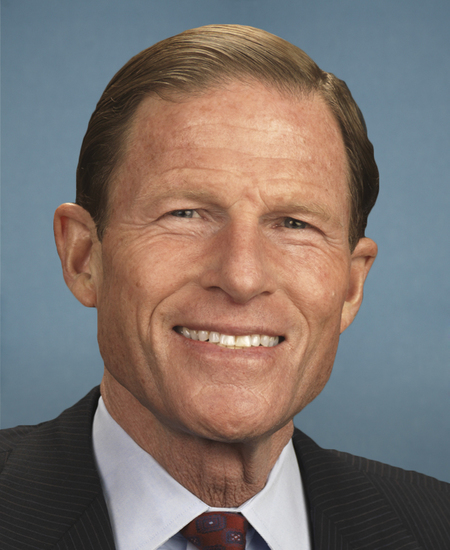
Sen. Richard Blumenthal
Sponsored bills
Hello Girls Congressional Gold Medal Act of 2021 This bill provides for the award of a single Congressional Gold Medal in honor of the female telephone operators of the Army Signal Corps, commonly known as the Hello Girls , in recognition of their military service, devotion to duty, and 60-year struggle for veterans' benefits and recognition as soldiers.
COVID-19 in Immigration Detention Data Transparency Act This bill requires U.S. Immigration and Customs Enforcement (ICE), U.S. Customs and Border Protection (CBP), and the Office of Refugee Resettlement (ORR) to collect and report various information about detained individuals, including data on COVID-19 (i.e., coronavirus disease 2019) testing. During the COVID-19-related declared public health emergency and for one year after, ICE, CBP, and ORR shall publicly post on a website certain data about its detention facilities, including COVID-19 testing numbers for detained individuals and detention facility staff, COVID-19 case outcomes, vaccinations, and COVID-19-related information about detained individuals who were released or removed from the United States. The Centers for Disease Control and Prevention (CDC) shall issue guidance as to the COVID-19-related data that ICE, CBP, and ORR must collect and report weekly to the CDC. The CDC shall periodically report to Congress a summary of this data and an analysis of the trends and pattern of the spread of the disease. ICE, CPB, and ORR shall ensure that each detained individual receives all medical records related to any COVID-19 test administered to the individual. ICE, CPB, and ORR shall also report to Congress on (1) the COVID-19 safety protocols in its facilities, and (2) information relating to their efforts to ensure that each detained individual has access to legal counsel. This bill's data collection and reporting requirements that apply to ICE, CPB, and ORR shall also apply to any contract facilities that they use to hold detained individuals.
NICS Denial Notification Act of 2021 This bill requires the Department of Justice to notify state and local law enforcement authorities following a firearms-related background check that results in a denial.
This bill directs the Joint Committee on the Library to accept from the Harriet Tubman Statue Commission of Maryland the donation of a statue of Harriet Tubman, which the Architect of the Capitol shall place in a prominent, permanent location in the U.S. Capitol.
Public Health Infrastructure Saves Lives Act This bill provides annual funding for the Centers for Disease Control and Prevention (CDC) to strengthen core public health infrastructure. Core public health infrastructure includes the elements and workforce capabilities that enable health departments to perform critical functions such as disease surveillance and emergency response. Specifically, the CDC must award grants to health departments for their core infrastructure needs. In addition, the CDC must support the development of accreditation standards for health departments that emphasize core public health infrastructure. Health departments must meet those (or similar) standards as a condition of receiving grants beginning in FY2025. The CDC must also take steps to expand and improve its own public health infrastructure.
Strengthening and Amplifying Vaccination Efforts to Locally Immunize all Veterans and Every Spouse Act or the SAVE LIVES Act This bill authorizes the Department of Veterans Affairs (VA) to furnish a COVID-19 (i.e., coronavirus disease 2019) vaccine to covered individuals during the COVID-19 public health emergency. Under the bill, covered individuals are veterans who are not eligible to enroll in the VA health care system; specified veterans who are eligible for hospital care, medical services, and nursing home care abroad; beneficiaries who are eligible for care due to a specified disability or death of a veteran; family caregivers of veterans who are participating in the VA's Program of Comprehensive Assistance for Family Caregivers; caregivers of veterans participating in the VA's Program of General Caregiver Support Services; caregivers of veterans participating in the VA's Medical Foster Home Program, Bowel and Bladder Program, Home Based Primary Care Program, or Veteran Directed Care Program; and the spouses of veterans. The VA must prioritize the vaccination of (1) veterans who are enrolled in the VA health care system, (2) veterans who fail to enroll but receive hospital care and medical services for specified disabilities in their first 12 months of separation from service, and (3) caregivers accompanying such prioritized veterans. Under the bill, the VA is authorized to offer a vaccine to the spouse of a veteran near the same time the veteran receives the vaccine.
Air Carrier Access Amendments Act of 2021 This bill expands provisions prohibiting discrimination against disabled individuals by an air carrier. Specifically, it enumerates certain actions that an air carrier must take or may not take with respect to a disabled individual. It also requires the Department of Transportation (DOT) to ensure that disabled individuals traveling in air transportation are able to file complaints with DOT in response to disability-related discrimination and receive assistance from DOT through a hotline or comparable electronic means. The bill authorizes an aggrieved individual and the Department of Justice to bring a civil action for discrimination. The Architectural and Transportation Barriers Compliance Board shall prescribe regulations setting forth minimum standards for aircraft with new or existing type certificates to ensure the accessibility of individuals with disabilities, including those who use wheelchairs. The standards shall address, among other things, boarding and deplaning equipment, seating accommodations, lavatories, visually accessible announcements, and proper stowage of assistive devices in the cargo hold to prevent damage.
Disability Employment Incentive Act This bill expands tax credits and deductions that are available for employers who hire and retain employees with disabilities. The bill expands the work opportunity tax credit to include the hiring of employees who receive Social Security Disability Insurance (SSDI) benefits. For employers who hire vocational rehabilitation referrals, Supplemental Security Income recipients, or SSDI recipients, the bill also (1) increases the amount of wages that may be taken into account for the credit, and (2) allows an additional credit for second-year wages. With respect to the tax credit for expenditures by eligible small businesses to provide access to disabled individuals, the bill increases the limits that apply to (1) the amount of expenditures that are eligible for the credit, and (2) the gross receipts and full-time employees of eligible small businesses. The bill also expands the tax deduction for expenditures to remove architectural and transportation barriers to the handicapped and elderly. The bill modifies the deduction to (1) increase the limitation on the amount of the deduction, and (2) allow the deduction to be used for certain improvements in the accessibility of i nternet or telecommunications services to handicapped and elderly individuals.
American Dream Employment Act of 2021 This bill permits the compensation of congressional employees who hold a current employment authorization document that was issued pursuant to a grant of (1) deferred action, including under the Deferred Action for Childhood Arrivals Program; (2) deferred enforced departure; or (3) temporary protected status. (Generally, these programs and statuses allow eligible aliens to remain and work in the United States.)