

Maddy summaryThis bill provides $5 million annually (2026-2030) to states for improving stillbirth data collection and research, directly affecting state health departments and public health officials. It requires states to collect deidentified stillbirth data - including risk factors - using existing systems like fetal mortality reviews, while ensuring strict privacy compliance. The bill also allocates $1 million yearly to develop standardized data collection guidelines and public educational materials about stillbirths, with input from medical professionals and bereavement organizations. It mandates a public HHS report within five years containing these guidelines and educational resources to improve data consistency and awareness. The legislation focuses on enhancing data quality for research and public health, without altering medical care or insurance coverage.
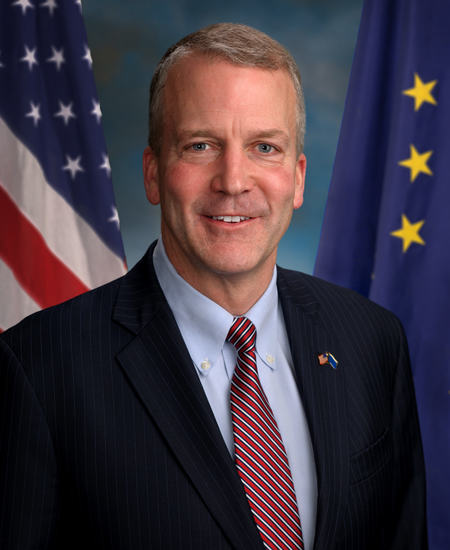
Sen. Dan Sullivan
Sponsored bills
Maddy summaryS 2832, the Native American Entrepreneurial and Opportunity Act of 2025, creates a new Office of Native American Affairs within the Small Business Administration. This office directly serves federally recognized tribes, Native Hawaiian Organizations, and small businesses owned by Native Americans by connecting them to existing SBA programs like the 8(a) program. The bill establishes an Associate Administrator for Native American Affairs (requiring cultural expertise and experience) to coordinate outreach, develop tailored assistance, and facilitate tribal consultation. It authorizes funding for the office from fiscal years 2026 through 2030 to support these initiatives.
Maddy summarySRES 391 is a symbolic Senate resolution condemning the assassination of Charlie Kirk, a conservative campus advocate and founder of Turning Point USA, who was killed on September 10, 2025, at Utah Valley University. The resolution expresses the Senate’s strongest condemnation of the killing, extends condolences to his family (including his wife Erika and two children), and honors his work promoting civil discourse on college campuses. As a non-binding resolution, it does not create policy changes or affect any individuals through legislative action.
Maddy summarySRES 392 is a Senate resolution designating November 16, 2025, as "National Warrior Call Day." It encourages all U.S. citizens to reach out to active-duty service members and veterans through phone calls or conversations to reduce isolation and connect them with support resources. The resolution specifically highlights the importance of peer-to-peer connections in addressing mental health challenges, citing veteran suicide statistics as context. As a symbolic measure (not a law), it does not create new programs but urges public engagement to support military personnel transitioning from service.
Maddy summaryThe Enhancing First Response Act requires the Federal Communications Commission (FCC) to issue detailed reports after major disasters that activate the Disaster Information Reporting System for at least 7 days. These reports must track outages in broadband, mobile, and emergency communication services (including 911 systems), estimate affected users, and include public hearings with local officials, providers, and first responders within 8 months. The FCC must publish a final report within 12 months, containing outage data and recommendations to improve network resilience. This bill directly affects communication providers, public safety agencies, and disaster response systems by standardizing outage reporting and accountability.
Maddy summaryThe Fire Ready Nation Act of 2025 establishes a coordinated fire weather services program within the National Oceanic and Atmospheric Administration (NOAA) to improve wildfire prediction, response, and community resilience. The program will develop advanced weather models, enhance data collection through technologies like uncrewed systems, and provide impact-based decision support services to emergency responders and communities. It specifically prioritizes improving access to these services for remote, rural, and isolated communities where residents often serve as first responders to wildfires. The bill authorizes $15 million for fiscal year 2026, increasing to $50 million by 2030, to fund these activities and support coordination with federal, state, tribal, and local partners.
Maddy summaryThis bill amends the Harmful Algal Bloom and Hypoxia Research and Control Act of 1998 to strengthen federal efforts addressing harmful algal blooms (HABs) and hypoxia across marine, estuarine, and freshwater systems. It establishes a new Task Force required to develop a comprehensive Action Strategy every five years, examining causes, ecological impacts, and economic consequences of HABs in diverse environments including the Great Lakes, coastal waters, and freshwater systems. The bill authorizes $19.5 million annually for NOAA and $8 million annually for the EPA (fiscal years 2026-2030) to implement these provisions, creates a national monitoring network for HABs, and establishes an incubator program to develop innovative prevention strategies. It mandates consultation with states, tribes, local governments, and affected industries like fisheries and agriculture to address HABs impacts on public health, ecosystems, and communities.
Maddy summaryThe Prevent Government Shutdowns Act of 2025 would prevent government shutdowns by automatically continuing funding for federal programs at previous year's levels if Congress fails to pass regular appropriations bills. If a lapse in appropriations occurs, the bill would provide automatic funding for 14 days, extendable for additional 14-day periods until a new appropriations bill is enacted, with funds charged to the appropriate account once legislation is passed. The bill also restricts official travel for certain government employees and congressional staff during a lapse, with limited exceptions for returning to Washington, D.C. or responding to national security events. It establishes procedures requiring Congress to prioritize appropriations legislation during a funding gap and would take effect on September 30, 2025.
Maddy summaryThe Telehealth Modernization Act extends Medicare telehealth flexibilities through 2027, allowing more patients to access care remotely without geographic restrictions. It expands who can provide telehealth services (including audio-only visits), extends telehealth use for hospice recertification, and updates coverage for in-home cardiopulmonary rehabilitation. The bill also extends "acute hospital care at home" program flexibilities through 2030 and requires a study on this program's effectiveness. Additionally, it includes provisions to improve telehealth access for patients with limited English proficiency and enhances Medicare coverage for virtual diabetes prevention programs. These changes primarily affect Medicare beneficiaries, healthcare providers, and telehealth service companies.
This bill requires the Department of Veterans Affairs (VA) to provide quarterly budget briefings to Congress, prohibits the VA from providing specified pay incentives to senior-level employees, and establishes an office to carry out customer service initiatives of the VA. Protecting Regular Order for Veterans Act of 2025 or the PRO Veterans Act of 2025 (Sec. 1) This section requires the VA to provide quarterly budget briefings to Congress, which must include information on any budget shortfalls the VA may be experiencing. The VA must present its plans to address or mitigate shortfalls during such briefings. Next, the section prohibits the VA from providing certain senior-level employees with a critical skill incentive, which is generally a payment bonus for employees possessing a high-demand skill or skill that is at a shortage. Specifically, the VA may not provide such an incentive to an employee in a Senior Executive Service position or other comparable position in the VA Central Office, regardless of the actual location where the employee performs the functions of the position. Senior-level employees whose positions are primarily in the VA Central Office but perform some portion of their job function based out of non-Central Office VA facilities are eligible for an incentive for their non-Central Office work. The section also provides that an incentive may only be provided to senior-level employees on an individual basis and upon approval by specified officers (e.g., the Under Secretary for Health). The VA must report to Congress annually regarding senior-level employees who were provided a critical skill incentive. Improving Veterans’ Experience Act of 2025 (Sec. 2) This section establishes the Veterans Experience Office through FY2028 to carry out the key customer experience initiatives of the VA relating to veteran and beneficiary satisfaction with and usage of VA benefits and services. The Government Accountability Office must complete an analysis of and report on the methodology, effectiveness, and implementation of findings and feedback of veterans and beneficiaries used by the VA, including the Veterans Experience Office, to improve customer experience and satisfaction.