

Maddy summaryThis bill phases out enhanced federal funding for Medicaid in states that expanded coverage under the Affordable Care Act. It gradually reduces the federal share of Medicaid costs for states that expanded coverage, decreasing the percentage each year from 2027 through 2034 before returning to standard funding levels after 2035. The change directly affects low-income residents in expansion states who rely on Medicaid, as states will pay more for their coverage over time. Non-expansion states (those that haven't expanded Medicaid) are exempt from these reductions, and expansion states can choose to limit coverage to individuals at or below 100% of the federal poverty line to maintain the higher federal funding rate.
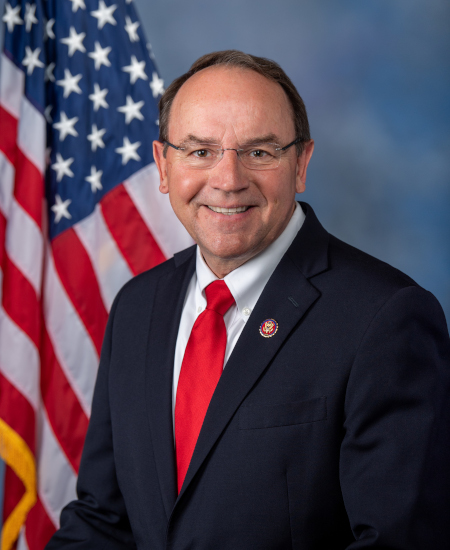
Rep. Thomas P. Tiffany
Sponsored bills
Maddy summaryHR 3228, the Constitutional Hearing Protection Act, reclassifies firearm silencers as firearms under federal tax law and eliminates their separate registration under the National Firearms Act. It requires the Attorney General to destroy all existing federal silencer registration records within one year and preempts state laws that impose taxes, registration, or recordkeeping requirements on silencers. The bill defines "firearm silencer" and specifies that manufacturers must mark silencers on a "keystone part" with a serial number. This directly affects silencer owners, manufacturers, and state governments by standardizing federal regulation and removing state-level restrictions.
Maddy summaryThis bill creates a new system for recognizing and regulating individuals who help veterans file benefit claims. It requires the VA to provide veterans with information about free assistance options and maintain a public list of accredited representatives. The bill sets a maximum fee limit of $12,500 or 5 times the monthly benefit increase for representatives, and establishes penalties for unaccredited representatives who charge improper fees. The law aims to protect veterans from unscrupulous representatives while ensuring they have access to quality assistance with their benefit claims.
Maddy summaryThis bill requires the U.S. President to identify and sanction individuals involved in "involuntary harvesting of organs" in China by blocking their U.S. property and banning their entry. It mandates an annual list of designated persons (submitted to Congress) and imposes sanctions like visa restrictions and asset freezes under the International Emergency Economic Powers Act. Exceptions cover humanitarian aid, national security activities, and UN-related travel. The sanctions expire after 5 years, and the bill also requires a report on China's organ transplant practices and whether Falun Gong persecution meets atrocity definitions. The bill directly targets Chinese officials/entities linked to organ harvesting claims, not Falun Gong practitioners.
Safeguard American Voter Eligibility Act or the SAVE Act This bill requires individuals to provide documentary proof of U.S. citizenship when registering to vote in federal elections. Specifically, the bill prohibits states from accepting and processing an application to register to vote in a federal election unless the applicant presents documentary proof of U.S. citizenship. The bill specifies what documents are considered acceptable proof of U.S. citizenship, such as identification that complies with the REAL ID Act of 2005 that indicates U.S. citizenship. Further, the bill (1) prohibits states from registering an individual to vote in a federal election unless, at the time the individual applies to register to vote, the individual provides documentary proof of U.S. citizenship; and (2) requires states to establish an alternative process under which an applicant may submit other evidence to demonstrate U.S. citizenship. Each state must take affirmative steps on an ongoing basis to ensure that only U.S. citizens are registered to vote, which shall include establishing a program to identify individuals who are not U.S. citizens using information supplied by certain sources. Additionally, states must remove noncitizens from their official lists of eligible voters. The bill allows for a private right of action against an election official who registers an applicant to vote in a federal election who fails to present documentary proof of U.S. citizenship. The bill establishes criminal penalties for certain offenses, including registering an applicant to vote in a federal election who fails to present documentary proof of U.S. citizenship.
Maddy summaryThis resolution recognizes Tren de Aragua members as "alien enemies" under the 1798 Alien Enemies Act, affirming the President's authority to apprehend and remove them from the U.S. It does not create new law but supports the executive action taken under existing legal authority. The resolution specifically references the President's March 2025 proclamation declaring Tren de Aragua's activities constitute an invasion, citing its presence in 19 states and alleged violent actions against law enforcement.
Maddy summaryHR 2735, the Strengthening Child Exploitation Enforcement Act, updates federal laws to better protect children from exploitation. It amends kidnapping statutes to include deception in abduction definitions and explicitly states that consent is not a defense for offenses involving victims under 16. The bill adds a new provision (2243(f)) making it illegal to intentionally touch a minor under 16 without clothing for sexual purposes in specific settings like prisons or federal facilities. These changes apply retroactively to conduct occurring before, on, or after the law’s enactment.
Maddy summaryHRES 295 is a resolution expressing congressional support for the President's use of the Alien Enemies Act to remove members of Tren de Aragua (designated as a Foreign Terrorist Organization) from the United States. It references the deportation of noncitizens to El Salvador under a prior agreement and affirms the President's authority to detain or deport foreign terrorists. The resolution does not create new laws but endorses specific security actions taken under existing legal authority. It directly relates to the removal of Tren de Aragua members and their transfer to El Salvador's detention facility.
Maddy summaryThis bill, HR 2102 (Major Richard Star Act), allows veterans with combat-related disabilities to receive both full military retired pay and veterans' disability compensation simultaneously, without the previous offset that reduced retired pay. It directly affects veterans already eligible for both benefits due to combat-related injuries, removing the requirement that their retired pay be reduced by the disability compensation amount. The key provision amends Title 10 and Title 38 to eliminate the offset rule (sections 5304 and 5305 of Title 38) for these veterans. The change applies to payments starting after the bill’s enactment date, effective for all qualifying veterans. This is a policy change to increase financial support for affected veterans, not a new benefit.
Maddy summaryThis bill amends the tax code to allow health savings account (HSA) funds to be used tax-free for funeral expenses of the account holder. It defines covered expenses broadly - including burial, cremation, caskets, funeral services, and related costs - and sets a $5,000 annual limit per person. Expenses incurred within 90 days of the account holder’s death can be treated as if paid before death. The change applies to distributions after the bill’s enactment for eligible taxable years.