

Maximum Pressure Act This bill expands sanctions and economic penalties on Iran. It also restricts the President from unilaterally lifting or waiving the sanctions or penalties and increases congressional oversight of them. Specifically, the bill requires the President to impose visa- and asset-blocking sanctions. Additionally, it modifies existing sanctions, including by (1) providing statutory authority for executive orders imposing sanctions; (2) applying sanctions to additional sectors of Iran's economy; and (3) broadening sanctionable conduct to cover, for example, assisting Iran with the acquisition of ballistic missiles and the complicity of Iranian officials in human rights violations in specified countries. The bill also requires reporting on licenses that authorize activities subject to sanctions. The bill prohibits U.S. representatives at the International Monetary Fund from voting to allow Iran's access to special drawing rights (a currency support tool) and places restrictions on financial transactions with Iran. The restrictions include requiring domestic financial institutions to implement special measures with respect to foreign financial institutions that conduct significant transactions connected to the Instrument in Support of Trade Exchanges (a European mechanism that bypasses U.S. sanctions when carrying out trade with Iran). The Department of State must maintain the Islamic Revolutionary Guard Corps' designation as a terrorist organization and must designate Ansharallah (or Houthis), which operates in Syria, as a foreign terrorist organization. The bill also requires reports on U.S. sanctions concerning Iran, the status of Iran's nuclear weapons program, and other matters.
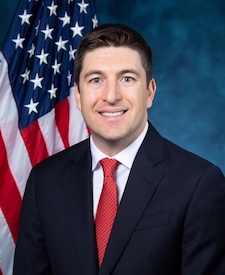
Rep. Bryan Steil
Sponsored bills
Red Tape Reduction Act This bill grants the force and effect of law to various executive orders relating to administrative procedures that were rescinded on January 20, 2021, including orders requiring agencies to (1) identify at least two regulations for repeal before publishing notice of a proposed new rule, and (2) rescind guidance documents that are no longer in effect.
Stopping Overdoses of Fentanyl Analogues Act This bill adds five fentanyl analogues and the entire category of fentanyl-related substances to schedule I of the Controlled Substances Act. A schedule I controlled substance is a drug, substance, or chemical that has a high potential for abuse; has no currently accepted medical value; and is subject to regulatory controls and administrative, civil, and criminal penalties under the Controlled Substances Act.
Stopping Illicit Trafficking Act of 2021 or the SIFT Act of 2021 This bill adds five fentanyl analogues and the entire category of fentanyl-related substances to schedule I of the Controlled Substances Act. A schedule I controlled substance is a drug, substance, or chemical that has a high potential for abuse; has no currently accepted medical value; and is subject to regulatory controls and administrative, civil, and criminal penalties under the Controlled Substances Act. The bill also creates a process to remove from schedule I certain fentanyl-related substances that do not have a high potential for abuse.
Access to Small Business Investor Capital Act This bill allows a registered investment company to exclude from the calculation of acquired fund fees and expenses those incurred indirectly from investment in a business development company. Instead, such fees and expenses may be disclosed in a footnote. Acquired fund fees and expenses is a required line item on a fund's fee schedule that provides the operating expenses of the fund.
Prohibiting IRS Financial Surveillance Act This bill prohibits the Department of the Treasury from requiring a financial institution to report the transfers into and out of a financial account. This prohibition does not apply to laws or regulations in effect on October 1, 2021.
Accountability in Foreign Animal Research Act This bill prohibits the National Institutes of Health from conducting or supporting research that involves testing on vertebrate animals in China, Cuba, Iran, North Korea, Russia, or other countries determined to be a foreign adversary.
Addressing Care Timelines for Veterans Act or the ACT for Veterans Act This bill modifies the Veterans Community Care Program to extend the authorization period for emergency treatment in non-Department of Veterans Affairs (VA) medical facilities. Specifically, the bill requires the VA to deem as authorized emergency care or services provided by a non-VA health care provider to a covered veteran if such veteran applies for authorization within 96 hours (currently 72 hours under VA regulations) of admission for care. Covered veterans are those who are enrolled in the VA health care system or those who are not enrolled but are eligible for care due to a service-connected disability.
Israel Relations Normalization Act of 2021 This bill requires the Department of State to take certain actions promoting the normalization of relations between Israel, Arab states, and other relevant countries and regions. Specifically, the State Department must develop a strategy on expanding and strengthening the Abraham Accords (the term used to refer collectively to agreements between Israel and the United Arab Emirates and between Israel and Bahrain marking the public normalization of relations between the two Arab countries and Israel). The strategy must include a description of how the U.S. government will encourage further normalization of relations with Israel. In addition, the State Department must report on options for U.S. international efforts to promote the strengthening of ties between Israel, Arab states, and other relevant countries and regions. The State Department must also report on the status of the normalization of relations with Israel, including information on (1) laws that punish individuals for people-to-people relations with Israelis (i.e., anti-normalization laws), and (2) evidence of steps taken by Arab governments toward permitting or encouraging normalized relations between their citizens or residents and Israeli citizens.
This resolution recognizes the cultural and historical significance of the Hmong New Year and wishes Hmong Americans and all individuals who observe this holiday a happy new year.