Ensuring a Long-Term Housing Recovery Act of 2021 This bill increases the authorization of appropriations for the Department of Housing and Urban Development (HUD) to provide additional rental housing choice voucher assistance. This assistance may be used for rent, utilities (including internet service), related debt, fees, deposits, and landlord incentive payments. The bill authorizes HUD to waive certain requirements related to this additional assistance. In addition, the bill extends HUD's existing authority to waive requirements related to this assistance program and other programs that HUD administers.
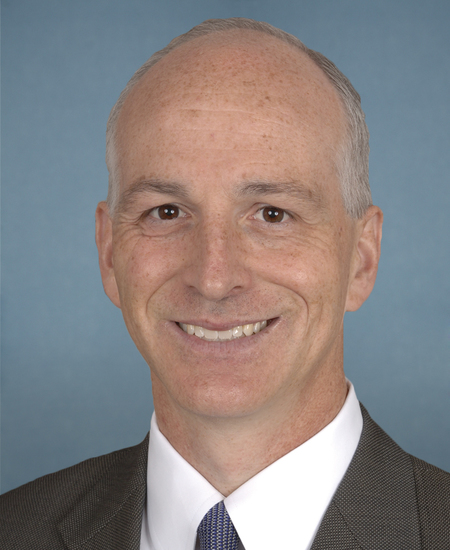
Rep. Adam Smith
Sponsored bills
Broadband Justice Act of 2021 This bill includes broadband high-speed internet service as a utility subsidized by federally assisted housing programs through utility allowances. The bill also establishes grants and loans for housing providers, public housing agencies, and other public entities to provide access to broadband high-speed internet service to residents of federally assisted housing through the installation of such service and other infrastructure improvements.
Improving Access to Indian Health Services Act This bill permanently extends certain Medicaid flexibilities relating to Indian health care providers. Specifically, the bill permanently expands coverage to include clinical services that are furnished outside of a clinic by an Indian Health Service (IHS) facility, a tribe or tribal organization, or an Urban Indian Organization (UIO). Current guidance from the Centers for Medicare & Medicaid Services allows IHS and tribal facilities to receive payment for clinical services provided outside of clinics through October 31, 2021; facilities are expected to work with their state Medicaid programs to transition to other, more permanent payment options for these services. The bill also permanently establishes a 100% federal matching rate, also known as the Federal Medical Assistance Percentage (FMAP), for UIO services. Current law provides a 100% FMAP for UIO services during the eight fiscal quarters after March 11, 2021.
911 Diversion to Unarmed Personnel Act of 2021 This bill authorizes grants to dispatch unarmed, specialized health care or social service providers to respond to nonviolent 9–1–1 calls instead of law enforcement officers. The Substance Abuse and Mental Health Services Administration may award grants to states and other jurisdictions for this purpose.
Funding for Aviation Screeners and Threat Elimination Restoration Act or the FASTER Act This bill repeals the requirement that a portion of aviation security service fees collected from passengers be credited as offsetting receipts and deposited in the general fund of the Treasury. It requires such fees to be deposited into a separate account in the Treasury for expenditure to pay only the costs of activities and services for which the fee is imposed (i.e., aviation security screening).
Immediate Coverage for Former Foster Youth Act This bill accelerates the application of certain changes that are scheduled to take effect under the Substance Use-Disorder Prevention that Promotes Opioid Recovery and Treatment (SUPPORT) for Patients and Communities Act relating to the coverage of former foster youth under Medicaid. Under current law, a state Medicaid program must cover former foster youth until the age of 26 if the youth were in the state's foster care system at the age of 18 and were enrolled in the state's Medicaid program while in foster care; a state may choose to also cover former foster youth from other states. The SUPPORT for Patients and Communities Act altered these provisions to require a state Medicaid program to cover former foster youth from other states until the age of 26; such changes apply to former foster youth who reach the age of 18 on or after January 1, 2023. The bill instead applies these changes to former foster youth who reach the age of 18 on or after the date of enactment of this bill. States must also establish Medicaid outreach and enrollment programs for former foster youth.
Public School Green Rooftop Program This bill directs the Department of Energy (DOE) to establish a grant program for installing and maintaining green roof systems on public elementary and secondary school buildings. Green roof refers to a layer of vegetation that is planted over a waterproofing system or to a waterproof management practice that is installed on a roof and may support plant growth. Specifically, DOE must award grants to public elementary and secondary schools, local educational agencies, and partnerships with nonprofit organizations to (1) pay the costs of planning assistance for green roof systems on school buildings (e.g., assessing structures, conducting financial and engineering analyses, and receiving cost estimates), and (2) install green roof systems on these buildings. Additionally, a grant recipient must complete the installation of a green roof system within four years of receiving the grant. A grant recipient that completes this installation requirement shall receive additional funding for maintenance activities, such as conducting routine inspections to monitor the condition of the green roof.
COVID Community Care Act This bill provides FY2021 supplemental appropriations for the Department of Health and Human Services (HHS) to prevent, prepare for, and respond to COVID-19 (i.e., coronavirus disease 2019). Specifically, the bill provides appropriations to the HHS Public Health and Social Services Emergency Fund and the Indian Health Service for implementing programs to prevent, prepare for, and respond to COVID-19 in medically underserved communities and among tribal populations, respectively. The bill designates the funding as emergency spending, which is exempt from discretionary spending limits.
Protecting the Right to Organize Act of 20 21 This bill expands various labor protections related to employees' rights to organize and collectively bargain in the workplace. Among other things, it (1) revises the definitions of employee , supervisor , and employer to broaden the scope of individuals covered by the fair labor standards; (2) permits labor organizations to encourage participation of union members in strikes initiated by employees represented by a different labor organization (i.e., secondary strikes); and (3) prohibits employers from bringing claims against unions that conduct such secondary strikes. The bill also allows collective bargaining agreements to require all employees represented by the bargaining unit to contribute fees to the labor organization for the cost of such representation, notwithstanding a state law to the contrary; and expands unfair labor practices to include prohibitions against replacement of, or discrimination against, workers who participate in strikes. The bill makes it an unfair labor practice to require or coerce employees to attend employer meetings designed to discourage union membership and prohibits employers from entering into agreements with employees under which employees waive the right to pursue or a join collective or class-action litigation. The bill further prohibits employers from taking adverse actions against an employee, including employees with management responsibilities, in response to that employee participating in protected activities related to the enforcement of the prohibitions against unfair labor practices (i.e., whistleblower protections). Such protected activities include providing information about a potential violation to an enforcement agency, participating in an enforcement proceeding, initiating a proceeding concerning an alleged violation or assisting in such a proceeding, or refusing to participate in an activity the employee reasonably believes is a violation of labor laws. Finally, the bill addresses the procedures for union representation elections, provides employees with the ability to vote in such elections remotely by telephone or the internet, modifies the protections against unfair labor practices that result in serious economic harm, and establishes penalties and permits injunctive relief against entities that fail to comply with National Labor Relations Board orders.
For the People Act of 2021 This bill addresses voter access, election integrity and security, campaign finance, and ethics for the three branches of government. Specifically, the bill expands voter registration (e.g., automatic and same-day registration) and voting access (e.g., vote-by-mail and early voting). It also limits removing voters from voter rolls. The bill requires states to establish independent redistricting commissions to carry out congressional redistricting. Additionally, the bill sets forth provisions related to election security, including sharing intelligence information with state election officials, supporting states in securing their election systems, developing a national strategy to protect U.S. democratic institutions, establishing in the legislative branch the National Commission to Protect United States Democratic Institutions, and other provisions to improve the cybersecurity of election systems. Further, the bill addresses campaign finance, including by expanding the prohibition on campaign spending by foreign nationals, requiring additional disclosure of campaign-related fundraising and spending, requiring additional disclaimers regarding certain political advertising, and establishing an alternative campaign funding system for certain federal offices. The bill addresses ethics in all three branches of government, including by requiring a code of conduct for Supreme Court Justices, prohibiting Members of the House from serving on the board of a for-profit entity, and establishing additional conflict-of-interest and ethics provisions for federal employees and the White House. The bill requires the President, the Vice President, and certain candidates for those offices to disclose 10 years of tax returns.