

Medal of Sacrifice Act of 2025 This act directs the President to issue a medal of sacrifice for eligible law enforcement officers and first responders who are killed in the line of duty. The act also directs the President to establish a commission on the medal of sacrifice and appoint its members. The act sets forth responsibilities of the commission, including to advise on the design of the medal and determine how the medal will be presented. Under the act, eligible law enforcement officers and first responders include federal, state, local, tribal, or territorial law enforcement officers or first responders who are not subject to an official act of wrongdoing (e.g., a determination that the officer or first responder acted outside the scope of their duties or in a manner that was not in accordance with official policies or procedures). A law enforcement officer or first responder who is subject to an official act of wrongdoing is generally not eligible for the medal of sacrifice. However, in the case of such an officer or first responder, the act requires the commission to investigate the circumstances surrounding the officer or first responder's cause of death and issue a final determination on their eligibility.
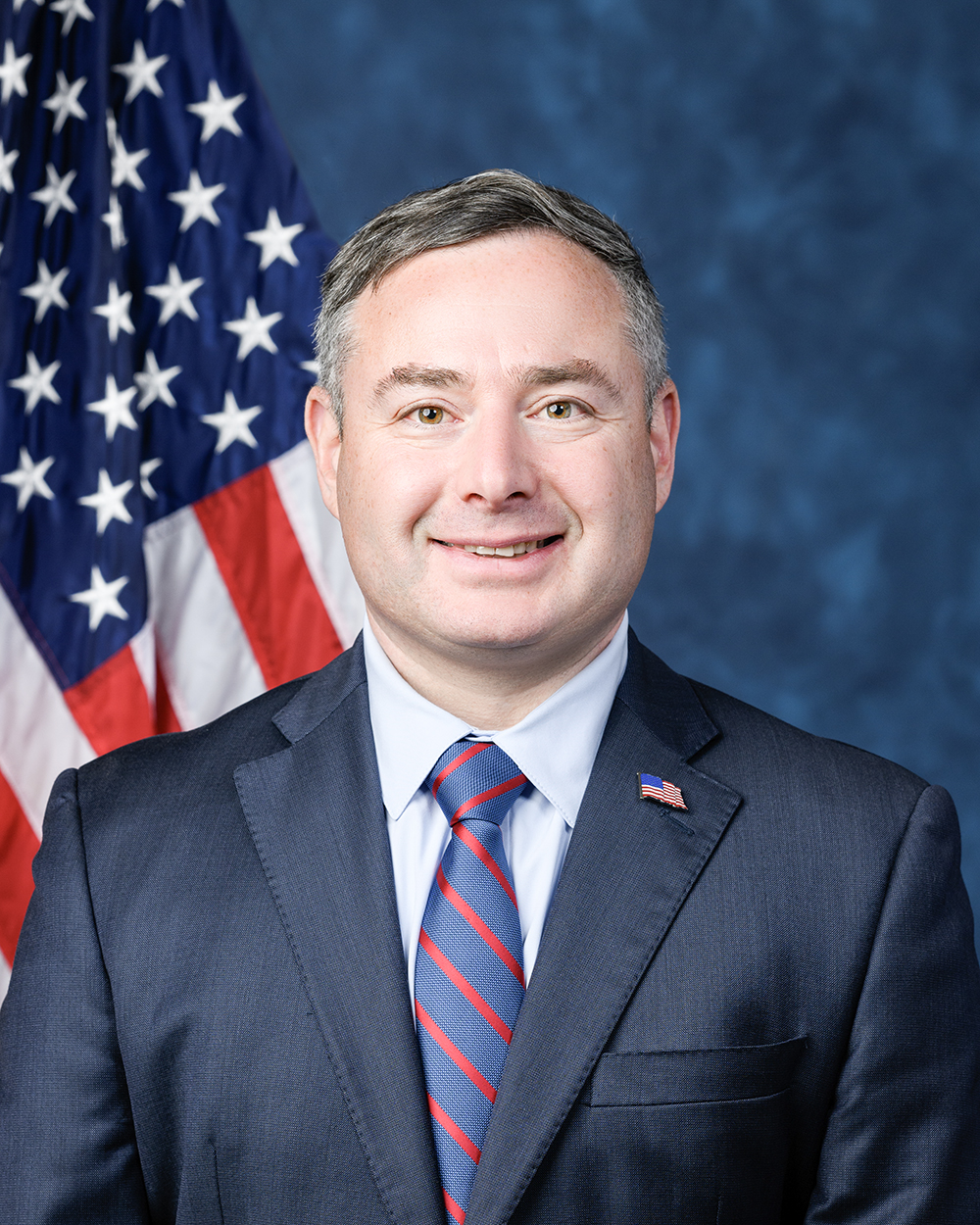
Rep. Eugene Simon Vindman
Sponsored bills
Maddy summaryThe Blue Skies for Taiwan Act of 2026 establishes a working group to evaluate how the United States can support Taiwan in producing secure, China-independent drone components. This initiative aims to address security risks posed by Chinese-sourced parts in commercial drones by facilitating public-private partnerships and streamlining certification processes for Taiwanese manufacturers. The bill also creates a cooperative framework to help regional allies acquire these secure drones and includes provisions for fast-tracking export controls and cybersecurity reviews for qualified Taiwanese suppliers. While the legislation authorizes funding for these efforts, it explicitly states that it does not change the official U.S. position on Taiwan's international status.
Maddy summaryThe American High-Speed Rail Act expands federal funding and streamlines regulations to support the development of high-speed and higher-speed rail projects across the United States. It authorizes billions of dollars in grants for corridor planning, technology improvements, and construction, while allowing the federal government to cover up to 100% of project costs under specific conditions. The bill also introduces new provisions to facilitate land acquisition, prioritize border projects, and extend labor protections to workers involved in federally funded rail infrastructure. Additionally, the legislation defines higher-speed rail as trains traveling between 110 and 186 miles per hour and includes tax incentives for rail carriers that sell or lease property to support these projects.
Maddy summaryThis bill authorizes the Department of Defense to offer fuel discounts to eligible military members and veterans at exchange stores, provided the fuel is dispensed directly into their personal vehicles. The program guarantees a minimum discount equal to the federal tax rate on gasoline or diesel, with a floor of 18.4 cents per gallon for gasoline and 24.4 cents per gallon for diesel, while allowing for additional reductions to cover state and local taxes. To prevent fraud and ensure the fuel is used only for personal transportation, the Secretary of Defense must update regulations to stop resale or commercial use of the discounted fuel. The authority to run this program will end on September 30, 2029, and the Department must submit annual reports to Congress detailing the program's usage, costs, and any issues encountered.
Maddy summaryThis resolution expresses support for designating May 2026 as Awareness Month for Progressive Supranuclear Palsy and Corticobasal Degeneration, two rare and complex neurodegenerative diseases. The measure highlights the challenges faced by the approximately 32,000 Americans living with these conditions, including difficulties with diagnosis, limited treatment options, and the significant impact on families and caregivers. By officially recognizing this month, the House aims to encourage increased public awareness, promote research into better treatments and cures, and honor the resilience of the affected community.
Maddy summaryThe SCREEN for Type 1 Diabetes Act of 2026 directs the Centers for Disease Control and Prevention to launch a national public awareness campaign focused on type 1 diabetes detection, screening, and management. This initiative will provide written materials and public service announcements across various media platforms, including social media and television, while consulting with health organizations, schools, and community groups to ensure the content is culturally and linguistically appropriate. The bill authorizes $5 million annually from 2027 to 2031 to fund grants for nonprofit entities and state or local health departments to distribute these resources and increase screening access in communities with high incidence rates. Additionally, the law requires the Secretary of Health and Human Services to submit a report to Congress within one year detailing the campaign's activities and its impact on diabetes detection and management.
Maddy summaryThe Foreign Service Workforce Retention Act aims to improve the ability of retired U.S. diplomatic officers to return to their jobs. It allows former career members to request reappointment within five years of leaving the service and requires the government to hire them back within 180 days if approved. The law also mandates that these returning officials be placed in the next assignment cycle with full standing, meaning they keep their previous rank and benefits. Additionally, the act requires the Secretary of State to submit annual reports to Congress detailing how many officers were recalled, their former grades, and their new positions. These changes directly affect retired Foreign Service officers and the administrative processes for re-hiring them.
Maddy summaryThis bill, the Provider Reimbursement Stability Act of 2026, aims to create more predictable payment adjustments for physicians and other healthcare providers under the Medicare program. It directly affects medical practices and providers who receive reimbursement for services through the physician fee schedule. The legislation increases a threshold for certain budget neutrality calculations from $20 million to $54.3 million in 2027, with automatic increases every five years thereafter. It also requires the government to correct payment estimates when actual service usage differs significantly from projections, mandates regular updates to cost calculations for practice expenses, and limits how much Medicare payment rates can change from year to year to a maximum of 2.5 percent.
Maddy summaryThis bill would add pharmacist services to Medicare Part B coverage for beneficiaries, specifically covering pharmacist-led testing and treatment for illnesses like flu, COVID-19, or strep throat during public health emergencies. It defines covered services as those performed under state law, often requiring collaboration with a physician, and sets payment at 80% of the lesser of the actual charge or 85% of physician payment rates. Pharmacists would be prohibited from balance billing for these services, ensuring Medicare beneficiaries pay only their standard copayment. The changes would take effect January 1, 2026.
Maddy summaryThe Recycling Infrastructure and Accessibility Act of 2025 establishes a competitive federal grant program to fund projects improving recycling access in underserved communities. It authorizes $30 million annually (2025-2029) for grants to states, local governments, tribes, or public-private partnerships to build infrastructure like transfer stations, expand curbside collection, or reduce transport costs. Grants must be $500,000-$15 million, with 70% reserved for projects in communities lacking a materials recovery facility within 75 miles. The program requires grantees to report on implementation and outcomes, excluding funding for recycling education.