

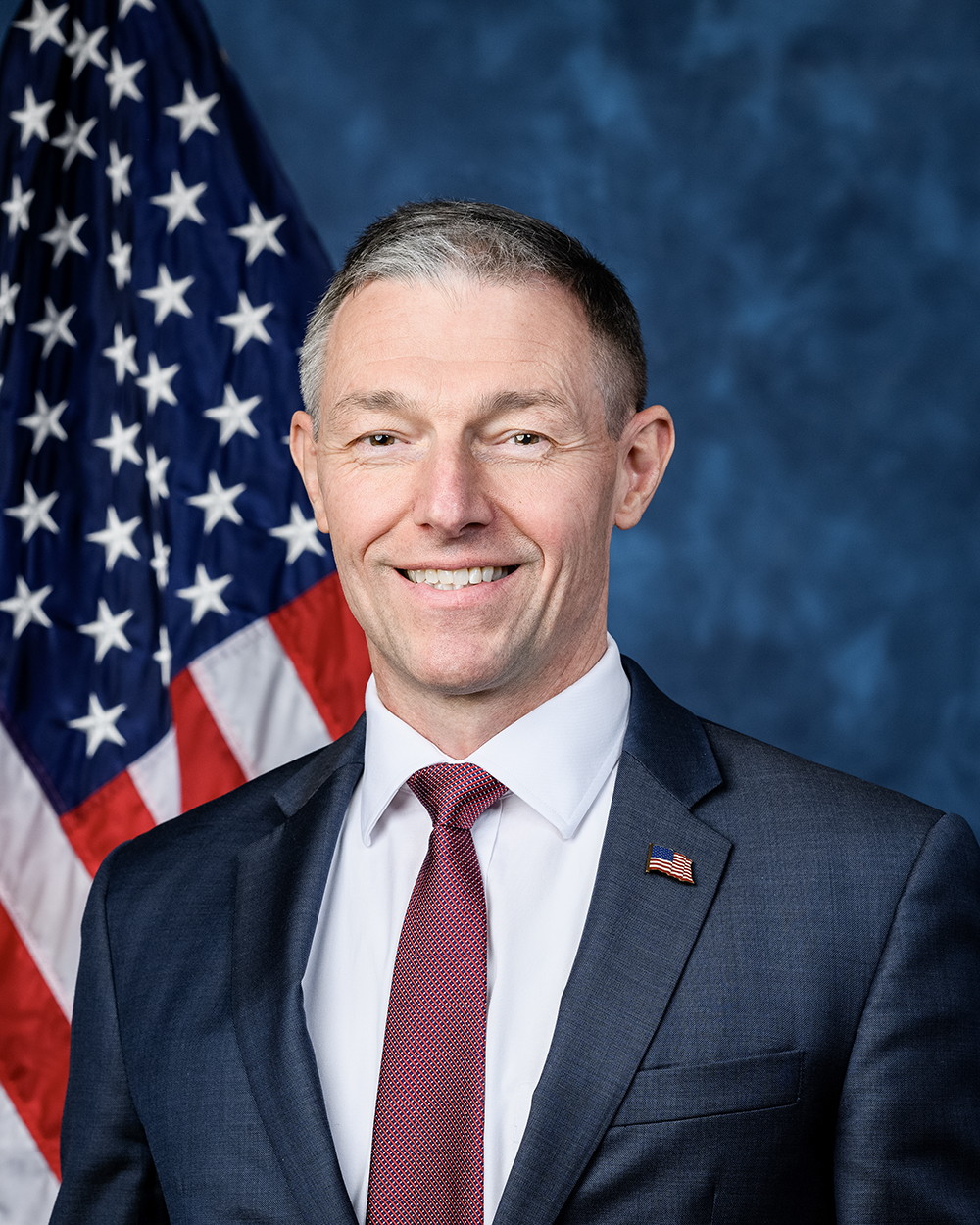
Photo of Mike Kennedy
R United States House · District 3 · Utah On the 2026 ballot

Rep. Mike Kennedy

Compare
Total votes
650
all sessions
Attendance
98%
12 missed
Near the chamber average
With party
93%
of cast votes
Lower than 84% of chamber peers
Bipartisan score
3%
crosses aisle rarely
Higher than 83% of chamber peers
Sponsored
183
bills & resolutions
Lower than 80% of chamber peers
Committees
10
assignments
183 bills and resolutions

Sponsored bills

Total
183
Primary
36
Co-sponsor
147
This page
183
matching current filters
Primary HR 4684
Passed · Oregon House · Lead sponsor
Star-Spangled Summit Act of 2026

Maddy summaryHR 4684, the Star-Spangled Summit Act of 2025, grants a 10-year special use permit for maintaining a U.S. flag at Kyhv Peak Lookout Point in Utah's Uinta National Forest. The permit is first issued to Robert S. Collins of Provo, Utah, or if he declines, to a qualified local resident or nonprofit with experience caring for flagpoles, prioritizing previous permit holders. Key provisions include exemption from land use fees, a process for renewal, and an explicit exemption from environmental review under the National Environmental Policy Act (NEPA). The bill directly affects only the specific location and the designated permit holder(s) at Kyhv Peak, with no broader policy changes.

Passed May 20, 2026 0 co-sponsors
Co-sponsor HR 8332
In committee · Oregon House · Co-sponsor
Special Operations Forces Concealed Carry Act

Maddy summaryThis bill, titled the "Special Operations Forces Concealed Carry Act," amends federal law to allow current and honorably discharged military special operations personnel to carry concealed firearms nationwide. It directly affects those who served in specific special operations roles across the Army, Navy, Marine Corps, and Air Force. The bill expands the existing Law Enforcement Officers Safety Act (LEOSA) to include these "qualified special operators," granting them similar concealed carry privileges. Unlike law enforcement officers under LEOSA, these individuals would not be subject to annual firearms qualification requirements, and their authority would be permanent, contingent on maintaining honorable discharge status and federal firearm eligibility. To exercise this authority, they must carry proof of identity and qualification, which can include a new Department of Defense or Veterans Affairs photo identification or official service documentation.

In committee May 7, 2026 1 co-sponsor
Co-sponsor HR 1163
In committee · Oregon House · Co-sponsor
Prove It Act

Maddy summaryThis bill requires federal agencies to analyze indirect economic costs on small businesses when creating new rules, including costs affecting businesses that interact with regulated entities (like suppliers or partners). It creates a new process allowing small businesses to petition the Small Business Administration's Chief Counsel to review agency certifications claiming a rule won't significantly impact them. Agencies must then provide detailed cost analyses, publish guidance online for small business feedback, and face penalties if they fail to cooperate with reviews. The bill does not change existing regulations but adds new review steps for small business input.

In committee May 4, 2026 1 co-sponsor
Co-sponsor HR 8630
In committee · Oregon House · Co-sponsor
PEAT Act of 2026

Maddy summaryThe PEAT Act of 2026 amends federal regulations to clarify how certain biologic drugs are classified for approval purposes. Specifically, it prevents the Food and Drug Administration from denying approval to a biologic product simply because it contains a protein that does not have a clinical effect. This change ensures that the presence of inactive proteins does not automatically disqualify a drug from being treated as a biological product. The legislation directly impacts pharmaceutical companies developing complex biologics and the regulatory review process for these medicines. By removing this specific barrier, the bill aims to streamline the path to market for drugs that include non-active protein components.

In committee Apr 30, 2026 1 co-sponsor
Co-sponsor HR 8384
In committee · Oregon House · Co-sponsor
To provide for the conveyance of certain property to the Utah National Guard located in Lehi, Utah, and for other purposes.

Maddy summaryThis bill authorizes the transfer of three specific parcels of federal land in Lehi, Utah, to the Utah National Guard for use as a state armory. The property includes various strips and irregularly shaped lots, and the transfer is subject to existing easements and restrictions that are currently in place. To ensure the land remains dedicated to military training, the agreement includes a clause allowing the federal government to reclaim the property if it is no longer used for National Guard readiness activities. Additionally, the bill requires the State of Utah to cover the costs associated with the transfer, such as environmental reviews and administrative fees, without using federal funds for these expenses.

In committee Apr 20, 2026 1 co-sponsor
Primary HR 8335
In committee · Oregon House · Lead sponsor
PROTECT Act of 2026

Maddy summaryThe PROTECT Act of 2026 modifies rules for H-1B visa petitions to ensure higher wages and stricter oversight for third-party work arrangements. It requires employers to pay H-1B workers at least the higher of the local market rate or $100,000, adjusted annually for inflation, and limits visas for those working at third-party sites to a maximum of one year unless the job assignment is clearly defined and long-term. Additionally, the bill mandates that visa petitions offering higher compensation be prioritized for approval regardless of filing date. A separate provision exempts health care workers from certain filing fees if the employer can prove they made a good faith effort to hire a U.S. citizen or permanent resident before bringing in foreign staff. These changes apply to all H-1B visa petitions filed on or after the date the law is enacted.

In committee Apr 16, 2026 0 co-sponsors
Co-sponsor HR 7613
Passed · Oregon House · Co-sponsor
ALERT Act

Maddy summaryThe ALERT Act (HR 7613) requires the Federal Aviation Administration to improve aviation safety through several key measures. It mandates the evaluation and potential implementation of enhanced collision avoidance systems (ACAS-Xa) for commercial aircraft and ACAS-Xr for rotorcraft, with specific deadlines for rulemaking and installation. The bill establishes committees to develop recommendations for safety technology requirements, requires safety risk assessments for air traffic controllers, and addresses operational procedures at high-traffic airports like Ronald Reagan Washington National. These provisions affect air carriers, air traffic controllers, rotorcraft operators, and Department of Defense aircraft operations. The act aims to enhance situational awareness and reduce midair collision risks through technology upgrades and improved safety protocols.

Passed Apr 15, 2026 1 co-sponsor
Co-sponsor HR 8182
In committee · Oregon House · Co-sponsor
Banning Perpetrators of Religious Persecution Act of 2026

Maddy summaryThis bill prohibits the issuance of U.S. visas to individuals who have committed particularly severe violations of religious freedom, either while serving as foreign government officials or while acting outside the United States. It directly affects foreign nationals by adding them to the list of inadmissible aliens under U.S. immigration law if they meet specific criteria related to religious persecution. The law requires the Secretary of State to publish the names and locations of these individuals on a public website, though the Secretary retains discretion to withhold identities if doing so would harm U.S. foreign policy interests. This measure expands existing immigration restrictions to specifically target those responsible for religious freedom violations, creating a new ground for visa denial.

In committee Apr 2, 2026 1 co-sponsor
Co-sponsor HR 7979
In committee · Oregon House · Co-sponsor
Public Lands Access Restoration Act

Maddy summaryThis bill requires federal land agencies to assume that designated motorized roads and trails remain open unless restrictions are clearly justified by resource protection or public safety concerns. It mandates that any access restrictions be properly signed, mapped, publicly announced, and reviewed at least every five years to ensure they remain necessary. The legislation also allows the public to propose new motorized routes or convert existing closed roads, with agencies prioritizing requests that improve connectivity, protect resources, support wildfire management, or enhance recreational access. These rules apply to National Forest System and Bureau of Land Management roads and trails, excluding wilderness areas and national parks.

In committee Mar 26, 2026 1 co-sponsor
Showing 31 to 40 of 183 bills
Previous 1 3 4 5 19 Next