Maddy summaryHR 6945 clarifies that states may use federal grants under Section 403 of the Social Security Act to support pregnancy centers meeting specific criteria. These centers must promote protecting both mother and unborn child life while providing services like counseling, pregnancy testing, and material support (e.g., diapers, baby clothes). The bill explicitly prohibits interpreting existing law as barring such funding for eligible centers. It does not create new funding but defines which pregnancy resource organizations qualify for existing grants.
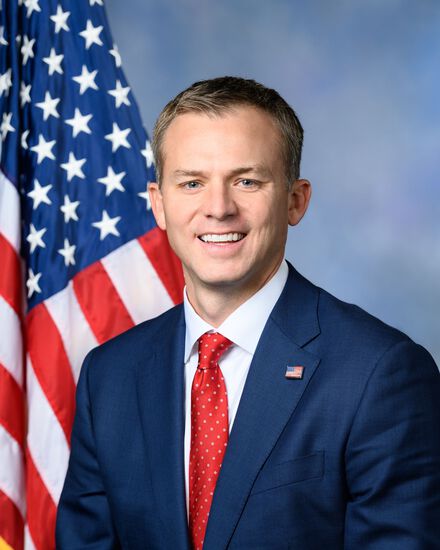
Rep. Blake D. Moore
Sponsored bills
Maddy summaryThis bill requires the federal government to use AI systems to annually identify redundant or outdated regulations in the Code of Federal Regulations. Specifically, the Office of Management and Budget (with National Institute of Standards and Technology guidance) must deploy AI meeting strict standards to flag duplicative or obsolete rules, then refer these to the responsible agency for review within 30 days. Agencies must then either rescind redundant rules or amend/update outdated ones within 30 days, bypassing standard regulatory procedures. The bill directly affects all federal agencies that create or maintain regulations, aiming to streamline the regulatory code through AI-assisted review.
Maddy summaryThe SAFE KIDS Act would void surrogacy contracts between U.S. surrogates and foreign nationals from designated "foreign entities of concern" (nations listed under 10 U.S.C. §4872(f)(2)), except for married couples where at least one prospective parent is a U.S. citizen or lawful permanent resident. It prohibits surrogacy brokers from facilitating such contracts, imposing fines or up to one year in prison for knowingly arranging these agreements. If a contract is voided, custody decisions for the child would be determined by state courts based solely on the child’s best interests, disregarding the invalid agreement. The bill aims to address what Congress identifies as a national security threat involving exploitation of U.S. surrogacy laws and potential human trafficking.
Maddy summaryThis bill amends a federal program to promote pollinator-friendly vegetation along roadsides and highway rights-of-way. It expands eligibility to include 501(c)(3) nonprofits managing such projects and requires consultation with the Fish and Wildlife Service before finalizing plans. The bill increases annual funding from $150,000 to $500,000 for program administration and raises the annual funding cap for projects from $2 million to $5 million (for fiscal years 2026-2031). These changes directly affect state transportation departments, federal land agencies, and qualifying nonprofit organizations managing roadside vegetation. The key policy shift is broadening partnership opportunities while increasing funding and clarifying consultation requirements.
Maddy summaryHR 7025, the Evidence-Based Grantmaking Act, requires 15 federal agencies (including Education, Health and Human Services, and Housing and Urban Development) to use proven methods in awarding grants. It mandates that agencies clearly define grant goals in funding notices, prioritize applicants using evidence-based practices, and require grant recipients to implement such practices when delivering services. Agencies must also conduct regular evaluations of grant effectiveness, publicly share results, and use findings to improve future funding decisions. This law directly affects federal grant recipients and aims to ensure taxpayer funds achieve measurable outcomes through data-driven approaches.
Maddy summaryHR 4782, the Local Farmers Feeding our Communities Act, establishes a USDA program to connect local farmers with food distribution networks. It requires eligible entities (like state agriculture agencies) to use funds to purchase unprocessed or minimally processed local foods from covered producers - including at least 25% from small-size, mid-size, beginning, or veteran farmers - while providing technical assistance for food safety and supply chains. The bill allocates $200 million annually (2026-2030) from the Commodity Credit Corporation, mandating 10% for Tribal governments and 1% per state before distributing remaining funds. This directly supports regional food security by boosting economic opportunities for local farmers and improving access to fresh, nutritious food through established distribution channels.
Maddy summaryHR 909, the Crime Victims Fund Stabilization Act of 2025, modifies how funds from the False Claims Act are deposited into the Crime Victims Fund. It specifies that from 2025 through 2029, certain False Claims Act proceeds (specifically those for qui tam plaintiff payments and government damage reimbursements) cannot be deposited into the fund. This change directly affects the composition of the Crime Victims Fund by excluding these specific revenue streams during the specified period. The bill does not create new benefits or alter victim services; it only adjusts fund allocation rules for existing False Claims Act revenues.
This resolution expresses the sense of the House of Representatives that (1) Congress should adopt a fiscal target to reduce the federal budget deficit to 3% of gross domestic product or less as soon as possible and no later than the end of FY2030; and (2) after the target is achieved, Congress should continue to pursue further deficit reduction with the goal of achieving a balanced federal budget.
Modernizing Access to our Public Waters Act or the MAPWaters Act of 2025 or the MAPWaters Act of 2025 This act directs the Forest Service and the Department of the Interior to standardize and publish data relating to the public's access to federal waterways for recreational use. (Sec. 3) The Forest Service and Interior must jointly develop and adopt interagency standards for data collection and dissemination of geospatial data relating to public outdoor recreational access of federal waterways and federal fishing restrictions. The standards must ensure compatibility and interoperability among applicable federal databases with respect to collection and dissemination of such data. (Sec. 4) Within five years, the Forest Service and Interior must also digitize and make publicly available online certain geographic information system data about (1) federal waterway restrictions, (2) federal waterway access and navigation information, and (3) federal fishing restrictions. They must also update the data about waterway restrictions, waterway access, and navigation information at least twice per year. Data about fishing restrictions must be updated in real time as changes go into effect. The Forest Service and Interior must also develop a process to allow members of the public to submit questions or comments regarding the data regarding waterway restrictions, waterway access, and navigation information. The requirements under this section do not apply to irrigation canals and flowage easements. (Sec. 5) To carry out the act, the Forest Service and Interior may (1) coordinate and partner with nonfederal agencies, private entities, and nonprofit partners; and (2) enter into agreements with third parties. The Forest Service and Interior may work with the U.S. Geological Survey to collect, aggregate, digitize, standardize, and publish data on their behalf. (Sec. 6) The Forest Service and Interior must annually report to specified congressional committees on their progress in meeting the requirements of this act.

Maddy summaryThis bill expands the Veterans Community Care Program to cover eyeglass lens fittings as an authorized medical service, directly affecting veterans who receive care through non-VA providers under the program. It amends the law to explicitly include "fittings for eyeglass lenses" in the list of covered services, allowing eligible veterans to schedule these appointments at nearby community providers. The Department of Veterans Affairs must establish regulations to implement this change, ensuring veterans can access these fittings without needing to go through VA facilities. A report on implementation progress, challenges, and veteran benefits must be submitted to Congress within 180 days of the bill's enactment.