

Maddy summaryHR 7678, the Gun Owner Registration Information Protection Act, prohibits federal funding for state or local databases that track lawfully owned firearms or their owners. The bill allows federal funding for databases recording lost or stolen firearms but bans it for databases listing legal gun ownership. This means states cannot use federal money to create or maintain systems that compile information about legally owned guns. The bill directly affects state and local governments that rely on federal funds for firearm ownership databases.
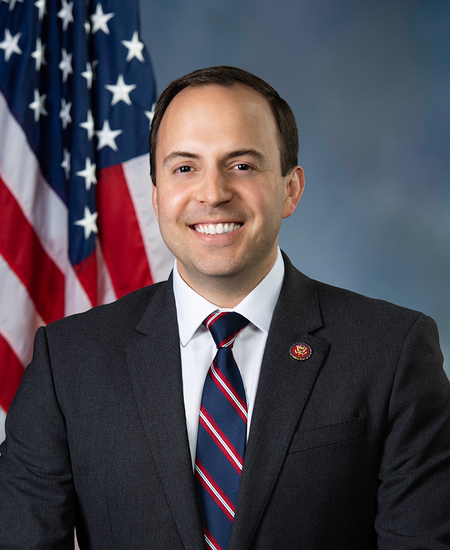
Rep. Lance Gooden
Sponsored bills
Respect State Housing Laws Act This bill eliminates a provision that requires a 30-day notice period before a landlord may begin eviction proceedings against a tenant in federally assisted or federally backed housing.
Maddy summaryHRES 1076 is a House resolution recognizing the 10th anniversary of the first U.S. liquefied natural gas (LNG) export shipment from the lower 48 states, which occurred on February 24, 2016. The resolution celebrates this milestone as a historic achievement in American energy production, highlighting its role in supporting over 273,000 annual jobs and $400 billion in economic growth over the past decade. It honors the workers and communities involved and acknowledges LNG exports' contribution to U.S. economic growth, energy security, and global partnerships. The resolution has no binding effect or policy changes - it solely expresses recognition of a past event.
Law-Enforcement Innovate to De-Escalate Act This bill removes less-than-lethal projectile devices (e.g., certain TASERs) from regulation under the Gun Control Act. The term less-than-lethal projectile device means a device that (1) is not designed or intended to expel (and may not be readily converted to discharge) commonly used ammunition or projectiles exceeding a velocity of 500 feet per second; (2) is designed and intended to be used in a manner not likely to cause death or serious bodily injury; and (3) does not accept (and cannot be readily modified to accept) an ammunition feeding device. The bill also requires the Bureau of Alcohol, Tobacco, Firearms and Explosives to determine whether a device satisfies the definition of a less-than-lethal projectile device within 90 days of a request.
Maddy summaryHR 7612 (End Sanctuary Cities Act of 2026) prohibits state and local government officials from interfering with federal immigration enforcement by blocking Department of Homeland Security (DHS) requests for "reasonable advance notice" (at least 48 hours) about releasing criminal aliens. It directly affects local leaders who establish policies restricting such notice, imposing criminal penalties: up to 25 years in prison for failures leading to the release of individuals convicted of murder, rape, or sex offenses against minors. Penalties decrease to 5-10 years for serious violent felonies and 30 days-6 months for other criminal offenses. The law creates new federal criminal charges under Title 18, Section 1925, targeting officials who obstruct DHS compliance with immigration laws.
Maddy summaryThis bill requires the Department of Health and Human Services (HHS) to collect detailed information about sponsors before placing unaccompanied migrant children with them, including background checks, addresses, immigration status, and DNA proof for relatives. It mandates in-person home visits, electronic monitoring for non-citizen sponsors, and a $5,000 bond to ensure children attend immigration hearings. HHS must share all collected data with Homeland Security (DHS), which must verify sponsors’ immigration status and may initiate removal proceedings for unlawfully present sponsors. The bill also requires follow-up checks and reporting to child safety authorities if contact with sponsors is lost, directly affecting unaccompanied migrant children and their sponsors.
Maddy summaryThe Tribal Warrant Fairness Act updates federal law to ensure Indian tribes have equal standing with local and state governments in specific law enforcement contexts. It amends the U.S. Marshals Service statute to explicitly include "Tribal fugitive matters" when requested by an Indian Tribe, and revises the Presidential Threat Protection Act to add "Indian Tribes" and "Tribal law" to relevant provisions. These changes directly affect tribal governments by requiring federal agencies to recognize tribal requests and jurisdiction in warrant-related matters and threat protection. The bill makes no new policy but clarifies existing federal procedures to include tribal authorities on par with local and state entities.
Maddy summaryThis bill prohibits federal officials from using settlement agreements to direct payments to third parties unless those payments directly compensate for actual harm caused by the defendant or pay for services rendered in the case. It prevents the government from creating slush funds through settlements that benefit unrelated organizations or individuals beyond the scope of direct restitution. Federal agencies must annually report to the Congressional Budget Office on settlement payments that meet the new criteria, while agency inspectors general must audit and publicly report any violations. The reporting and audit requirements are set to expire seven years after the law takes effect.
Maddy summaryHR 7371 (No Flight, No Fight Act of 2026) bans air carriers from transporting adult roosters as cargo, except for shipments originating from or destined to qualifying commercial farms. The bill requires shippers to provide USDA-certified documentation proving the farm meets the $350,000 annual gross income threshold for commercial operations. It defines "adult rooster" as a male chicken over 6 months old and specifies that exemptions apply only to legitimate agricultural purposes, not to prevent illegal activities like cockfighting. The Department of Transportation will enforce this rule, with violations subject to civil penalties, effective 180 days after enactment.
Maddy summaryThis bill amends the tax code to exclude specific Social Security benefits from taxable income. It directly affects individuals receiving Social Security benefits that were previously subject to taxation due to certain pension rules (like the Windfall Elimination Provision), but are restored under the Social Security Fairness Act of 2023. The exclusion applies only to payments attributable to those restored benefits for months between January 2025 and December 2026. This changes the tax treatment of a defined subset of Social Security payments during a specific two-year period.