

Maddy summaryThe Fair Competition for Small Business Act of 2025 amends the Clayton Act to allow legal claims for violations of the Sherman Antitrust Act or for violations of the bill's own section (section 2). This technical change would directly affect small businesses and other entities involved in antitrust litigation by expanding the grounds for lawsuits under the Clayton Act. The key mechanism is a modification to the Clayton Act that references the bill's provisions, creating a new basis for claims. The bill does not specify additional substantive rules beyond this amendment.
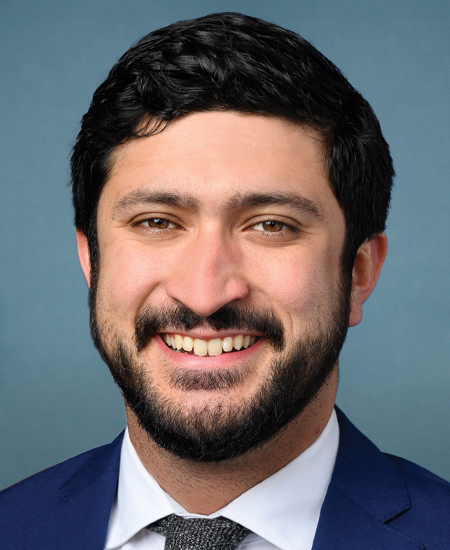
Rep. Greg Casar
Sponsored bills
Maddy summaryHR 6751 would repeal the 2001 Authorization for Use of Military Force (AUMF), a law passed after the September 11 attacks that has been used to justify military operations for over two decades. The bill states Congress finds the AUMF has been interpreted too broadly, conflicting with the Constitution's requirement that only Congress can declare war. It would formally end this legal authority 240 days after the bill becomes law, directly affecting future military actions authorized under the 2001 AUMF. The key provision is the repeal itself, removing the legal basis for ongoing military operations that rely on this specific 2001 law.
Maddy summaryHR 6731, the "Restore Trust in Government Act," requires Members of Congress, the President/Vice President, and their spouses or dependent children to divest certain financial investments during federal service. It defines "covered investments" broadly (including stocks, commodities, and derivatives) but excludes Treasury bonds, municipal bonds, family farm interests, and some Alaska Native Settlement stock. Covered individuals must sell holdings within 90-180 days of taking office or enacting the law, with limited exceptions for qualified blind trusts or spouses’ occupational trading. Violations incur a 10% fee on the investment value and require returning profits, paid to the Treasury. Ethics offices enforce these rules, publish penalty details, and issue divestiture certificates.
Maddy summaryThe ARMAS Act of 2025 transfers control of certain firearms export regulations from the Department of Commerce to the Department of State to better regulate exports to Mexico, Central America, and the Caribbean. It designates specific countries (including Mexico, Guatemala, Honduras, and El Salvador) as "covered countries" requiring stricter export oversight, including mandatory annual reports on firearms exports and end-use monitoring to prevent diversion to criminal groups. The bill requires the Department of State to develop a strategy to disrupt illegal firearm trafficking, including increased participation in the eTrace program for tracking U.S.-sourced firearms and improved data sharing with foreign governments. Based on findings that U.S.-sourced firearms are commonly used in crimes in these regions, the act aims to reduce the flow of weapons that fuel violence and crime.
Maddy summaryThe Protect America's Workforce Act cancels an executive order issued on March 27, 2025, that excluded certain groups from federal labor-management relations programs, making it legally unenforceable. It also ensures that all collective bargaining agreements between federal agencies and labor unions, which were active as of March 26, 2025, remain fully effective until their agreed terms expire. This directly affects federal agencies, labor unions, and the employees covered by these agreements. The bill prevents federal funds from being used to implement the canceled executive order while preserving existing labor agreements.
Maddy summaryThis concurrent resolution (HCONRES 65) is a symbolic congressional commendment of state and local governments that have affirmed reproductive rights as human rights. It recognizes efforts by jurisdictions like Carrboro, North Carolina; Austin, Texas; and Fulton County, Georgia, which passed resolutions or proclamations declaring abortion access a human right and condemning criminalization of pregnancy outcomes. The resolution urges states to repeal restrictive abortion laws and protect access to reproductive care, but it does not create new legal requirements or fund programs. As a procedural resolution, it has no binding effect on federal or state law.
Maddy summaryHR 6597, the LET’S Protect Workers Act, increases civil penalties for employers violating key labor laws to strengthen worker protections. It raises fines for child labor violations to up to $700,000 per incident causing death or serious injury, and doubles penalties for repeated wage/hour violations (up to $50,000 per violation). The bill also significantly boosts OSHA penalties (e.g., up to $800,000 for serious violations), adds new retaliation penalties for mine safety violations (up to $200,000 for repeat offenses), and clarifies that recordkeeping violations continue until corrected. These changes apply to employers across sectors, including manufacturing, agriculture, and mining, under the Fair Labor Standards Act, Occupational Safety and Health Act, and Mine Safety Act.
Maddy summaryThis bill prohibits Department of Homeland Security (DHS) officers from arresting or detaining immigrants at immigration court facilities during hearings or while arriving/departing for hearings, except with a judicial warrant. It applies to all pending immigration cases, appeals, and motions to reopen, covering anyone whose removal order isn't final. Exceptions allow arrests only to prevent imminent threats to life, safety, or national security. The bill also requires DHS to report scheduled check-in arrests to the Inspector General and mandates annual oversight reports to Congress on compliance.
Maddy summaryThe Dignity for Detained Immigrants Act establishes minimum standards for detention facilities operated by the Department of Homeland Security, requiring them to follow the American Bar Association's Civil Immigration Detention Standards. It mandates annual unannounced inspections by the DHS Inspector General, with penalties including fines for noncompliant private facilities and transfers of detainees from noncompliant facilities. The bill requires DHS to publicly report on facility compliance, phase out private detention facilities over three years, and prohibit solitary confinement. It also ensures detainees have access to legal orientation, counsel, and more frequent custody review hearings. The bill directly affects all individuals detained in DHS custody, including immigrants, asylum seekers, and refugees held in facilities operated by or contracted to DHS.
Maddy summaryThis bill would protect unaccompanied children by repealing fee requirements and other provisions in the "One Big Beautiful Bill Act" that have created barriers to their access to humanitarian protections. It specifically exempts unaccompanied children from paying fees for asylum applications, employment authorization, and immigration court proceedings, and requires the government to refund fees already paid under the repealed provisions. The bill also repeals provisions allowing for summary removal of children without due process, intrusive body examinations without safeguards, and sharing of sponsor information with immigration enforcement that has led to family separations. These changes would directly affect unaccompanied children seeking asylum or other protections in the United States, ensuring they can access legal processes without financial barriers or heightened risks of exploitation. The bill aims to uphold protections for unaccompanied children established under the William Wilberforce Trafficking Victims Protection Reauthorization Act of 2008 (TVPRA).