

Maddy summaryThe CRUSADE Act amends immigration law to require applicants for special immigrant visas to explicitly disavow Sharia law. Under this provision, individuals seeking these specific visas must take an additional oath affirming their commitment to uphold the U.S. Constitution. The bill directly affects foreign nationals applying for special immigrant status by adding a new eligibility requirement related to their legal and religious beliefs. This change does not alter the general immigration process but imposes a specific condition on one category of visa applicants.
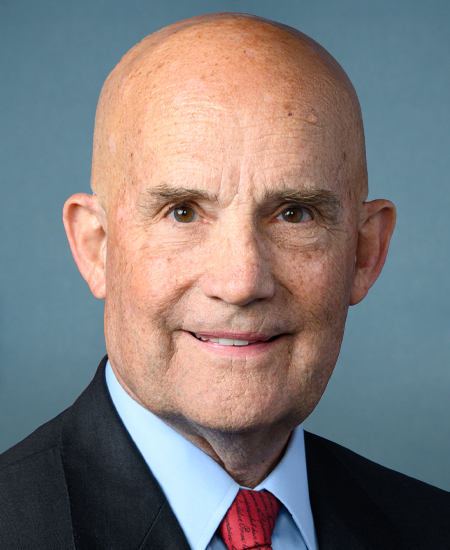
Rep. Keith Self
Sponsored bills
Maddy summaryThe Connected Vehicle Security Act of 2026 restricts the importation, sale, and manufacture of vehicles and related technology from specific countries, including China, Russia, Iran, and North Korea, to address national security concerns. The law defines prohibited items as connected vehicles, their software, and hardware components and sets different effective dates, with vehicle bans starting in 2027 and hardware restrictions beginning in 2030. A government official can grant exceptions for specific items after reviewing security risks and notifying Congress, while the agency must publish annual reports on enforcement actions and compliance.
Maddy summaryThis resolution expresses the House of Representatives' support for keeping United States troops as part of the Kosovo Force (KFOR). The bill directly affects the roughly 600 U.S. military personnel currently stationed in Kosovo and the NATO mission they support. It asserts that maintaining this presence is vital for stabilizing the region amid ongoing tensions between Kosovo and Serbia. The text urges that American forces remain in Kosovo until the peace mission is fully completed.
Maddy summaryThis resolution expresses the House of Representatives' support for Kosovo joining NATO, directly affecting U.S. foreign policy and relations with the Western Balkans. It outlines a specific path for Kosovo to become a full member by first joining the Partnership for Peace and then the Membership Action Plan. The bill also calls on the United States to encourage other NATO countries that do not recognize Kosovo to change their stance and to provide security assistance to Kosovo's defense and intelligence agencies. Additionally, it emphasizes that improving relations between Kosovo and Serbia should not delay Kosovo's progress toward NATO membership.
Maddy summaryThis bill proposes to amend federal law to prohibit marriages between individuals who are first cousins or closer relatives. It directly affects couples seeking to marry within the United States government's jurisdiction by adding them to the list of prohibited relationships. The key mechanism is a specific change to the U.S. Code that removes the legal exception allowing first cousins to marry. This legislation would make such unions federally invalid, though it does not alter state laws regarding marriage.
Maddy summaryThe End U Visa Abuse Act proposes to completely eliminate the U visa program, which currently provides immigration benefits and work authorization to alleged crime victims and their family members. The bill is based on findings that the program has been exploited through fraud, including staged crimes and forged law enforcement certifications, leading to a massive backlog of over 400,000 pending applications. By repealing the specific sections of the Immigration and Nationality Act that create the U visa category, the legislation would remove the legal pathway for these individuals to obtain lawful status through this specific mechanism. The text argues that existing alternatives, such as S visas for witnesses or humanitarian parole, are sufficient to assist genuine victims without the risks of abuse associated with the current system.
Maddy summaryThis bill, known as TREY's Law, aims to make nondisclosure clauses in contracts void and unenforceable if they prevent the reporting of sexual abuse involving minors. It directly affects victims of such abuse, their families, and anyone with knowledge of the abuse by allowing them to disclose these incidents without fear of civil liability. The law applies retroactively to agreements made before or after its passage and overrides any state laws that allow the enforcement of these specific clauses. While it invalidates clauses that silence abuse details, it permits parties to keep confidential other settlement terms like payment amounts, provided this does not stop the disclosure of the abuse itself.
Maddy summaryThis bill proposes a comprehensive overhaul of the H-1B visa program by pausing new issuances for three years and capping the annual limit at 25,000 visas. It would eliminate the current lottery system, replacing it with a process that prioritizes employers offering the highest wages, while also restricting visa holders to a maximum stay of three years and banning them from holding multiple jobs simultaneously. The legislation further mandates that all H-1B workers be paid at least $200,000 annually, prohibits staffing agencies from sponsoring these visas, and bars federal agencies from hiring or petitioning for H-1B workers. Additionally, the bill would end employment authorization for foreign students and interns, and generally prevent most nonimmigrants from adjusting their status to become permanent residents while in the United States.
Maddy summaryThe MATCH Act requires U.S. agencies to align export controls on semiconductor manufacturing equipment with allied nations to prevent adversaries from accessing critical technology. It mandates a 150-day period for diplomatic efforts to secure countrywide denial policies from allied suppliers, after which U.S. jurisdiction would extend to equipment exported from countries not complying with these controls. The bill specifically targets semiconductor manufacturing equipment that the U.S. cannot currently produce in high volume and includes a list of Chinese companies deemed to warrant comprehensive restrictions. If allies fail to implement matching controls, the Act would allow the U.S. to regulate equipment exported from non-compliant allied countries and restrict servicing of restricted items at facilities in adversary nations. The legislation includes a sunset provision that expires five years after enactment, with annual reporting requirements to Congress on progress and compliance.
Maddy summaryThis bill (HR 5853) increases civil penalties for violations of U.S. export control laws. It raises the maximum fixed fine under the Export Control Reform Act of 2018 from $300,000 to $1.2 million and increases the penalty multiplier from "twice the value" of the transaction to "four times the value." These changes directly affect businesses or individuals who export restricted items without proper authorization. The higher penalties apply to violations occurring on or after the bill's enactment date.